 NL
NL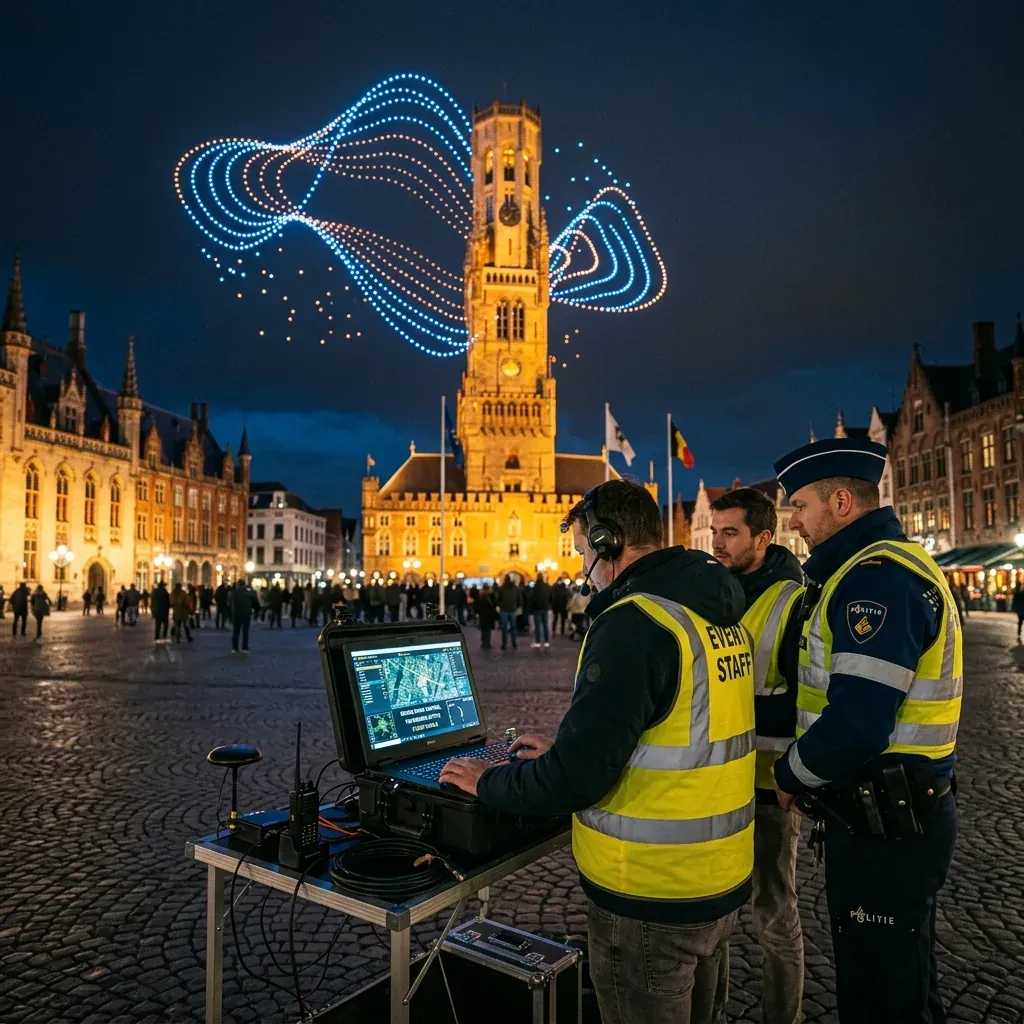
The rapid advancement in unmanned aviation offers unprecedented creative possibilities, ranging from complex aerial light shows to dangerous structure inspections. However, as the drone market grows, so does the frequency of regulatory violations that threaten national airspace safety. The Belgian federal aviation regulator, the Directoraat-generaal Luchtvaart (DGLV), has recently published a warning highlighting a series of highly concerning drone violations detected over the past year. The report reveals that authorities are encountering not only minor, localized rule-breaking but also large-scale illegal drone light shows and life-threatening high-altitude operations.
As the peak summer event season begins, with Belgium hosting massive international festivals such as Rock Werchter, Tomorrowland, and the Spa-Francorchamps Formula 1 Grand Prix, the authorities are warning pilots to strictly adhere to drone regulations. The DGLV has announced a significant ramp-up in monitoring and enforcement near large public gatherings. Non-compliant operators face heavy administrative fines, equipment confiscation, and potentially criminal prosecution for endangering civil aviation. (For massive public events like these, contracting a certified team for live broadcast & events is highly recommended to secure legal permissions).
Rise in drone safety incidents in Belgian airspace
Belgium has one of the most crowded airspace networks in Europe, heavily used by commercial airliners, military transports, and emergency services. The increasing presence of unauthorized drones represents a direct threat to mid-air safety. According to official data, there is a clear trend of both recreational flyers and commercial entities pushing the boundaries of the law, or choosing to bypass safety compliance processes altogether.
A collision between a drone and a manned aircraft, such as a search-and-rescue helicopter or a light utility plane, could easily result in a catastrophic accident. Because of this, European regulators, led by the European Union Aviation Safety Agency (EASA), are collaborating with national aviation bodies to enforce visual observer rules, implement Remote ID tracking, and roll out digital U-Space airspace management systems.
Primary drone infractions highlighted by the DGLV
The report from the Belgian aviation authority focuses on specific high-risk infractions that have raised immediate alarms among air traffic controllers. These incidents reveal that many operators are dangerously underestimating the risks of operating outside of legal parameters.
Unlicensed drone light shows and safety risks
One of the most notable findings in the DGLV report is the rise of unlicensed drone light shows. Coordinated drone shows, which fly dozens or hundreds of synchronized multirotors to create graphics in the night sky, have become a popular alternative to traditional pyrotechnics. However, because drone shows involve operating multiple aircraft under a single pilot, they are strictly prohibited in the Open Category and require a Specific Category operational authorization. The DGLV discovered multiple shows that were organized without any risk assessment, local coordinate planning, or flight authorization. Such uncoordinated flights pose immense risks of hardware failure directly above spectator crowds.
Extreme altitude violation at 500 meters
Another highly alarming violation involved a drone detected flying at a height of 500 meters (over 1,600 feet) above ground level. Across all European Union member states, drones flying in the Open Category are restricted to a maximum height of 120 meters. Operating at 500 meters places the drone directly in the flight path of commercial gliders, police helicopters, and medical transport flights. A mid-air collision at this altitude would be devastating, and operators who violate this limit are prosecuted to the full extent of the law.
Flights over assemblies of people and geozone intrusions
In addition to unauthorized shows and high-altitude flights, the regulator noted a persistent problem with drones flying directly over large public gatherings. Intrusions into temporary flight restriction zones (Geographical Zones or Geozones) set up around music festivals and critical infrastructure also remain common. Many operators claim ignorance of these restrictions, despite their public availability on aviation portal maps.
The regulatory framework for drone light shows and complex flights
Understanding the severe safety implications of these flights requires looking at the current EASA drone category structure. Under the standardized EU rules, flights are categorized based on risk: Open, Specific, and Certified. Operations that deviate from standard parameters, such as flying beyond visual line of sight (BVLOS) or executing swarm flights (as required for light shows), fall directly under the Specific Category.
Specific category and the SORA requirements
To fly under the Specific Category, operators must obtain an operational authorization from their respective national aviation authority (such as the DGLV in Belgium or the ILT in the Netherlands). This authorization is granted based on a detailed Specific Operations Risk Assessment (SORA). The SORA process requires the operator to evaluate ground and air risk classes, and implement corresponding safety mitigations. These mitigations include using certified flight termination systems, active geofencing, and utilizing professional, certified drone pilots with Specific Category training. Bypassing these requirements is a serious legal violation.
Enforcement and police operations during the festival season
To counter these safety risks, the DGLV is partnering with the Belgian federal police to carry out active enforcement. Authorities are using advanced radio frequency detection systems, such as Aeroscope, to identify drone telemetry signals in real-time, allowing them to instantly locate both the drone and the pilot on the ground. During major festivals, police units are deployed specifically to intercept unauthorized operators, seize equipment, and issue immediate penalties. The authorities have reiterated a zero-tolerance policy for drone flights near crowds or airports.
Comparing Open and Specific categories for drone flight operations
For both commercial operators and hobbyists, understanding the operational boundaries of each category is crucial to maintaining compliance:
| Parameter | Open Category (A1, A2, A3) | Specific Category (SORA / Standard Scenarios) |
|---|---|---|
| Maximum Altitude | Hard limit of 120 meters (400 feet) | Flexible (subject to airspace approval and authorization) |
| Number of Drones | Maximum of 1 drone per pilot | Multiple drones per pilot allowed (swarms/shows) |
| Flying Over People | Prohibited (limited close fly-by for A1 micro-drones) | Allowed under approved SORA risk mitigations |
| Authorization Requirements | No prior authorization required | Operational authorization (SORA) required |
| Line of Sight | Strict Visual Line of Sight (VLOS) required | Beyond Visual Line of Sight (BVLOS) allowed with approval |
The necessity of compliance for a safe airspace
The latest findings from the DGLV highlight that regulatory education and active hand-on enforcement are both required to maintain sky safety. While drone rules may seem strict, they are the only mechanism to ensure that the introduction of unmanned systems does not compromise the safety of manned aviation. Performing illegal drone swarms or high-altitude operations damages the reputation of the commercial drone industry and forces authorities to implement stricter, more costly limits. Commercial drone operators must take the lead by promoting compliance, completing SORA steps diligently, and operating with absolute safety as their top priority.
Frequently asked questions (FAQ)
Why are unlicenced drone shows considered a major hazard?
Drone light shows are highly complex swarms flying near crowds. If the synchronization software fails, or if there is localized signal jamming, drones can collide and fall onto spectators. Specific category authorizations guarantee that operators have fail-safes (like geofences and kill switches) to prevent injury.
What are the penalties for flying a drone at 500 meters in Belgium?
Flying at 500 meters is an aviation crime. Penalties include heavy fines (often in the thousands of euros), confiscation of the drone, and potential jail time if the flight endangers emergency services or commercial air traffic.
How do I check for active no-fly zones in Belgium?
Pilots must check official geographical maps provided by the Belgian aviation portal before flying. These platforms display permanent and temporary geozones around airports, military areas, industrial sites, and festival venues.