 NL
NL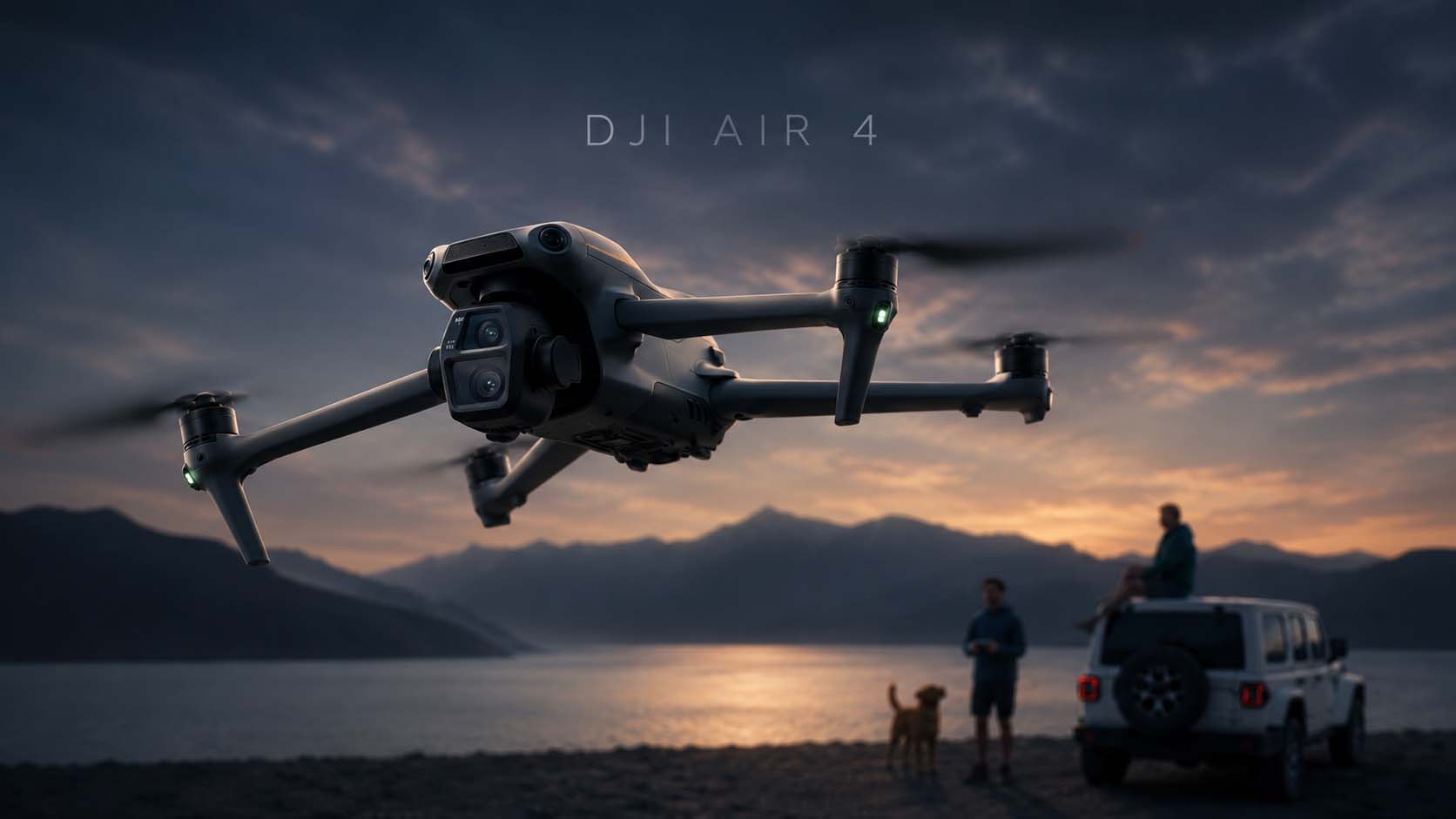
There appear to be new indications that DJI is working on a series of new drones that may be announced later this year or early next year. References to new models have surfaced in the Chinese CMIIT certification database. Specifically, this concerns the highly anticipated DJI Air 4 and an as-yet-unknown model with the striking designation N610BS, which many interpret as a potential DJI Avata 3 or an entirely new professional hybrid FPV drone.
For commercial drone operators and European aviation professionals, these registrations are an important indicator of the technological direction the market leader is taking. Despite recent geopolitical challenges in the United States, DJI continues to dominate in innovation, and the European market eagerly awaits the next generation of flying cameras.
Discovery of the DJI Air 4
The DJI Air series has been known for years as the sweet spot between the ultra-compact Mini series and the professional Mavic series. According to recent documents in the Chinese CMIIT (Ministry of Industry and Information Technology) registration system, the Air 4 is being intensively tested behind the scenes. Analysts and insiders in the drone industry expect a radical redesign compared to the Air 3.
Rumors point to a redesigned, aerodynamic airframe that should guarantee longer flight times and better wind resistance. In addition, DJI seems to be focusing on a more advanced camera sensor—possibly a 1-inch or even larger micro four-thirds (M4/3) sensor—to significantly improve low-light performance. Especially for European pilots who often fly in challenging weather conditions or have to deliver content during the dark winter months, this is a crucial upgrade. The arrival of better sensors also makes it easier to argue for safe flights within the EASA framework (Specific Category), as obstacle avoidance is heavily dependent on visual input.
Improved Obstacle Detection
In addition, it is expected that the DJI Air 4 will be equipped with an omnidirectional obstacle detection system that uses new AI algorithms. This would allow the drone not only to avoid obstacles but also to autonomously plan routes in complex environments such as forests or urban areas, without manual intervention. This offers tremendous benefits for inspection flights and dynamic video productions.
The Mysterious N610BS: An Avata 3 or New Category?
Perhaps the most intriguing news from the database is the appearance of a model called N610BS (and a variant called N610BS-BD). DJI's naming convention is normally very predictable: a "CZ" prefix is used for the Air series, for example, and a "QF" for the Avata models. The fact that this device carries the "N" prefix is causing much speculation on forums and within professional networks.
According to leading leakers and drone analysts, there are two main theories:
- DJI Avata 3: The "N" could stand for a complete redesign of the cinewhoop-style Avata line. A new chassis could help reduce noise, which is crucial for indoor flights in populated areas or during events (within the EASA Open A1 or A2 categories, depending on the weight).
- A New "Prosumer" Hybrid Drone: DJI could launch a new category that bridges the gap between enterprise inspection drones and fast FPV drones, similar to a heavier DJI FPV but with the sensor technology of the Inspire series. This would be a game-changer for high-speed pursuits or motorsport registrations in Europe.
European EASA Certification and Cx-labels
For European users, the final EASA Cx classification of these new devices is essential. It is highly likely that DJI will design the Air 4 to qualify for a C1 label (less than 900 grams), which means pilots are allowed to fly it in the A1 subcategory (flying over people allowed, but not over crowds). The DJI Avata series previously fell into the C1 class; a possible Avata 3 will undoubtedly have to meet the same strict noise and safety requirements.
When purchasing these future models, it is advisable for commercial operators to immediately verify the EASA Declaration of Conformity, as flying without a C-label since January 1, 2024, has drastically limited options within the Open Category to A3 (flying far away from people).
Market Impact: US vs Europe
Interestingly, these models are currently absent from the American FCC database. This fuels the theory that DJI might launch new products first or exclusively for the Asian and European markets. Due to increasing political pressure in the US—where legislation such as the "Countering CCP Drones Act" attempts to deny DJI access to the American market—Europe could well become DJI's most important strategic market in the West.
In Short
The discovery of the DJI Air 4 and the mysterious N610BS model in Chinese certification databases confirms that DJI is not sitting still. While the Air 4 is expected to further raise the standards for mid-range photography and videography with superior sensors and AI obstacle detection, the N610BS raises many questions. Is it the long-awaited DJI Avata 3, or is DJI introducing an entirely new segment? Whatever it becomes, the European market and regulations (EASA Cx labels) will determine how these drones can be used by professionals. We will be keeping a close eye on developments.
Frequently Asked Questions (FAQ)
When can we expect the DJI Air 4?
Although an official date is missing, certifications usually point to a release within three to six months. An announcement late in 2026 or early in 2027 is most likely.
Which EASA label will the DJI Air 4 get?
In all likelihood, DJI will aim for a C1 label (under 900 grams), making the drone highly suitable for the Open A1 category in Europe.
What is the N610BS?
The exact specifications are unknown, but it is believed to be a new iteration of the Avata FPV series (Avata 3) or an entirely new, heavier hybrid FPV drone.
Why aren't these drones in the FCC database?
This could be related to the timing of the applications or strategic decisions by DJI due to the strict regulations and potential bans on DJI drones in the United States.