 NL
NL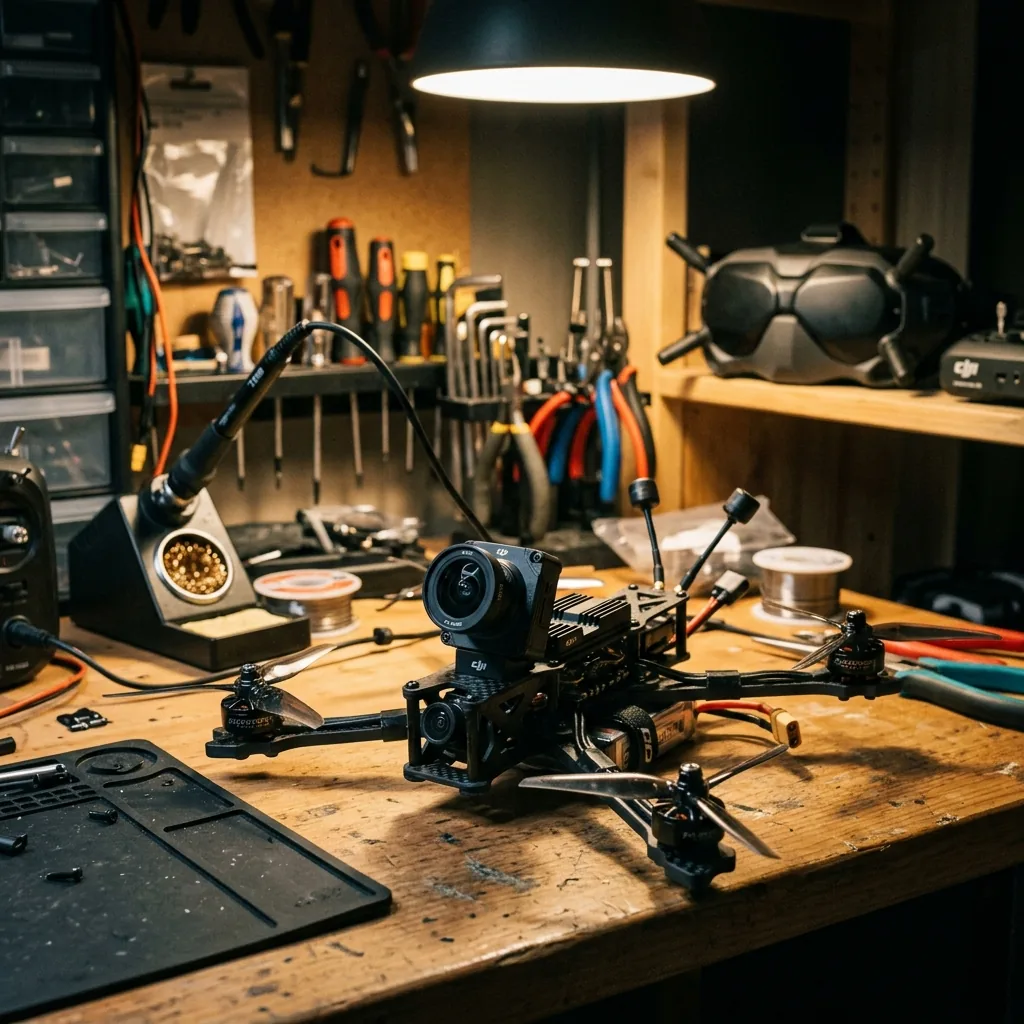
For pilots of custom and FPV (First Person View) drones, the camera's field of view is often just as critical as its overall image resolution. A wider perspective allows pilots to navigate obstacles faster and delivers a far more immersive flight experience. With this in mind, drone manufacturer DJI has introduced the latest addition to its digital FPV lineup: the DJI O4 Wide Air Unit. This ultra-wide video transmission system trades the standard camera lens for one that provides a sweeping 159-degree field of view, while preserving the 4K recording capabilities and low-latency performance of the original O4 system.
The new Wide model is built specifically for FPV pilots and commercial filmmakers who demand an expansive wide-angle shot without adding unnecessary bulk. Tipping the scales at 13 grams, the system is ideally suited for compact cinewhoop builds, which are frequently used for dynamic indoor fly-through video productions.
What is a digital FPV Air Unit?
For those unfamiliar with the DIY drone ecosystem, an Air Unit is not a complete drone. Instead, it is a standalone hardware kit comprising a digital camera and a video transmitter. Drone builders install these systems onto custom-built multirotors. The unit broadcasts a live high-definition video feed directly to compatible DJI FPV goggles while simultaneously recording high-resolution flight footage onto an onboard microSD card.
The DJI O4 digital transmission family first debuted in January 2025, bringing robust digital HD links to custom drone builds. While the standard O4 Air Unit is incredibly light at just 8.2 grams, the new Wide version weighs 13.0 grams due to its larger lens structure. Although slightly heavier, the expansive perspective it provides is a significant advantage for indoor cinematography and tight maneuvers.
The upgrade to a 159-degree field of view
The headline feature of the DJI O4 Wide Air Unit is its new camera lens. The field of view jumps from the standard model's 117.6 degrees to a broad 159 degrees. This creates a distinct wide-angle perspective highly favored in FPV cinema:
- Enhanced spatial awareness: The wider frame allows pilots to spot obstacles on the periphery earlier, which is vital during indoor fly-throughs or high-speed proximity flying.
- Increased speed sensation: A wider field of view naturally enhances the perception of speed, making action shots look faster and more dramatic.
- Reduced camera tilt: Because the lens captures more vertical space, pilots do not need to tilt their camera upward as aggressively to keep the horizon in view during fast forward flight.
Performance and specs of DJI O4 transmission
Aside from the new lens, the core performance specifications remain identical to the standard model. The O4 Wide Air Unit uses the same 1/2-inch image sensor, recording 4K video at up to 60fps. The live feed transmitted to the FPV goggles is a crisp 1080p at 100fps, compressed using the H.265 codec.
For racing pilots, transmission latency (the delay between the camera and the goggles) is vital. In the dedicated Racing Mode, the O4 system can lower latency to 15 milliseconds. The O4 Wide Air Unit itself achieves a highly responsive 20ms link. The system also supports up to eight drones flying simultaneously without channel interference, making it ideal for organized multi-pilot race events.
Comparing the DJI O4 Air Unit family
With the release of the Wide variant, DJI's DIY component line is divided into three distinct models, allowing pilots to choose the best option for their aircraft:
| Model | Weight | Field of View | Sensor & Max Video |
|---|---|---|---|
| DJI O4 Air Unit (Standard) | 8.2 grams | 117.6 degrees | 1/2-inch, 4K @ 60fps |
| DJI O4 Wide Air Unit | 13.0 grams | 159.0 degrees | 1/2-inch, 4K @ 60fps |
| DJI O4 Air Unit Pro | 18.5 grams | 135.0 degrees | 1/1.3-inch, 4K @ 120fps |
Regulatory compliance and operations in Europe
Even though FPV Air Units are targeted at custom-built hobbyist and commercial drones, flying them in Europe requires strict compliance with the European Union Aviation Safety Agency (EASA) regulations. Commercial FPV operations, such as indoor fly-throughs for real estate or brand promotions, typically fall within the Specific Category.
Under EASA, pilots flying in FPV goggles must have a visual observer (VO) standing next to them to monitor the surrounding airspace for other aircraft. Furthermore, the drone operator must complete a SORA (Specific Operations Risk Assessment) or operate under a standard scenario. High-quality digital links like DJI's O4 help establish robust operational control, mitigating safety risks during complex flights.
Frequently asked questions (FAQ)
Is the O4 Wide Air Unit backwards compatible with older DJI Goggles?
The O4 system is built to work with the DJI Goggles 3 and the DJI FPV Remote Controller 3. Always check DJI's official firmware release notes to confirm compatibility with legacy hardware.
How do I correct the fisheye distortion in post-production?
The 159-degree lens introduces minor barrel distortion. This can be corrected using standard lens correction profiles in video editing software, or kept as-is for a raw, immersive action look.
Is the Wide Air Unit too heavy for tinywhoops?
At 13.0 grams, it is slightly too heavy for micro 1S tinywhoops (which usually weigh under 30g total). However, it is an excellent fit for 2-inch cinewhoops and larger FPV builds.