 NL
NL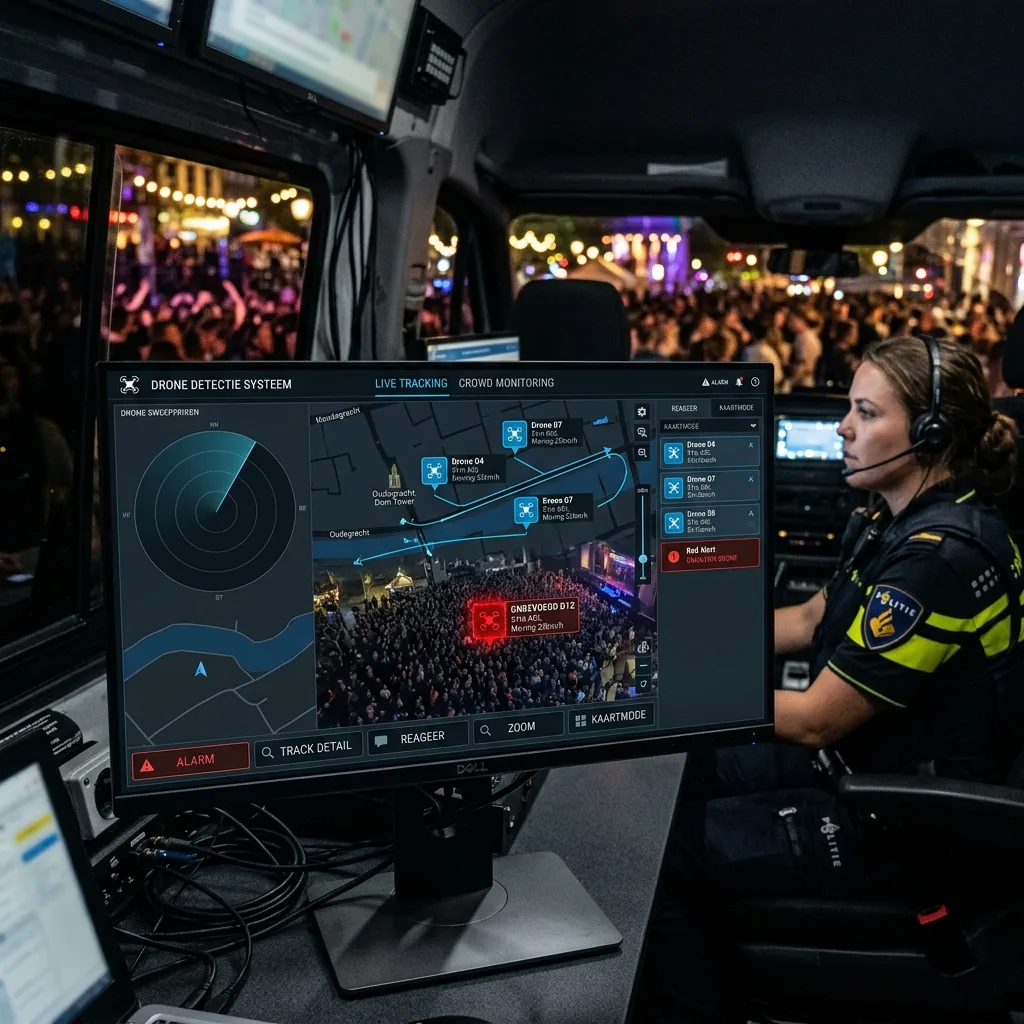
Large-scale public events in the Netherlands are implementing tighter security measures, and not just on the ground. This year, during the Vierdaagsefeesten in Nijmegen, local police will deploy a state-of-the-art drone detection system for the first time. The goal is to monitor the airspace above the city center day and night for the entire seven-day festival. Although authorities state there is no concrete threat, this preventative measure aims to mitigate potential safety hazards from unauthorized recreational drones. Our certified drone pilots highlight the critical importance of keeping airspace clear during crowded public gatherings.
The deployment of this tracking technology comes in response to the growing popularity of consumer drones. Flying drones over dense crowds without proper operational authority poses significant risks to public safety, and can easily disrupt medical or emergency helicopter operations. By utilising dedicated monitoring gear, police can react immediately if an unauthorized pilot attempts to launch a drone.
System capabilities and surveillance range
The temporary drone detection setup operates by scanning the radio frequencies used to control unmanned aircraft. The system is capable of detecting and tracking drones and their controllers within a radius of several kilometers around the Grote Markt in Nijmegen. This allows authorities to identify the exact flight path of the aircraft and, in most cases, pinpoint the coordinate location of the operator on the ground.
When an unauthorized signal is intercepted, officers receive real-time telemetry data showing the positions of both the drone and the controller. This direct tracking allows patrol units to quickly locate the pilot, issue warnings, confiscate equipment, or issue fines for airspace violations. This immediate enforcement is significantly more effective than post-event investigations.
Strict regulations: crowd overflight restrictions
While drone flights are generally permitted in certain sections of Nijmegen under standard European rules, strict restrictions apply during the festival week. According to the regulatory framework established by the EASA, flying drones directly over assemblies of people is strictly prohibited for standard operators. With hundreds of thousands of visitors expected to gather in the historic city center, legal flights in these areas are practically impossible for recreational pilots.
These flight restrictions apply universally to all drones, including micro-drones weighing under 250 grams. Many consumer pilots assume that light weight exempts them from rules, but national guidelines from the Inspectie Leefomgeving en Transport (ILT) clarify that operating above crowds remains illegal and carries heavy penalties due to safety risks.
Whitelisting and exceptions for certified operators
To avoid interfering with legitimate operations, police use a 'whitelist' registry. Drones deployed by emergency services, festival organizers, or accredited media teams can register their telemetry and control signatures. This allows the detection system to filter out safe, authorized flights and enables security teams to focus exclusively on unknown or potentially hazardous aircraft.
Authorized professional operators must possess specific operational authorizations. Companies like Drone Department execute complex aerial operations utilizing registered equipment and highly trained crews. This authorization is vital when conducting a live broadcast & events production or coordinating large-scale drone light shows. Such operations require comprehensive flight planning and prior approvals from aviation authorities.
Safety risks and police enforcement actions
The deployment of drone detection is primarily about maintaining safety for the thousands of event attendees. A drone falling into a crowded street due to signal loss, component failure, or a depleted battery can cause severe personal injury. Additionally, illegal drone flights often delay emergency helicopter crews, which must have clear flight paths when responding to urgent medical incidents.
Pilots who violate airspace restrictions during the Vierdaagsefeesten risk fines reaching thousands of euros, along with the immediate seizure of their drone equipment. The police urge recreational enthusiasts to leave their drones at home during the event and keep the airspace clear for emergency services.
An increasing trend in event airspace security
The introduction of drone detection in Nijmegen reflects a wider European trend to secure the skies above major public gatherings. Similar technology has been successfully deployed at the Formula 1 Dutch Grand Prix in Zandvoort and during the Wereldhavendagen in Rotterdam. For high-end events, including light displays like drone shows, active airspace monitoring is critical to prevent rogue drones from colliding with choreographed show fleets.
| Drone Category | Weight Class | Flight Over Crowds | Detection Risk (Nijmegen) |
|---|---|---|---|
| Consumer / Toy Drones | < 250 gramsStrictly Prohibited | Very High (Active tracking) | |
| Semi-Professional | 250g - 25kgStrictly Prohibited | Very High (Active tracking) | |
| Certified (Specific) | VariablePermitted (Whitelisted) | Registered (No intervention) |
A new standard for public safety in the skies
By implementing active drone detection during the Vierdaagsefeesten Nijmegen, police are establishing a modern approach to event security. Airspace monitoring is transitioning from sensitive military bases and commercial airports into standard crowd management protocols for major public festivals. These measures ensure a safer environment for visitors on the ground and authorized aircraft in the sky.
For the professional drone sector, this active enforcement is a positive development. It helps segregate unauthorized hobbyists from certified commercial operators who adhere to safety codes, ensuring professional operations run safely. As Nijmegen prepares for a week of celebrations, advanced technology is helping keep the skies safe for everyone.
Frequently asked questions about drone detection
Why are police using drone detection at the Vierdaagsefeesten?
The system is deployed to prevent unauthorized drones from flying over large crowds and to ensure that emergency helicopters can operate without risk of mid-air collisions.
Can I fly a drone weighing under 250 grams in Nijmegen during the event?
No. Under EASA regulations, flying drones over crowds is illegal for recreational operators, regardless of the drone's weight. Due to the high density of festival-goers, flights are not allowed.
How do police identify a drone pilot's location?
The system scans the radio signals transmitted between the drone and the controller. This allows police to determine the exact GPS coordinates of both the drone and the pilot on the ground.
What are the penalties for illegal drone flights?
Piloten violating regulations risk immediate equipment confiscation and significant fines issued by aviation prosecution services under national aviation acts.