 NL
NL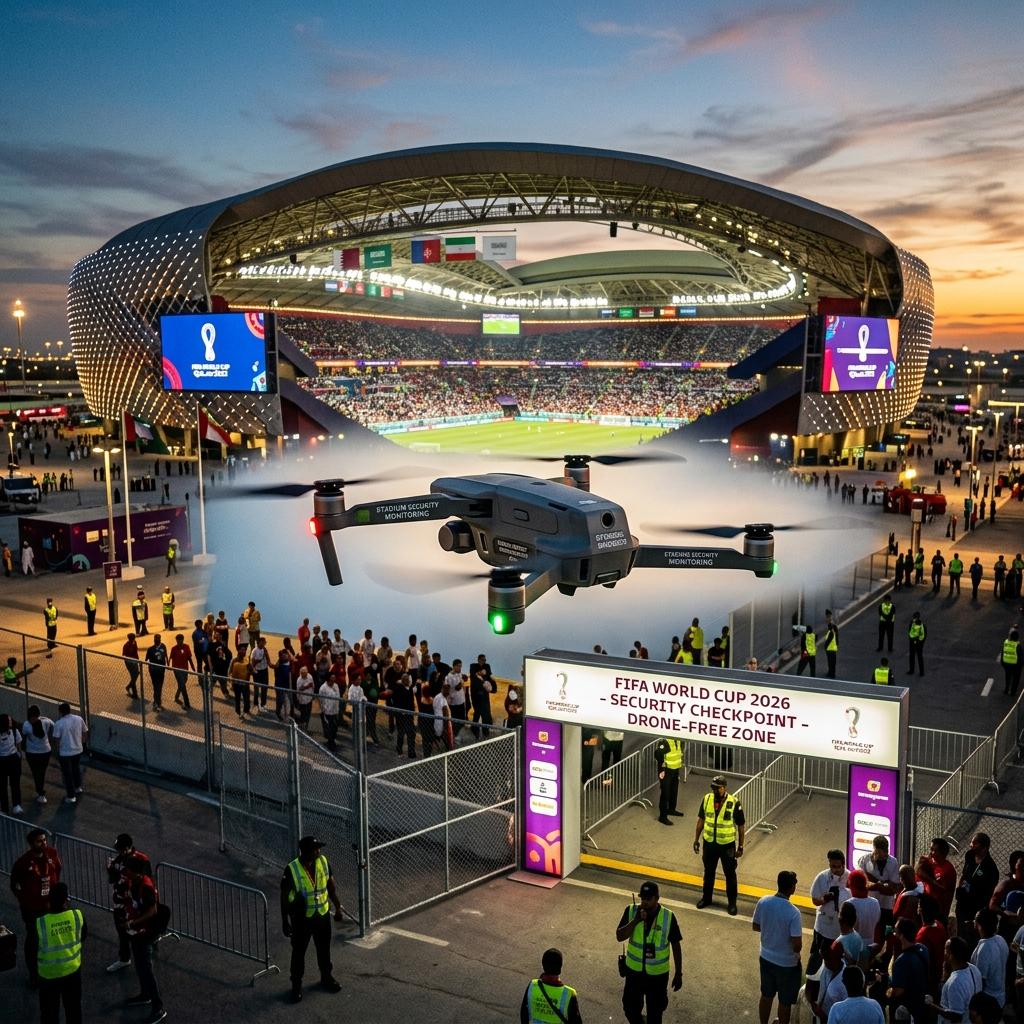
Securing massive sporting events is facing a new, technological frontier. According to recent reports, US authorities have detected a staggering 1,139 unauthorized drone flights near venues related to the upcoming FIFA World Cup. In response to these incursions, law enforcement has seized over 500 drones to ensure the safety of spectators and players alike.
These impressive figures highlight the growing concern surrounding drone activities near large crowds. While the drone industry continues to boom with rapid innovation, government agencies and security services are struggling to enforce temporary and permanent no-fly zones (TFRs) around stadiums.
The Scale of the Security Challenge
As the World Cup approaches, the United States, Canada, and Mexico are bracing for millions of visitors across numerous host cities. The FBI, FAA (Federal Aviation Administration), and local police departments are heavily deploying counter-drone measures (C-UAS). The active use of these systems has already resulted in the detection of over a thousand drones violating established security perimeters.
The vast majority of these incidents do not involve malicious actors, but rather oblivious hobbyists and commercial pilots attempting to capture aerial footage of stadiums or events. According to the US FAA and similar agencies like EASA in Europe, ignorance of airspace rules remains the primary cause of these violations. This underscores a pressing need for improved education and warning systems, such as enhanced geofencing in applications from leading manufacturers like DJI and Autel.
Seizures and Legal Consequences
Detecting a drone is merely the first step; actually neutralizing or seizing it is a far more complex process. In over 500 incidents in the US, authorities have successfully confiscated the equipment. This is often achieved by locating the pilot using advanced tracking systems (such as AeroScope) and forcing the flight to abort. Pilots involved risk not only losing their (often expensive) drones but also face steep fines and potential criminal prosecution.
Technology vs. Technology: C-UAS Systems
The rapid proliferation of drones is forcing security agencies to invest heavily in advanced Counter-UAS (C-UAS) technologies. These systems range from radar and radio frequency scanners that intercept communication between the drone and its controller, to more physical solutions like net-firing drones or signal jammers.
- Detection: Identifying a drone early via radar or RF signals, often from miles away.
- Identification: Determining whether the drone is a known, authorized flight (e.g., official broadcast media).
- Mitigation: Safely grounding the drone without endangering the crowd below, such as by commandeering its control signal (spoofing).
However, these technologies are not without controversy. Disrupting signals in urban environments can have unintended consequences for other wireless communications, including equipment used by emergency responders. Close coordination is required, as outlined in global drone threat research by INTERPOL.
Relevance for European Drone Operators
While this specific news takes place in the United States, the situation is highly relevant for European operators. Within the EASA framework (such as the Open and Specific categories), strict rules apply to flying over assemblies of people. During major events in Europe, such as the Olympic Games or European football championships, similarly strict no-fly zones are enforced.
For commercial drone operators, this necessitates a proactive approach. Applying for flight authorizations well in advance, closely monitoring NOTAMs (Notices to Airmen), and maintaining good communication with local authorities are essential to prevent expensive professional drones from mistakenly being classified as threats and downed by C-UAS systems.
Securing the Skies for Future Tournaments
The seizure of 500 drones sends a powerful message from US authorities: illegal drone flights around massive events simply will not be tolerated. It emphasizes that airspace security has evolved in tandem with the rise of consumer drones. Both recreational flyers and professional operators must be aware of this strict enforcement, as ignorance is not a valid excuse when the safety of thousands of spectators is on the line. Adhering closely to laws and regulations remains the only way to fly safely and legally in today’s complex airspace.
Frequently Asked Questions (FAQ)
Why are drones banned near stadiums?
Drones pose a direct safety risk to large crowds. A technical failure could result in a crash onto spectators. Additionally, security services view them as a potential security threat.
What happens if I accidentally fly into a no-fly zone (TFR)?
Depending on the country and the specific zone, your drone may be jammed or neutralized. Furthermore, you risk having your equipment confiscated, facing hefty fines, and criminal prosecution.
How do I know if a temporary no-fly zone is active?
Always check official aviation authority apps or consult current NOTAMs. Do not rely solely on your drone's built-in geofencing, as it may sometimes lag behind temporary restrictions.
Are there exceptions for official media or commercial operators?
Yes, but these require extensive prior approval, the submission of a risk analysis (such as SORA in Europe), and strict coordination with air traffic control and event security.