 NL
NL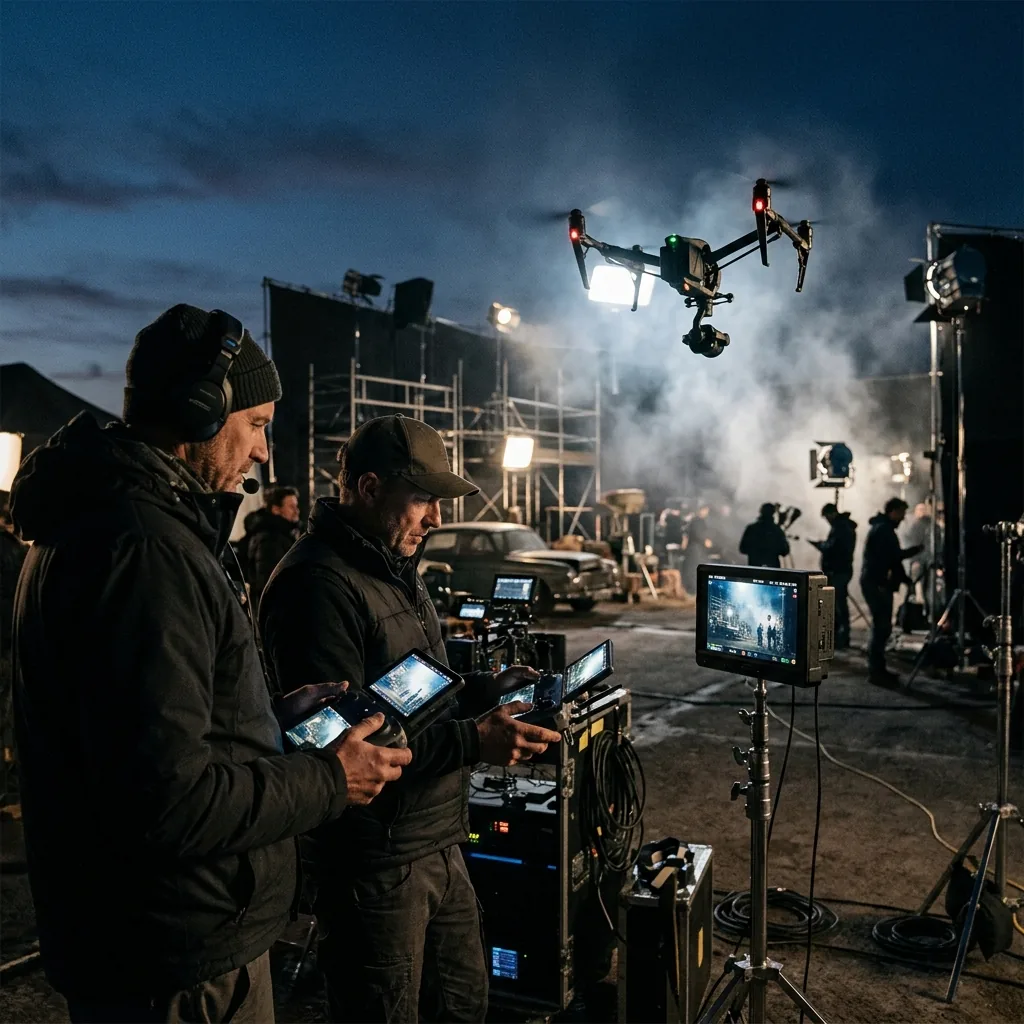
In the world of high-end cinematography, the DJI Inspire 3 represents the pinnacle of aerial camera movement. This professional drone, equipped with the full-frame Zenmuse X9-8K Air gimbal camera, is specifically engineered to meet the strict demands of feature films, drama series, and premium commercials. One of the core pillars of its operational success on movie sets is its advanced dual-operator workflow. While a single operator is often forced to compromise between flight path safety and visual framing, the Inspire 3 allows for a complete separation of duties. By pairing two independent controllers to a single aircraft, a fluid, real-time collaboration is established between the pilot and the camera operator.
This independent gimbal control is invaluable when shooting complex scenes involving fast-paced action, vehicle chases, or precise structural fly-throughs. The technical foundation of this setup relies on a highly stable, low-latency transmission link and a smart distribution of live video feeds. It allows the pilot to focus entirely on maneuvering the aircraft using a dedicated FPV (First Person View) camera, while the camera operator exercises complete control over the Zenmuse X9-8K Air's composition, framing, and lens settings. This technical synergy drastically elevates the capabilities of [cinema drones](../services/cinema-drones.html) on set.
The Operational Need for Dual-Operator Systems in Cinema
On professional feature film sets, every camera move is designed to serve the narrative. Cinematographers (Directors of Photography) craft complex movement paths that must follow actors or match set geometry perfectly. When a single drone pilot attempts to fly the aircraft and tilt or pan the camera at the same time, subtle errors are common. Correcting a flight line while keeping a pan smooth often results in jerky movements or missed frames. It also introduces safety risks when operating close to actors or set decorations.
By shifting to a dual-operator workflow, this high cognitive load is halved. The pilot is tasked solely with flight path safety, speed control, and navigation, while the camera operator focuses on composition. This allows for smooth, independent pans, tilts, and rolls that are completely decoupled from the drone's flight vector. As a result, production crews can execute shots that previously required expensive and rigid camera cranes. This is why directors select experienced crews and [professional drone pilots](../services/drone-pilot-team.html) to manage these advanced workflows.
The Technical Foundation: DJI O3 Pro Transmission
Splitting pilot controls and video feeds requires a powerful wireless transmission protocol. DJI equipped the Inspire 3 with the O3 Pro transmission system, which supports dual-control mode. In this mode, two DJI RC Plus controllers connect directly to the aircraft. Unlike older drone models that utilized a master-slave configuration (where the secondary remote depended on the primary remote's signal), both remotes on the Inspire 3 link directly and independently to the drone's onboard transceivers.
This means the camera operator's video feed and controls remain stable even if the pilot's remote experiences physical obstructions or local signal dips. The O3 Pro link supports a transmission range of up to 15 kilometers in single-user mode, and maintains a highly stable, high-bandwidth connection over short set distances in dual-user setups. Both operators receive a clear 1080p live feed at 60 fps with an end-to-end latency of less than 90 milliseconds, ensuring near-instantaneous feedback. This makes the [DJI Inspire 3](dji-inspire-3-ultimate-cinema-drone-in-2026.html) a highly responsive tool for demanding film sets.
Decoupling Visuals: FPV Pilot Feed vs. 8K Cinema Gimbal
Proper division of visual feedback on set is vital for flight safety and creative execution. The pilot navigates using a custom-engineered FPV camera featuring a wide-angle lens and a larger sensor for improved low-light performance. This camera is fixed to the nose of the drone and does not move with the main gimbal. This ensures the pilot always has a clear view of the drone's travel vector and local obstacles, regardless of where the main cinema camera is pointed.
Conversely, the camera operator views the feed from the Zenmuse X9-8K Air. This cinema gimbal is capable of 360-degree continuous panning and deep tilting thanks to the Inspire 3's retractable landing gear. When the carbon-fiber arms lift, the camera operator gains an unobstructed view in all directions. This allows the operator to track subjects behind the drone while the aircraft travels forward, or to shoot lateral tracking shots while the drone moves in a straight line, decoupled from the camera's orientation.
Control Handoff and Accessory Integration on Set
A key feature of the Inspire 3 dual-operator setup is its control handoff capability. If a pilot needs to hand over camera control, or if an emergency requires one remote to seize master flight control, the handoff can be completed instantly with a button press on either RC Plus controller. This flexibility enhances safety and allows operators to adjust to changing shooting conditions on the fly.
Additionally, the Inspire 3 integrates with industry-standard cinema accessories, such as the DJI Three-Channel Follow Focus and DJI Master Wheels. This allows the camera operator to use high-precision physical wheels to control the gimbal, mirroring traditional camera crane operations, while a focus puller (1st AC) manages the DL-mount lenses on a separate channel. This structure divides the aerial shoot into three dedicated roles: flying, framing, and focusing, matching the exact workflow used for traditional A-cameras on major film productions.
Comparing Single-Operator and Dual-Operator Aerial Workflows
To highlight the operational and creative differences between these two approaches, the following table compares key technical parameters:
| Operational Metric | Single-Operator Workflow | Dual-Operator Workflow (Inspire 3) |
|---|---|---|
| Pilot Cognitive Load | Split between flight path and framing | 100% focused on flight safety and speed |
| Framing Flexibility | Limited to flight direction and simple tilts | Unrestricted 360-degree pan and tilt |
| Live Video Feeds | One feed on one screen (switching required) | Independent FPV and 8K cinema feeds |
| Crew Collaboration | Hard to adjust composition mid-flight | Real-time voice sync between pilot and DoP |
| Feature Film Suitability | Low (limited to simple establishing shots) | Excellent (capable of complex action shots) |
Frequently Asked Questions (FAQ)
How does the dual-operator system work on the Inspire 3?
It uses two DJI RC Plus controllers connecting directly to the drone. The pilot flies using a fixed FPV nose camera, while the camera operator controls the main X9-8K Air camera.
Is there video latency between the two controllers?
The O3 Pro transmission system keeps latency under 90ms for both controllers, providing near-instant visual feedback for smooth, synchronized camera movements.
Can a focus puller control focus independently?
Yes, the setup supports follow-focus units and DJI Master Wheels, allowing a focus puller to manage lens focus on a separate channel while the operator frames the shot.
What happens if one controller loses connection?
Because both controllers connect independently to the drone, a connection loss on one remote does not affect the other. Control can also be handed off instantly if needed.
The Standard for Cinematic Execution
The DJI Inspire 3's dual-operator workflow proves that modern cinema drones are fully integrated movie production tools. Decoupling flight navigation from camera framing allows filmmakers to capture shots that were once physically impossible. Supported by O3 Pro transmission, independent control links, and follow-focus systems, this workflow ensures flawless execution on set. For production houses and cinematographers aiming for visual excellence, deploying an experienced dual-operator drone crew is key to translating creative concepts into cinematic reality.