 NL
NL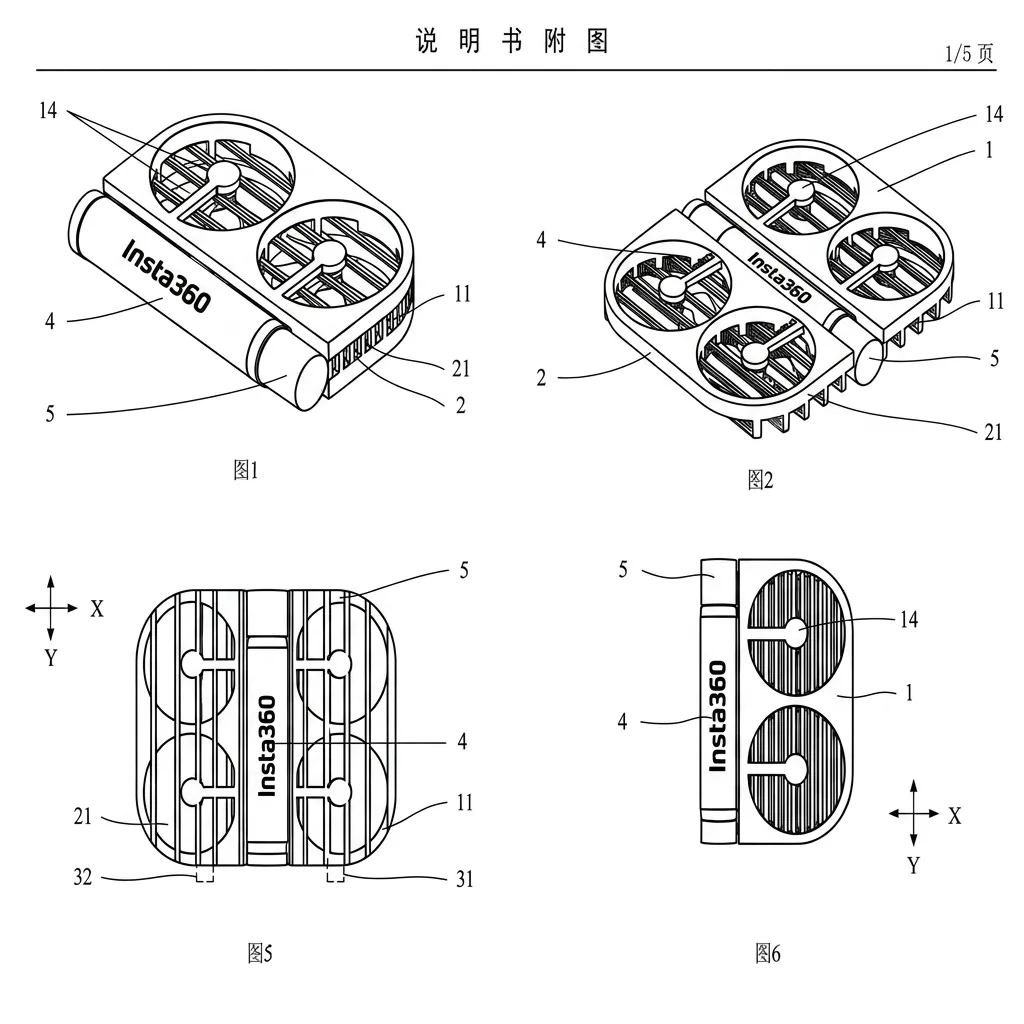
The landscape of compact consumer drones has undergone a massive transformation in recent years, sparked by the introduction of miniature, self-flying cameras built specifically for content creators. The action camera giant Insta360, globally recognized for its industry-leading 360-degree cameras and modular action gear, appears to be preparing a direct assault on the territory of industry leader DJI. A newly published patent cataloged under reference number CN223865117U has surfaced, detailing an ultra-portable, foldable drone prototype. The designs display close structural similarities to the popular DJI Neo series, hinting at an aggressive push to challenge the rumored DJI Neo 2.
With the meteoric rise of vertical video content across TikTok, Instagram, and YouTube Shorts, creators are constantly searching for fast, autonomous, and portable tools for quick aerial shots. Up to this point, DJI has held a tight grip on the sub-250-gram selfie-drone niche with its DJI Neo line. The discovery of Insta360 securing design patents for a rival model featuring enclosed propeller guards and a unique folding mechanism indicates that the brand sees a path to disrupt DJI's dominance by elevating product portability.
A new contender in the compact drone market
The drone industry has seen a strong shift from heavy, high-maintenance quadcopters toward micro-drones that require no pilot licenses and can be operated by anyone. Insta360 is not entirely new to this space, having previously designed action cameras for custom FPV drone builds and experimented with drone technology in their earlier Antigravity A1 development cycle. Engineering a dedicated creator drone is a natural step to give their user base a fully integrated content creation suite.
According to initial document analysis, the Insta360 concept is structured as a pocket-sized quadcopter. The drone is designed to be launched directly from the palm, track the user autonomously using onboard vision sensors, and land back on the hand without requiring a traditional RC transmitter. Utilizing Insta360's extensive background in artificial intelligence, computer vision, and digital stabilization, this new drone could prove to be a serious challenger to DJI's established ecosystem.
Analyzing the patent and prototype details
The patent, first reported by tech sites, provides comprehensive diagrams of the new vehicle. The most significant departure from the DJI Neo is the physical frame layout. While the DJI Neo utilizes a rigid, non-folding frame, Insta360's patent details a smart folding structure that allows the drone's arms to pack tightly against the main chassis, making it much more space-efficient during transit.
Foldable arm mechanism
The patent describes a pivot mechanism integrated into the main chassis, allowing the front and rear motor arms to rotate inward. When fully folded, the drone achieves a completely flat profile. This addresses a common complaint regarding the DJI Neo, which remains somewhat bulky to pack because its wide propeller guards are permanently fixed to the frame.
Ringed propeller guards and structural design
The diagrams and leaked prototype images show a stealthy black chassis surrounded by ringed propeller guards that completely enclose the rotors. This design ensures safe operation when flying close to people, inside tight spaces, or during quick hand-takeoffs. A prominent Insta360 logo is visible on the top plate of the prototype, indicating that development is well underway. The prototype has reportedly been spotted in outdoor test sites, indicating that Insta360 is actively evaluating its flight characteristics in real-world environments.
The corporate rivalry between Insta360 and DJI
The tension between DJI and Insta360 has been building for years. Both Shenzhen-based technology firms are competing aggressively for the creator market. When DJI launched the Osmo Action camera line, it encroached directly on Insta360's core action camera business. Insta360's move to launch a consumer drone is a classic counter-offensive, taking the fight directly to DJI's home turf of camera drones.
Patent lawsuits and market competition
This rivalry has extended beyond product releases into the legal system. Both companies have filed mutual patent infringement lawsuits in international courts, particularly in the United States and China. These disputes focus on core camera gimbal mechanics, data transmission systems, and tracking algorithms. Despite these legal frictions, both manufacturers continue to push the boundaries of product design, resulting in faster innovation cycles that ultimately benefit drone consumers.
Technical comparison: Insta360 patent concept vs DJI Neo
While final hardware specifications for the Insta360 drone have not been officially confirmed, we can build a comparison based on the patent details and current competitive landscape:
| Specification | DJI Neo (Current Generation) | Insta360 Patent Concept (CN223865117U) |
|---|---|---|
| Frame Design | Rigid frame (fixed arms) | Rotational folding arms |
| Propeller Guarding | Integrated ring guards | Fully enclosed ringed guards |
| Stabilization | RockSteady / HorizonSteady | FlowState stabilization technology |
| Control Methods | Mobile app, voice, RC, autonomous | Autonomous tracking, smartphone, gesture control |
| Packability | Moderate (cannot reduce size) | High (folds flat for pocket carry) |
European drone regulations and open category operations
For European operators, keeping up with the rules of the European Union Aviation Safety Agency (EASA) is essential. Given the target demographic of a lightweight selfie camera, it is highly likely that the production version of this Insta360 drone will weigh under the critical 250-gram threshold. This sub-250g weight limit is a significant milestone for drone users in Europe. It allows hobbyists and professional creators to fly their aircraft in many areas where heavier drones are strictly banned or require complex operational permissions. Keeping the weight low ensures that the drone can be flown with minimal bureaucratic friction, which is key for spontaneous content creation.
EASA C0 class rules and operator guidelines
Assuming the drone falls under the 250-gram limit and secures a C0 class certification mark, it will operate within the Open Category (subcategory A1). This makes compliance much simpler for casual creators:
- No pilot certificate required: Under 250 grams, pilots are not legally mandated to complete the official EASA A1-A3 theory certificate, though reading the user manual remains a requirement.
- Operator registration: Since the drone carries an image sensor capable of recording personal data, the owner must register as a drone operator and display their operator ID sticker on the drone chassis.
- Flights near people: Subcategory A1 allows flying close to uninvolved individuals, but flying over active crowds remains prohibited.
The evolution of creative aerial cinematography
The introduction of a foldable pocket-sized drone from a major competitor represents a massive win for mobile filmmakers and creators. By combining their established FlowState stabilization algorithms with deep AI tracking software (such as Deep Track), Insta360's drone could make capturing cinematic b-roll effortless. Whether it can challenge DJI's market share will depend heavily on real-world battery performance, camera sensor quality, and retail price. In either case, the competition is set to trigger a wave of innovation that will benefit the entire creative community.
Frequently asked questions (FAQ)
When will the Insta360 foldable drone be released?
Because this product is currently in the patent stage (CN223865117U), Insta360 has not announced an official launch date or pricing. Patent applications do not always result in a commercial launch, but active field testing indicates high likelihood of future release.
Do I need a license to fly the Insta360 drone in Europe?
If the production weight stays under 250 grams, no theory exam is needed. However, you must register as an operator due to the onboard camera and follow all local flight restrictions and EASA open category guidelines.
What are the advantages of a folding design over fixed-wing selfie drones?
The folding arm mechanism allows the drone to be compressed into a much flatter shape, protecting the propeller guards and making it vastly easier to carry in pockets or compact camera bags.