 NL
NL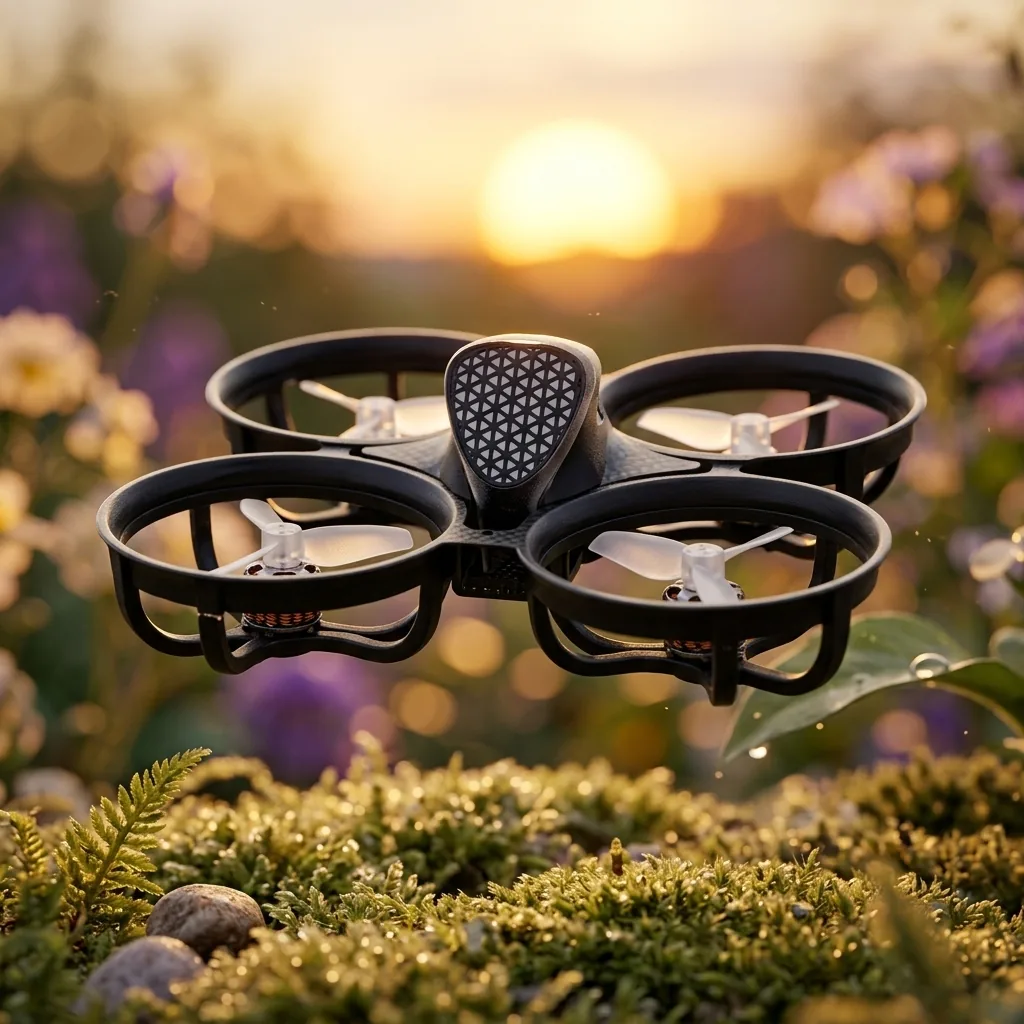
Mosquito eradication is on the verge of a technological revolution. A team of innovative engineers has built an autonomous micro-drone designed specifically to track and intercept mosquitoes mid-air. This technology has been developed by the startup Tornyol, an ambitious company backed by the renowned startup accelerator Y Combinator. The goal is to provide a sustainable, chemical-free alternative to traditional insecticides, mitigating the spread of deadly mosquito-borne diseases.
While our work in the commercial drone industry typically centers on heavy payloads, such as those used for cinema drones or custom enterprise integrations like custom drones, this project proves how effective micro-drones can be when paired with onboard artificial intelligence. Weighing only 40 grams, this drone is one of the smallest autonomous aerial interceptors ever built.
How the mosquito-hunting micro-drone works
The drone relies on a combination of acoustic sensors and AI software. Rather than using power-hungry optical cameras, it monitors its environment using smartphone-grade microphones and ultrasonic sensors, similar to parking-assist systems. This allows the micro-drone to listen for the distinct acoustic wingbeat frequency of flying mosquitoes.
By analyzing the micro-Doppler signature of nearby insects, the onboard system distinguishes target mosquitoes from beneficial species like bees or wasps. Once a target is identified, the drone autonomously maneuvers toward the insect and intercepts it using the physical impact of its high-speed spinning propellers, offering a non-toxic alternative to chemicals.
A major milestone in autonomous insect interception
Recently, the Tornyol team, led by founders Clovis Piedallu and Alex Toussaint, successfully demonstrated their first autonomous air-to-air takedown. During a controlled test, the micro-drone autonomously identified and neutralized a flying moth. While this early phase relied on external motion-capture hardware to assist with spatial coordinates, the startup is rapidly moving toward fully onboard embedded processing.
Ultimately, the company plans to deploy swarms of these micro-drones within residential spaces to patrol rooms and eliminate mosquitoes on contact. Under EASA drone categories, sub-250g drones carry minimal operational restrictions, making them ideal for indoor domestic use.
The global fight against mosquito-borne diseases
The development of mosquito-hunting drone swarms has a significant humanitarian focus. According to global health reports from the World Health Organization (WHO), mosquitoes are the deadliest creatures on Earth, transmitting malaria, dengue fever, Zika, and West Nile virus, which collectively cause hundreds of thousands of deaths annually.
Traditional chemical spraying leads to environmental degradation and insect pesticide resistance. A physical, mechanical control method bypasses these challenges entirely. The founders estimate that low-cost micro-drone swarms can potentially reduce the cost of large-scale mosquito control by 100x, offering scalable disease prevention.
| Feature | Chemical Pesticides | Tornyol Micro-Drones |
|---|---|---|
| Environmental Impact | Chemical runoff, harms non-target insects | 100% eco-friendly mechanical control |
| Target Selectivity | Kills beneficial insects like bees | Acoustic wingbeat signature filtering |
| Resistance Build-up | Mosquitoes develop chemical resistance | Physically impossible to build resistance |
| Long-term Cost | Requires recurring chemical purchases | One-time hardware deployment |
Engineering challenges and aerial robotics
From the perspective of professional drone pilots, the level of precision in a 40-gram aircraft is remarkable. Tracking a fast-moving, unpredictable target like a mosquito requires responsive motors, high-frequency flight controllers, and efficient sensor arrays to process telemetry data in milliseconds.
Although these systems operate indoors, their underlying technology paves the way for advanced micro-robotics in other sectors. We are likely to see more autonomous micro-drones in the future executing specialized indoor inspections and precision tasks, expanding standard aviation use-cases.
An ecological shift in pest management
Combining mechanical target tracking with acoustic AI represents a paradigm shift in pest management. Tornyol's prototype demonstrates that complex ecological problems can be resolved without chemical intervention. As the hardware becomes more compact and battery technology improves, these systems could become a household safety standard.
We are watching these developments closely. Miniature autonomous drone technology is not only expanding what is possible in robotics but is showing practical potential to solve significant global challenges, one micro-flight at a time.
Frequently asked questions about the mosquito drone
How heavy is the drone, and is it safe to fly indoors?
The drone weighs only 40 grams. Its minimal mass makes it safe to fly in domestic environments, and propeller guards are planned to prevent any accidental contact with humans.
Will the drone attack other insects like bees?
No. Using micro-Doppler acoustics, the drone identifies the specific wingbeat signature of mosquitoes, avoiding non-target beneficial insects.
How does the drone neutralize the mosquito?
The drone intercepts the target in mid-air, utilizing the mechanical impact of its fast-spinning propellers to eliminate the insect.
When will Tornyol's system be available for consumers?
The company is currently refining its onboard navigation chip. Commercial pilots and release timelines will follow once tests are concluded.