 NL
NL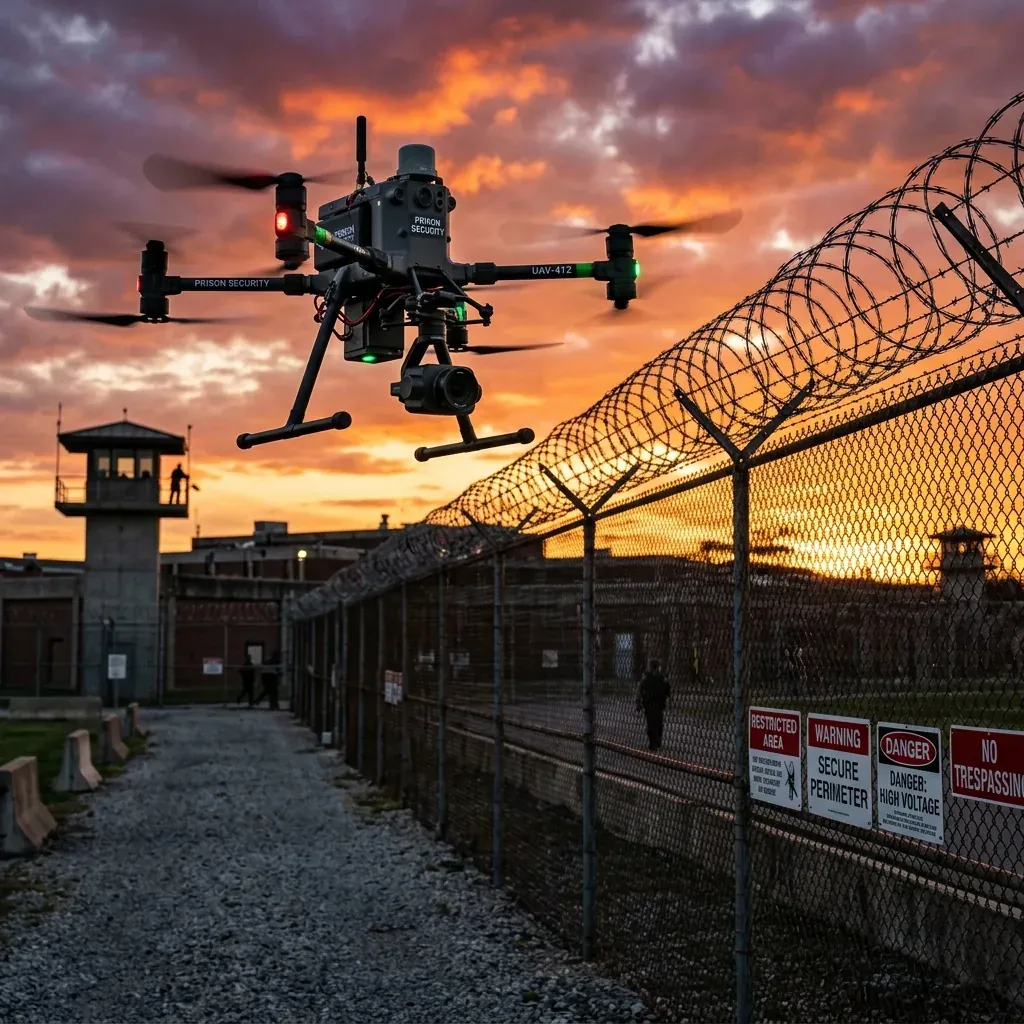
Starting July 1, 2026, the Dutch Custodial Institutions Agency (DJI) will be granted new legal powers to directly neutralize unauthorized drones and other unmanned systems. This authority is specifically activated when unmanned platforms present a direct threat to the safety and security of high-security prisons across the Netherlands. Personnel will be permitted to disrupt or physically disable these systems if a concrete hazard exists and less intrusive measures are ineffective.
Combating contraband smuggling and escapes
The new authorization is codified via a revision to the Penitentiary Institutions Force Regulations (Geweldsinstructie penitentiaire inrichtingen). Until now, custodial authorities depended entirely on external entities, such as local police force support, to neutralize incoming drones. Because requesting law enforcement assistance introduces critical response delays, it was practically impossible to intercept quick drop-offs over prison compounds.
According to State Secretary Claudia van Bruggen (Justice and Security), criminal syndicates are constantly seeking new vectors to smuggle illegal contraband, including narcotics, communication devices, and weapons. Drones have emerged as a primary tool for these activities. Equipping correctional facility personnel with defensive capabilities enables instantaneous action against deliveries, making it easier to combat organized crime executed from within prison walls.
Limited to high-security facilities
This counter-UAS authority is strictly restricted to correctional facilities configured with an extra or extensive level of security. This includes:
- Extra Beveiligde Inrichting (EBI) in Vught: The highest-security prison housing high-risk inmates.
- Terrorism Wings (TA): Specially secured sectors located within key facilities.
- Ground, sub-surface, and water-based systems: Remarkably, the authority covers all unmanned vehicles, allowing staff to act against ground-crawling or water-borne automated systems if they pose a security threat.
The exact technologies and countermeasures deployed by DJI remain confidential for security reasons. Deployments are expected to range from digital signal jamming (disrupting GPS/RF control links) to kinetic physical neutralization.
The challenges of drone identification
Despite the security advantages, the measure introduces operational challenges. Correctly identifying a drone at range, particularly in high-stress scenarios, is difficult. There is a real risk that defensive actions could be taken against benign hobbyist drones flying too close to restricted boundaries or even non-UAS objects.
This concern is supported by recent events. During the European "drone panic" in late 2025, numerous reports of hostile drones turned out to be false alarms. Notably, at the Borris military range in Denmark, defensive shots were reportedly fired at a commercial passenger aircraft after it was misidentified as a drone. This incident highlights the difficulty of air-target identification under pressure.
Implications for professional operators
For certified operators like Drone Department, the rules are clear: flying near no-fly zones (and high-security facilities in particular) remains strictly prohibited without prior authorization from civil aviation authorities and facility administrators.
As an EASA Specific category operator, Drone Department coordinates all missions using official airspace maps (such as GoDrone/Airmap) to ensure our cinematic operations remain safely clear of penitentiary boundaries. This new directive serves as a reminder that airspace security is tightening, and unauthorized systems near critical installations will face immediate neutralization.