 NL
NL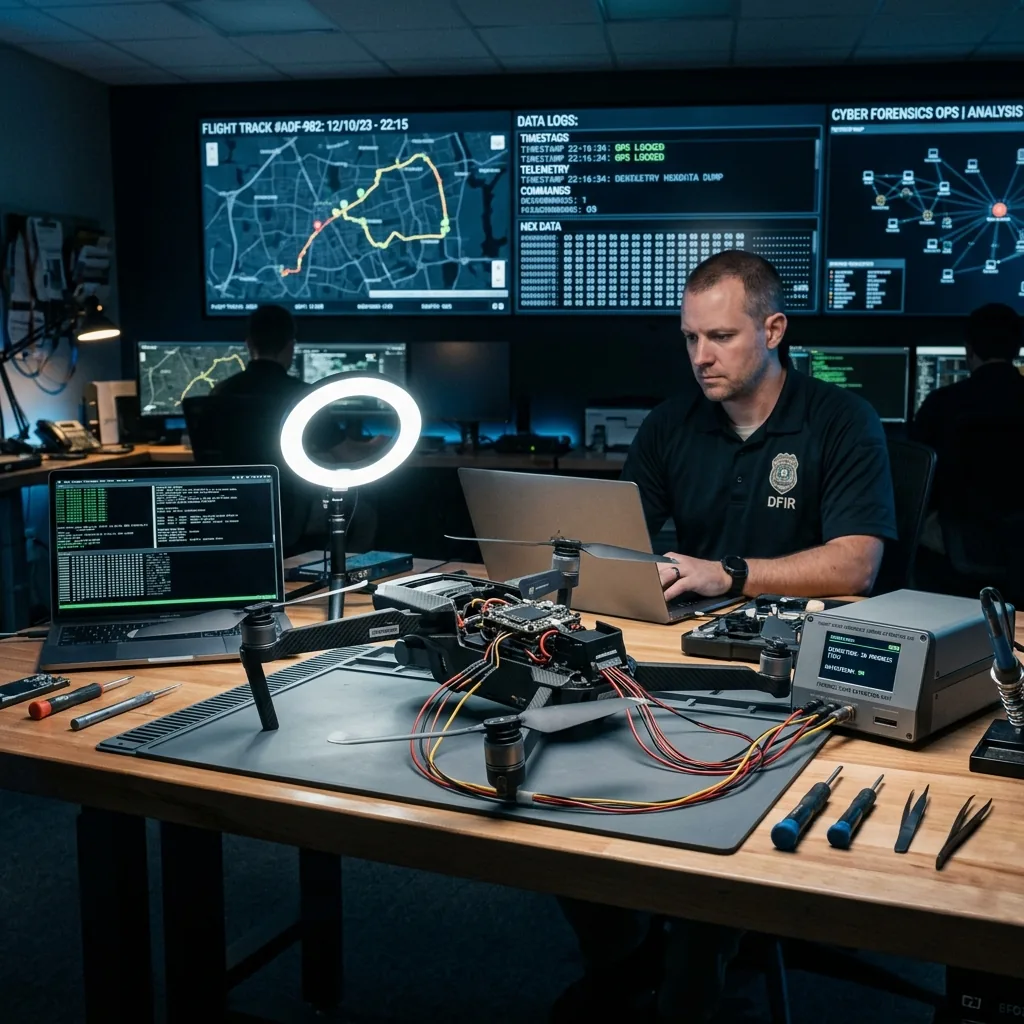
Investigating and prosecuting unauthorized drone flights is one of the most significant challenges facing modern law enforcement and security personnel. When a suspicious drone is spotted near an airport, prison, or sporting venue, identifying the operator and gathering enough solid evidence for prosecution is often incredibly difficult. Even if the physical aircraft is recovered, investigators are usually left to manually correlate data from different, unconnected systems to piece together the event. Digital forensics specialist Cellebrite is looking to change that.
The leading mobile and computer forensics provider has expanded its partnership with drone tracking and intelligence specialist SkySafe. The expanded collaboration is designed to integrate live airspace monitoring and historical flight telemetry directly into Cellebrite's comprehensive digital forensics suite. This allows law enforcement agencies to connect what happens in the sky with the data recovered from the drone's internal storage, providing a complete, unified narrative of drone-related security breaches.
The development follows a series of moves by Cellebrite to strengthen its capabilities in the rapidly growing field of unmanned aerial vehicle (UAV) investigations. Earlier this year, in March, Cellebrite entered the drone forensics sector by acquiring the forensic business of SCG Canada, whose technology enables data extraction from more than 80 popular commercial and consumer drone models. By incorporating SkySafe's Cloud-based sensor network, Cellebrite is transitioning from post-incident device analysis to a holistic, real-time investigation platform.
The rise of drone-related security threats and the need for forensic evidence
Across the European Union, unauthorized drone activity continues to pose serious challenges near critical infrastructure, airports, and correctional facilities. These activities have prompted stricter regulatory adjustments in several European nations, such as granting new powers to prison staff authorized to bring down drones. However, neutralizing a drone is only a temporary fix. To prevent future incursions and deter organized operations, security agencies must identify the operators and gather evidence that holds up in a court of law.
Conventional investigation methods fall short because operators can control aircraft from several kilometers away, leaving no physical trace at the scene. Establishing a strong chain of custody that links the pilot's control device to the drone's flight log at the exact moment of the violation has been a major legal bottleneck. By linking live tracking logs with physical device forensics, prosecutors can now prove the origin, flight path, and control signature of a specific drone, leaving no gaps for defense arguments.
For certified operators navigating the airspace under the European Union Aviation Safety Agency (EASA) guidelines, robust enforcement platforms are a positive step. They protect the integrity of the airspace, distinguishing professional operations from rogue flyers. This is particularly vital for enterprise services that operate in urban or controlled environments, such as our team's specialized aerial work for live broadcasts and events, where airspace coordination is tightly managed.
Technical mechanics of the combined forensic platform
The integration coordinates data streams from two previously separate domains: active radio frequency (RF) monitoring and offline media forensics. During a flight, SkySafe's distributed sensor grid captures the drone's Remote ID transmissions, active RF telemetry, altitude, velocity, and the live GPS coordinates of the remote controller. This information is uploaded in real time to secure, cloud-based servers.
Once a drone is seized or recovered from a crash, Cellebrite's forensic extraction tools retrieve internal data, including flight logs, GPS waypoints, EXIF data from captured images, and onboard communication histories. The platform then automatically correlates the device's internal logs with the sensor records captured during the flight. This automated process confirms that the physical hardware matches the broadcasted telemetry, establishing a highly reliable chain of custody for legal proceedings.
| Feature | Real-Time Monitoring (SkySafe) | Device Forensic Extraction (Cellebrite) |
|---|---|---|
| Data Category | Live RF signals, Remote ID metadata, and telemetry | Internal flash storage, media files, and system logs |
| Tracking Focus | Real-time flight path and live operator location | Historical home points and system records |
| Identification | Active radio signatures and MAC addresses | Serial numbers, firmware info, and metadata |
| Primary Function | Early warning, alert systems, and threat mitigation | Post-incident evidence gathering and verification |
EASA regulations, Remote ID, and airspace enforcement in Europe
The integration of live tracking and device forensics directly supports EASA's U-space initiative, which aims to safely integrate drones into European airspace alongside manned aircraft. Central to this initiative is the Remote ID mandate, which requires most drones operating in the Specific and Open categories to broadcast their identity and location. Airspace monitoring grids like SkySafe detect these signals, while digital forensics verify their accuracy, preventing operators from using spoofed or altered IDs to bypass regulations.
For professional drone pilots, stricter handovers and improved forensic tools help clean up the market. Gaining permissions for BVLOS (Beyond Visual Line of Sight) flights and urban operations is easier when authorities have the tools to swiftly address non-compliant flyers. It provides a level playing field where safety rules are enforced, reducing risk for commercial enterprises, scientific research, and search-and-rescue teams.
Furthermore, these integrated systems are highly beneficial for corporate security audits and critical asset protection. Port authorities, energy grids, and chemical facilities can utilize this data to assess industrial espionage attempts. Post-recovery analysis can determine if a drone was carrying unauthorized payload sensors, signal-sniffers, or customized communications equipment, transforming drone investigations into a critical part of cybersecurity protocols.
A new standard for aviation security and digital forensics
The expanded partnership between Cellebrite and SkySafe represents a major milestone in airspace security and digital investigations. By merging real-time sensor intelligence with post-flight data analysis, this platform changes how drone incidents are investigated. It shows that in a connected world, physical hardware and digital logs are part of the same investigation workflow, providing enforcement agencies with the speed and accuracy they need.
As U-space frameworks expand across Europe and critical infrastructure facilities face new digital and physical security challenges, the demand for unified drone forensics will continue to grow. Combining live telemetry with physical extraction sets a new standard for airspace enforcement, ensuring that commercial aviation and drone operations can safely co-exist within a secure regulatory framework.
Frequently Asked Questions (FAQ)
What is the goal of the Cellebrite and SkySafe partnership?
The partnership integrates SkySafe's real-time airspace monitoring and Remote ID data with Cellebrite's digital forensics tools, enabling investigators to match physical drone logs with active flight tracking data.
How do investigators locate a drone operator?
SkySafe's tracking grid detects RF signals to determine the real-time coordinates of the drone and its controller, which is later matched with the internal logs of the seized drone to identify the pilot.
What data can be extracted from a recovered drone?
Cellebrite's extraction tools, backed by SCG Canada technology, can retrieve GPS logs, home point registers, flight logs, EXIF data from media files, and system configuration directories.
Is this technology compliant with European privacy regulations?
Yes, the collection and analysis of flight telemetry for airspace security and law enforcement purposes are subject to strict legal frameworks, ensuring compliance with local laws and GDPR guidelines.