 NL
NL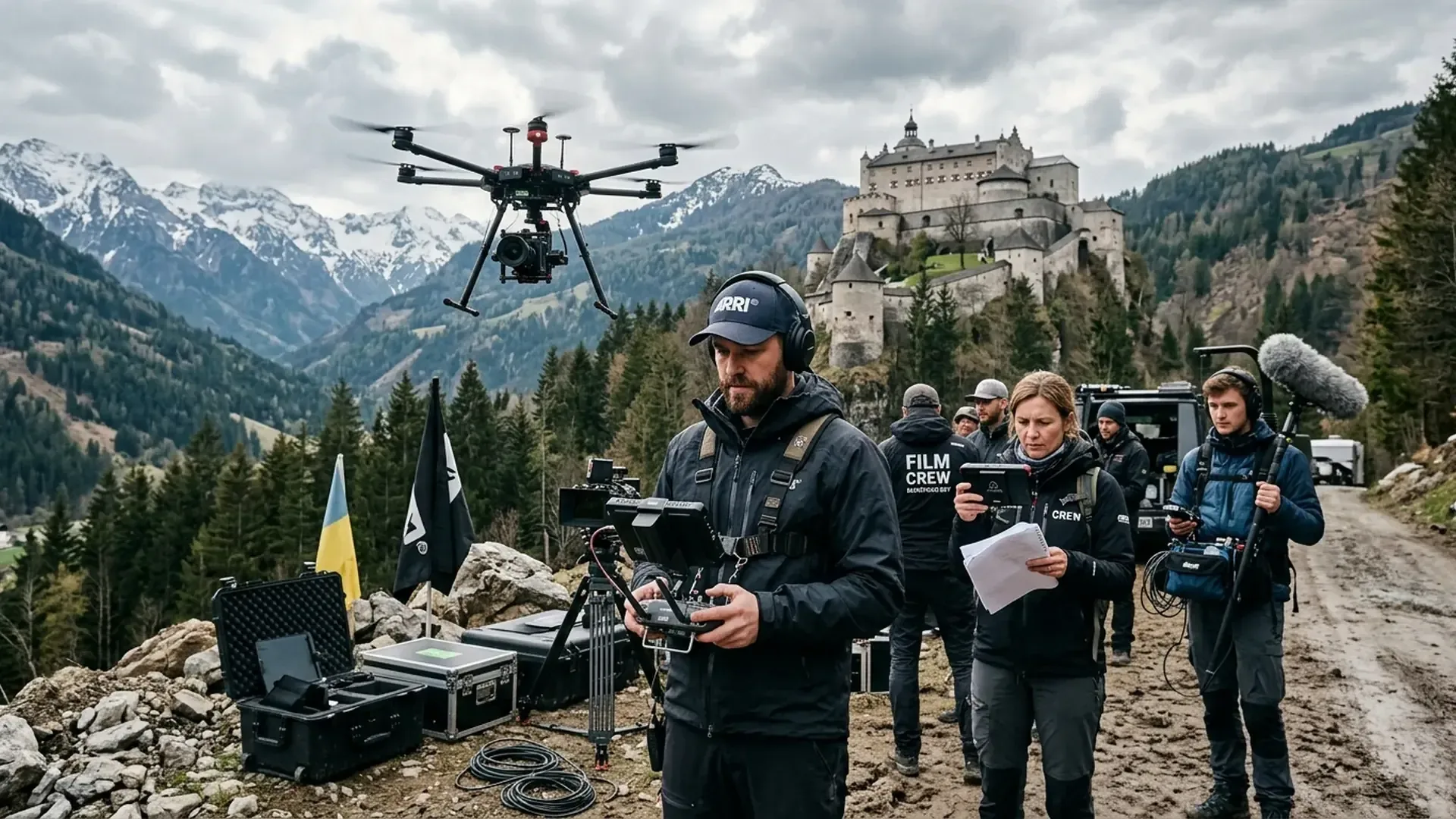
International feature films, high-budget television series, and global commercial campaigns demand rapid mobility across European borders. A production crew might be capturing chase sequences along the Amsterdam canals on Monday, filming alpine landscapes in Austria on Wednesday, and shooting commercial yacht scenes in the French Riviera by the weekend. Historically, flying professional cinema drones across national borders was a bureaucratic nightmare, with fragmented national regulations, redundant flight tests, and approval lead times taking up to six months.
The implementation of harmonized European drone regulations under the EASA (European Union Aviation Safety Agency) framework—specifically Commission Implementing Regulation (EU) 2019/947—has revolutionized commercial drone operations. Through Article 13 of this regulation, certified drone operators holding an operational authorization in the Specific category can seamlessly deploy their crew and equipment into any other EU member state. This article breaks down how the cross-border procedure works in practice, the operational advantages it brings to international production houses, and the essential considerations for filming across Europe.
Unified European Airspace for Commercial Drone Cinematography
Prior to EU-wide harmonization, drone operators had to submit individual operational manuals, undergo duplicate national audits, and secure country-specific insurance policies for every single European destination. This created immense friction for fast-moving film schedules and added significant administrative costs. An authorization granted in one country carried zero legal weight in another.
Under the modern EASA framework, mutual recognition of operational authorizations is legally guaranteed across all 27 EU member states, alongside EASA associate countries including Norway, Iceland, Liechtenstein, and Switzerland. An operational authorization issued by a National Aviation Authority (such as the Dutch Inspectie Leefomgeving en Transport - ILT) establishes a trusted baseline of airworthiness, pilot competency, and risk management that other European Civil Aviation Authorities (CAAs) accept without re-evaluating core manuals. Our certified drone pilots operate under this standardized European safety foundation.
This does not mean operators can fly without prior notice in foreign airspace, but it fundamentally streamlines the review process. Foreign aviation authorities only assess site-specific local mitigations (such as local airspace coordinates and temporary flight restrictions) rather than re-auditing the entire operator. As a result, lead times are compressed from months into just a few business days.
How the Article 13 Cross-Border Notification Procedure Operates
The mechanism for executing international commercial flights in the Specific category is established under Article 13 of Regulation (EU) 2019/947 ("Cross-border operations or operations outside the state of registration"). The application follows a standardized four-step workflow:
- Step 1: Submission of EASA Cross-Border Application: The operator completes the standardized EASA application form accompanied by a certified copy of their active operational authorization (such as a Specific Category SORA or PDRA permit).
- Step 2: Documentation of Local Mitigations: The operator details location-specific mitigations for the intended shoot (exact flight area coordinates, local NOTAM reviews, emergency response plans, and air traffic control coordination protocols).
- Step 3: Verification by the Host CAA: The National Aviation Authority of the destination country (such as the DGAC in France, the LBA in Germany, or ENAC in Italy) verifies only the adequacy of the local mitigations for the specified geozone.
- Step 4: Issuance of Confirmation of Receipt: Upon successful verification, the host authority issues an official confirmation of receipt, allowing flight operations to commence immediately in full regulatory compliance.
European Standard Scenarios such as STS-01 (visual line-of-sight flights over a controlled ground area in a populated environment) or STS-02 (beyond visual line-of-sight flights with airspace observers) also shorten the review, but they do not remove it: the operator still submits the required cross-border notification, including the local mitigations, to the authority of the state of operation before flying.
Comparison: Cross-Border Operations vs. Open Category and Legacy Frameworks
The comparative breakdown below highlights the operational advantages of the EASA Specific Cross-Border mechanism compared to basic Open category flying and legacy national permitting:
| Operational Feature | Open Category (A1/A2/A3) | Legacy National System | EASA Specific (Article 13) |
|---|---|---|---|
| EU-Wide Deployment | Instant but heavily restricted | Full re-application per nation | Harmonized notification via Article 13 |
| Heavy Cinema Payloads (>4 kg) | Prohibited near people/urban areas | Complex local airworthiness checks | Fully permitted (Inspire 3, RED, ARRI) |
| Controlled Airspace (CTR) | Strictly prohibited | Lengthy local approvals | Direct 2-way VHF air traffic coordination |
| Night Flights (Outside UDP) | Subject to local restriction zones | Separate night exemption required | Included when authorised in the permit (green blinker) |
| Permit Lead Time | N/A (cannot fly heavy cinema) | 2 to 6 months per country | A few days to 2-3 weeks maximum |
Managing UAS Geozones, NOTAMs, and Air Traffic Control in Foreign Airspace
While overarching drone regulations are fully standardized across the European Union, the governance of local geographic zones (UAS geozones) remains under the jurisdiction of each individual member state. Every country publishes dynamic digital geozone data showing active no-fly zones, military corridors, national parks, and industrial security perimeters. To explore the diverse digital airspace maps across Europe, review our comprehensive guide on European drone regulations and drone maps.
Furthermore, operating in controlled airspace (CTR) or near busy international airports requires direct operational coordination with local Air Traffic Control (ATC). Mastery of standardized ICAO English aviation radiotelephony and familiarity with local aeronautical terminology ensure seamless communication with tower controllers. Direct VHF radio integration allows controllers to slot cinema drone flights smoothly between commercial traffic without delaying the production crew.
Deploying Certified Cinema Equipment for Cross-Border Shoots
Achieving the full potential of international operations requires drone platforms that satisfy the rigorous airworthiness criteria of the EASA Specific category. For high-end film and commercial projects, Drone Department utilizes our certified fleet of cinema drones, including the DJI Inspire 3 with the full-frame Zenmuse X9-8K Air camera. These aircraft incorporate triple-redundant IMUs, centimeter-accurate RTK positioning, and certified Flight Termination Systems (FTS parachutes) mandatory for close-proximity flights near talent and crew.
For high-speed automotive and action cinematography, custom-engineered heavy-lift cinema FPV drones carry full-frame cinema cameras such as the RED Komodo or Sony FX6. International brand activations and drone shows also benefit directly from the EASA Specific framework, enabling synchronized swarm telemetry and risk analyses to be approved under standardized European guidelines.
Frictionless Cinema Production Through Proactive Compliance
The EASA Specific framework and Article 13 cross-border procedures have transformed the European aerial cinematography industry into a unified, highly efficient market. Directors, production companies, and global brands no longer need to navigate fragmented local suppliers in every country; they can partner with a single, trusted European drone operator capable of delivering identical safety, compliance, and image quality across the entire continent.
Through proactive airspace filing, deep understanding of national geozones, and the deployment of premium cinema technology, regulatory roadblocks are eliminated. This leaves the creative team free to focus on what matters most on set: capturing breathtaking cinematic imagery from above, regardless of where in Europe the story unfolds.
Frequently asked questions about cross-border drone operations
What is Article 13 of Commission Implementing Regulation (EU) 2019/947?
Article 13 is the European regulatory framework that enables drone operators holding an operational authorization in the Specific category in one EU member state to execute operations in any other EU member state through mutual authorization recognition.
Does an EU Specific authorization apply to non-EU nations like Switzerland and Norway?
Yes. As EASA member countries, Norway, Iceland, Liechtenstein, and Switzerland have adopted harmonized European drone regulations, making Article 13 cross-border notification procedures applicable in their airspace.
How long does it take to secure cross-border flight clearance in Europe?
Using standard EASA notification templates, cross-border clearances generally take between several business days to two or three weeks, depending on local airspace complexity and air traffic control requirements.
Are night flights permitted during cross-border operations?
Yes, provided night flight privileges are authorized in the operator's home Specific category permit and the aircraft is equipped with an EASA-compliant flashing green navigation light (green blinker).
What is the main difference between Open category and Specific cross-border flights?
The Open category is strictly limited to light aircraft and prohibits flights near uninvolved people, in urban centers, or with heavy cinema packages. The Specific cross-border framework allows certified operators to fly heavy cinema drones (like the DJI Inspire 3) in cities, near crews, and in controlled airspace across Europe.