 NL
NL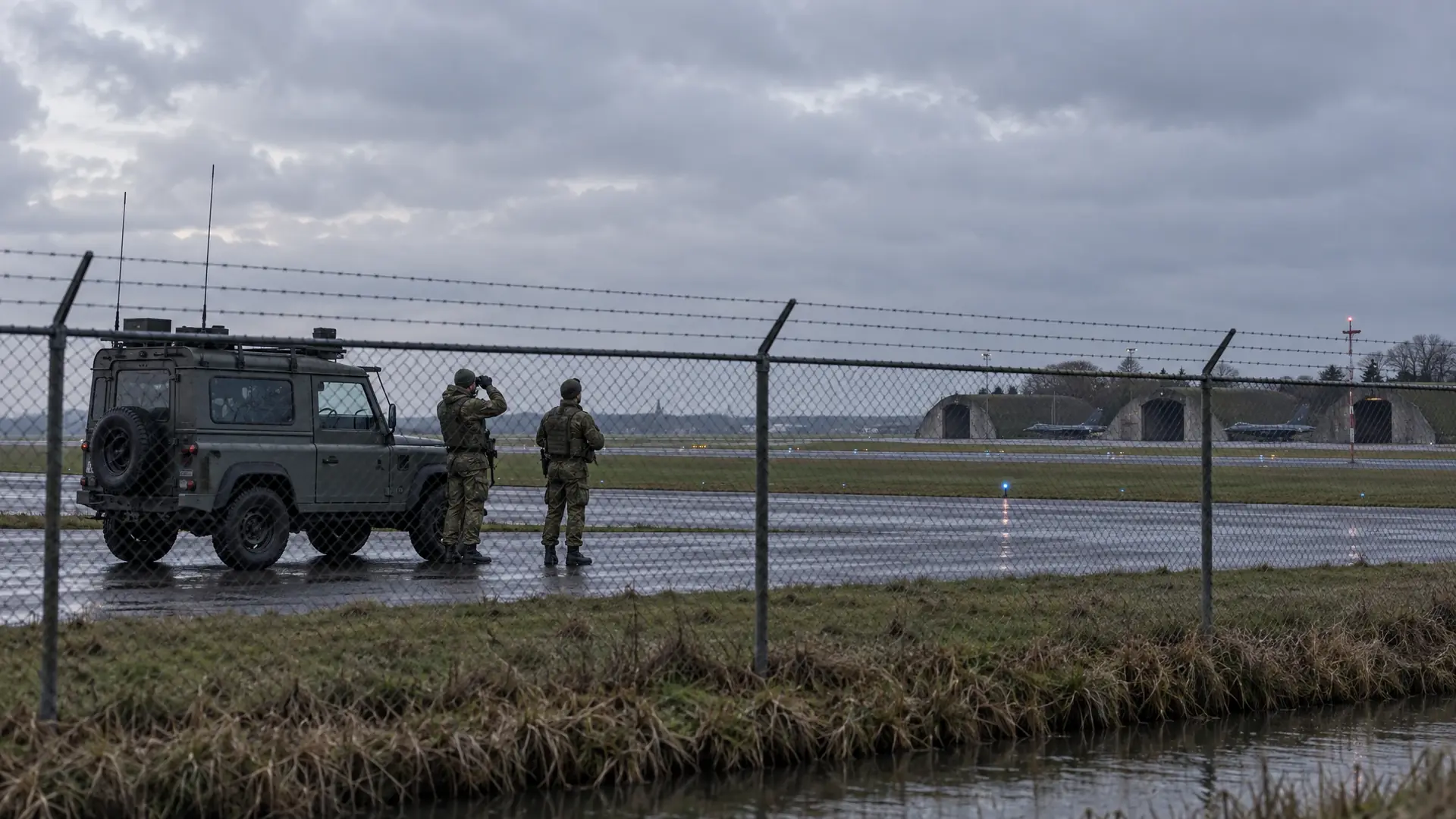
The Dutch Ministry of Defence is refusing to answer substantive questions about the drone incidents that disrupted the airspace around Dutch airbases and airports in late 2025. Broadcaster RTL Nieuws filed a request under the Open Government Act (Woo) and received a decision explaining that disclosure would reveal the nature, scale and frequency of the observations and the strengths and limits of Dutch drone detection. The broadcaster has said it will appeal.
The result is that one of the most discussed security questions of the past year remains largely unresolved. What exactly hovered over Volkel, Eindhoven and other locations, how many of the reported objects were actually drones and whether further incidents occurred after November 2025 all remain behind closed doors. At the same time, the ministry had earlier released an internal memo showing how seriously it assessed the situation, including preparations for the use of firearms against unmanned aircraft.
What RTL Nieuws asked and what Defence withheld
The request focused on the drone reports of November 2025 and their aftermath. RTL Nieuws asked what else the ministry knows about these drone incidents and whether more of the same incidents have occurred since November 2025. On both points the answer is withheld.
In the decision, published on the national disclosure portal, Defence hints that more material exists. A separate overview of observed objects catalogues the sightings, and it will not be released. The ministry argues that disclosure could reveal how the Netherlands detects drones and where that capability falls short. Anyone who knows which objects are and are not noticed also knows how to avoid detection.
The argument reverses the usual logic of the Act, which treats openness as the default and secrecy as the exception. Where a question has dominated public debate for months, the burden of proof sits with the ministry. The fact that information says something about detection capability is not by itself a ground for refusing everything, since disclosure can also take the form of an anonymised or partial release.
The internal memo of 6 November 2025: from counter-UAS to firearms
What happened internally in the final months of 2025 emerges from a Royal Netherlands Air Force memo that has since been released. Dated 6 November 2025, it deals with the deployment of available counter-drone capabilities, known as C-UAS. The memo states that the suspected drone activity around Dutch airbases increased considerably in the autumn of 2025 and that unknown parties were flying new and larger systems inside the controlled airspace of military airbases. Runways and buildings important to the mission were said to be involved as well.
The tone is that of a threat assessment rather than an incident report. Defence speaks of a real and serious threat and of the need to enable force protection personnel to act immediately against unmanned systems. The memo describes a wide range of options: not only electronic jamming and interception, but under certain conditions kinetic means, meaning firearms.
Notably, the ministry also wanted to adjust the legal framework, arguing that existing rules were not sufficiently tailored to the new threat around military sites. Early December 2025 saw warnings telling drone pilots that flying in certain no-fly zones could lead to the use of live ammunition, in the context of counter-drone live-fire exercises near Den Helder.
Equally notable is what the memo does not say. It refers to detection without specifying the means by which the objects were observed. That detail determines whether a sighting is technically solid or rests on human observation in the dark, and it has become the central point of contention in the entire European drone debate of 2025.
Volkel, Eindhoven, Schiphol, Gilze-Rijen and Brunssum
The reports that triggered the response came in a short period. On 21 and 22 November 2025 drones were reported above Volkel airbase and in the vicinity of Eindhoven Airport. Air traffic at Eindhoven was suspended temporarily and Defence deployed counter-drone capabilities. The ministry declined to say which means were used. The then state secretary Gijs Tuinman said the objects were unarmed hobby drones. Further investigation produced nothing.
Earlier that autumn there had already been disruption around the Polderbaan runway at Schiphol, closed after a drone report in which a balloon was not ruled out as the explanation. Around Gilze-Rijen airbase air traffic control raised the alarm, while the military police did not suspect espionage. Drones were also reported near the NATO headquarters in Brunssum.
The Netherlands was not alone. From September 2025 a wave of reports emerged across several European countries around airports, military sites and critical infrastructure, including in Denmark, Belgium, Germany, France, Norway and Sweden. In Denmark drones were reported at several military locations, among them Skrydstrup airbase. At the Borris military training area shots were actually fired at an object believed to be a drone.
Why the overview of observed objects carries so much weight
The term Defence itself uses is telling. It speaks of an overview of observed objects, not of drones. That wording echoes the central question that surfaced ever more insistently during the European drone scare: how many of the reported objects were genuinely unmanned aircraft?
In the Netherlands that question is especially pointed, because the technical basis of the observations was narrow. Tuinman later confirmed that the Dutch IRIS drone radars were deployed in Ukraine during the incidents. The sightings over Volkel and Eindhoven were therefore made with the naked eye alone. No specialised equipment was in place to distinguish a drone from a bird, an aircraft or a star. The investigation by the Public Prosecution Service and the security services is ongoing and has produced no public findings so far.
That is a familiar problem for European aviation authorities. Detection is expensive, the means available are scarce and the systems that exist are not always used. For that reason both the Human Environment and Transport Inspectorate and industry parties have long argued for nationwide coverage of drone traffic. Without that picture, every discussion about threat remains a discussion about suspicions.
What European investigations did establish
Elsewhere the picture is now sharper, which makes Dutch reticence harder to defend. A joint analysis of more than sixty sightings in eleven European countries between 9 September and 27 November 2025 reached a sobering conclusion. In 41 cases there was no evidence and the origin remained unknown, while in 14 cases the object was demonstrably something other than a drone. Only three cases involved a proven Russian drone, all in countries bordering Ukraine. In 55 of the 61 cases no confirmation of a hostile or illegal drone has been found to date.
The examples of misidentification are by now numerous. In Belgium a police helicopter above Brussels Airport was mistaken by the military leadership for an enormous drone. In Denmark the armed forces fired 43 rounds at a suspected drone object near Borris, after which it emerged that a passenger aircraft was overflying at that moment. The Danish military leadership confirmed that coincidence only much later. In June 2026 Danish police also withdrew an earlier statement about verified drone activity at Skrydstrup, concluding that drones could be ruled out in the majority of the reports examined. In the Dutch province of Limburg the Big Dipper was mistaken for a swarm of drones, something similar happened with a bright star in Billund, and at Oslo airport a detector sat unused at the decisive moment.
This record shows where the friction lies. Transparency about sightings does not automatically weaken security policy. In Belgium the number of reports actually fell after additional detection equipment was installed, and in several countries corrections led to a more targeted use of resources. The bill for the panic is being paid regardless: Belgium acquired Senhive detection systems and DroneShield jamming equipment, while the Netherlands ordered a hundred IRIS radars, is investing in SkyRanger rapid-fire cannons and is running a counter-strike drone challenge.
What the secrecy means for the drone industry
For professional operators the question is not abstract. They plan flights using geo-zones, maps and application procedures, and those tools only work if the underlying risk assessment can be followed. If the threat picture that produced the restrictions cannot be checked, an operator has no way of judging whether an application is viable or hopeless from the start.
That matters more now that civil access around airports is expanding. In the controlled airspace of civil aviation more possibilities for civil drones arrive from 26 November, while the military airspaces remain closed as a single zone. Those military zones will be added to the national geo-zoning file, so that they appear in planning software rather than only in specialised application procedures. More on those procedures is available in our article on approvals in military airspace and on the Dutch drone map.
At the same time the willingness to actually stop drones is growing. Prison staff received powers to jam or land drones around custodial institutions, and Defence is preparing for the use of live ammunition in no-fly zones. In that environment it becomes more important, not less, for operators to know exactly where observations come from. Detection that rests only on human observation produces measures that cannot be reconstructed afterwards. The more such measures accumulate, the greater the need for a public evidence base. Anyone who wants safer skies above the Netherlands therefore benefits if the overview of observed objects is eventually published, even in anonymised form.
Appeal, ongoing investigation and the cost of the scare
RTL Nieuws is not accepting the refusal and is filing an objection, which means the ministry must reassess its own decision. If the refusal stands, the case can go to an administrative court, where the judge tests whether the confidentiality is adequately motivated for each individual part. The outcome cannot be predicted, but the procedure itself forces the ministry to substantiate the refusal more precisely than its first decision did.
Until then the situation remains effectively the same as a year ago: a wave of reports, a temporary halt to air traffic, the deployment of counter-drone capabilities, an investigation without public findings and a ministry withholding its reasoning. In other European countries the same period produced public corrections and new procedures. Denmark admitted that shots had been fired at a suspected drone while a passenger aircraft passed overhead, and Belgium saw a helicopter mistaken for a drone. The Netherlands has not yet issued that correction, and as long as the overview of observed objects stays classified, it remains unclear what exactly the drone scare of late 2025 was based on.
Frequently asked questions about the Dutch disclosure decision
What did RTL Nieuws request under the Open Government Act?
The broadcaster asked what else the Ministry of Defence knows about the drone incidents of late 2025 and whether more such incidents have occurred since November 2025. The ministry refuses to answer either question substantively.
Why is Defence not publishing its overview of observed objects?
According to the decision, disclosure would reveal the nature, scale and frequency of the observations and the strengths and limits of Dutch detection capability. Opponents could then infer where detection falls short.
Were the objects above Volkel and Eindhoven actually drones?
That cannot be established independently. The Dutch IRIS drone radars were deployed in Ukraine during the incidents, so the sightings were made with the naked eye only. State secretary Tuinman described them as unarmed hobby drones, but technical confirmation is missing and the public prosecution investigation has not been made public.
How long may a public body take to decide on an Open Government Act request?
A public body must decide within four weeks. If that is impossible it must notify the requester within that period and may postpone the decision by a reasonable term. An objection can be filed with the ministry, and if that fails the requester can take the case to an administrative court.
What does the decision mean for drone pilots in military airspace?
The closed military controlled airspaces stay closed to the open category and the handling of applications does not change. The military zones are being added to the national geo-zoning file, however, making visible where flying is prohibited and where an application is required.