 NL
NL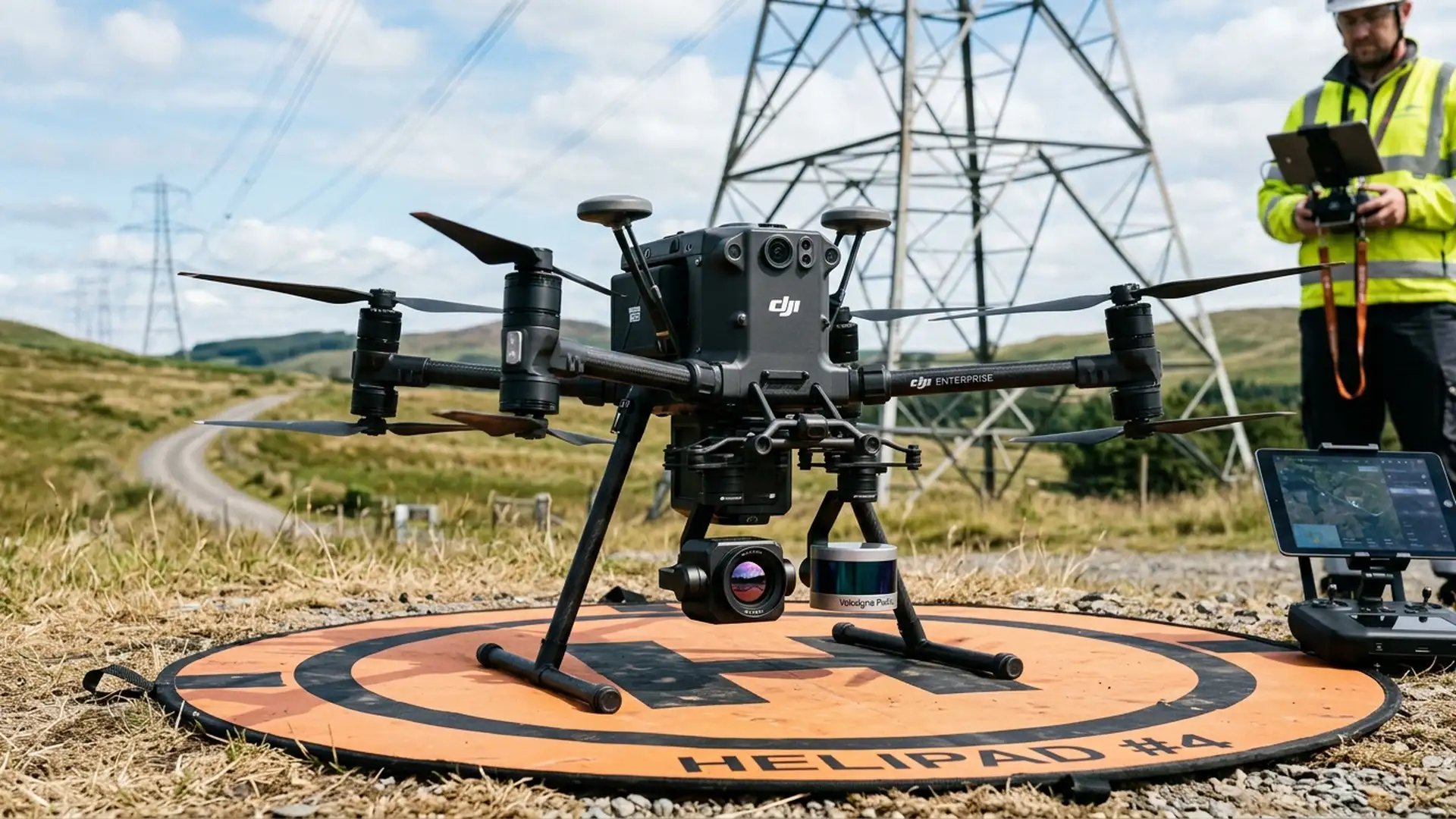
The regulatory debate surrounding commercial unmanned aviation has reached a critical juncture in the United States. Following the conclusion of a public comment period that drew nearly 4,000 formal submissions, drone manufacturer DJI has filed an extensive 26-page legal response with the Federal Communications Commission (FCC). The regulatory proposal under review seeks to ban the continued importation, marketing, and authorization of foreign-manufactured drones that possess capabilities categorized by regulators as military-grade. Law enforcement officers, firefighters, farmers, surveyors, cinematographers, and infrastructure inspectors submitted thousands of comments warning of catastrophic consequences for public safety and enterprise operations.
In its comprehensive legal filing, DJI challenges the regulatory proposal at its very foundation. While earlier United States policy actions targeted individual corporate entities, the current proposal shifts to a capability-based ban. Under this framework, civilian features including thermal imaging cameras, LiDAR sensors, autonomous docking stations, swarming capabilities, agricultural spraying payloads, and aircraft weighing over 55 pounds (25 kilograms) are treated as battlefield technology. For European commercial drone operators and enterprise asset managers, this development holds significant ramifications, as global supply chains, international compliance, and technical standards remain interconnected across the Atlantic.
The Core Controversy: What the FCC Defines as Military Capabilities
The central point of dispute lies in how modern drone technology is characterized. The FCC proposal establishes seven capability-based categories that would automatically subject foreign-made aircraft to prohibition. DJI argues that this classification completely ignores the evolution of commercial technology over the past decade. Systems and sensors that originated in defense research decades ago have long since become standard, peaceful instruments across countless civilian industries.
A prime example is LiDAR-assisted obstacle detection. Today, this capability is integrated into popular consumer and prosumer camera platforms such as the DJI Mini 5 Pro and DJI Air 3S, where it functions solely to prevent collisions during low-light conditions, evening flights, or complex environmental navigation. Treating essential flight safety sensors as battlefield hardware represents what the filing describes as a fundamental disconnect from real-world technological applications.
To illustrate how deeply these capabilities are embedded into commercial workflows, the following comparison highlights the proposed American restrictions alongside their established civilian applications across European industries:
| FCC Capability Category | Regulator Rationale | Civilian and Enterprise Reality in Europe |
|---|---|---|
| Thermal imaging sensors | Night reconnaissance and target detection | Fire rescue hotspot location, missing person searches, solar farm audits, and electrical grid monitoring. |
| LiDAR sensors | Military terrain mapping and intelligence | High-precision 3D topographic surveying, forestry inventory, civil engineering volume analysis, and obstacle avoidance. |
| Autonomous docking stations | Unmanned tactical perimeter stations | Automated recurring inspection of railway corridors, substations, coastal flood defenses, and remote wind farms. |
| Swarming software | Coordinated saturation attack capabilities | Synchronized aerial light shows, multi-agent environmental monitoring, and coordinated search grid operations. |
| Agricultural spraying systems | Dispersal of hazardous substances | Targeted precision fertilization, targeted crop treatment, and significant reduction of chemical runoff. |
| Aircraft weighing over 55 lbs (25 kg) | Heavy-payload combat or cargo platforms | Heavy-lift cinematic camera platforms and specialized industrial emergency response equipment. |
Legal and Economic Arguments from DJI's 26-Page Filing
Beyond technical classifications, DJI mounts severe legal arguments against the rulemaking process. Chief among these is the assertion that the regulatory agency is acting without statutory authority. According to the filing, the proposal cites a December 2025 National Security Determination that never actually created or recommended capability-based categories for military-grade drones. DJI argues that agency bureaus invented these seven categories post-hoc without factual foundation or authorization from national security agencies.
Furthermore, the filing highlights pervasive regulatory ambiguity. While the notice cites thermal sensors, it fails to define any objective threshold for resolution, thermal sensitivity, or detection range. Crucial legal concepts like defense article remain undefined. DJI points out that regulators simultaneously solicited public comment on whether their own definitions were too broad or too narrow, creating severe fair-notice violations and regulatory uncertainty for manufacturers and enterprise fleet operators alike.
The financial fallout of revoking existing equipment authorizations would be immense. DJI estimates its own direct losses would exceed 1.5 billion dollars, but emphasizes that the broader economic damage across distributors, service companies, and end users would reach tens of billions of dollars. Over the past decade, public safety agencies, utility operators, surveyors, and commercial drone pilots have built entire operations around legally approved equipment that would suddenly be stranded without operational support or replacement hardware.
The legal brief also highlights an inexplicable policy contradiction. If foreign-made drones truly represented an unacceptable national security risk, why would the federal government retain the ability to procure and operate them, while municipal fire departments, police agencies, and private businesses are cut off from using identical aircraft? The regulatory record offers no justification for why identical hardware would be secure for one level of government yet prohibited for another.
The European Perspective: EASA Risk-Based Rules vs US Import Restrictions
For European operators and aviation authorities, the American regulatory dispute underscores a fundamental divergence in regulatory philosophy. While the United States increasingly pursues protectionist restrictions and origin-based prohibitions, the European Union, guided by the European Union Aviation Safety Agency (EASA), adheres strictly to an operational risk-based methodology. Under European drone regulations, airworthiness and operational safety are assessed through mission risk profiles rather than manufacturing nationality.
The European framework establishes clear Open, Specific, and Certified categories supported by harmonized CE class markings ranging from C0 to C6. Aircraft are certified against objective standards regarding Remote ID transmission, geo-awareness, structural integrity, and kinetic energy dissipation. When enterprise operators conduct advanced missions in the Specific category, compliance is achieved through the Specific Operations Risk Assessment (SORA) methodology, ensuring thorough risk mitigation regardless of airframe manufacturer.
Data security within Europe is managed with similar pragmatic rigor. Rather than banning vital sensors, European standards aligned with directives such as NIS2 emphasize data sovereignty, local network isolation, and encryption. Commercial operators can activate Local Data Mode, perform offline flights, and store critical telemetry exclusively on European servers. This approach ensures that vital thermal and LiDAR surveys of critical infrastructure remain protected without sacrificing access to state-of-the-art aerial tools.
Practical Implications for Commercial Flight Operations and Inspections
Although the FCC proposal is technically confined to the United States jurisdiction, its practical consequences cannot be isolated from the European commercial drone sector. Global hardware manufacturing and sensor supply chains are deeply unified. If leading manufacturers are forced to split product lines or develop fragmented firmware ecosystems, European enterprise operators could face higher equipment costs, altered product availability, and extended delivery cycles.
For cross-border commercial operations, regulatory fragmentation poses operational hurdles. European aerial cinematography teams and industrial inspection specialists deploying with professional drones for North American projects could encounter severe customs barriers or operational restrictions on standard platforms equipped with LiDAR or thermal optics. Staying informed about international regulatory shifts has become essential for long-term fleet management and capital planning.
Concurrently, the international trade tension provides momentum for European drone hardware and sensor developers. While domestic alternatives are steadily emerging, current market realities demonstrate that scalable alternatives to mature enterprise platforms like the Matrice series or automated docking stations remain limited in availability and substantially more expensive. Maintaining an open, safety-driven regulatory climate in Europe remains critical to sustaining the competitiveness of local operators.
Next Steps and Future Scenarios for the Global Drone Industry
With the public comment window closed, FCC commissioners and bureau staff face the complex task of reviewing thousands of technical filings and stakeholder testimonies. In its formal conclusion, DJI calls upon the commission to withdraw the rulemaking proposal in its entirety. Should the agency continue to pursue restrictions, DJI urges regulators to adopt four core adjustments:
- Base any restrictions on rigorous, product-specific national security findings rather than generic capability lists.
- Establish objective, measurable technical metrics for sensors, frequencies, and data protocols.
- Provide a minimum 18-month transition window to protect enterprise investments and prevent immediate fleet grounding.
- Institute comprehensive exemptions for public safety organizations, first responders, and critical infrastructure operators.
For European regulatory authorities and industry stakeholders, this regulatory conflict reinforces the value of a balanced, predictable aviation framework. By maintaining focus on operational risk mitigation, rigorous data hygiene, and international technical standards, Europe can foster drone innovation while preserving the highest levels of airspace and data security.
Frequently asked questions about the proposed FCC drone ban
What is the United States FCC proposing regarding commercial drones?
The FCC has proposed revoking and prohibiting equipment authorizations for foreign-made drones featuring specific advanced capabilities, including thermal imaging, LiDAR, automated docking stations, swarming capabilities, agricultural spraying, and platforms weighing over 25 kilograms.
Why does DJI dispute the classification of military-grade features?
DJI demonstrates that capabilities like LiDAR and thermal imaging have become standard civilian inspection and public safety tools over the past decade. The company argues that the FCC invented these capability categories without statutory authority or backing from national security determinations.
Does the proposed American ban directly apply to drone operators in Europe?
No, the FCC proposal applies strictly within the United States. In Europe, operations remain governed by EASA's risk-based regulations. However, European operators may experience indirect effects through global equipment pricing, supply chain shifts, or restrictions when travelling to the US for commercial projects.
How do European operators safeguard data when using foreign drone platforms?
European commercial operators utilize offline flight profiles, Local Data Mode, and European server storage compliant with GDPR and NIS2 directives. This ensures complete data sovereignty and operational security without requiring bans on essential sensor hardware.