 NL
NL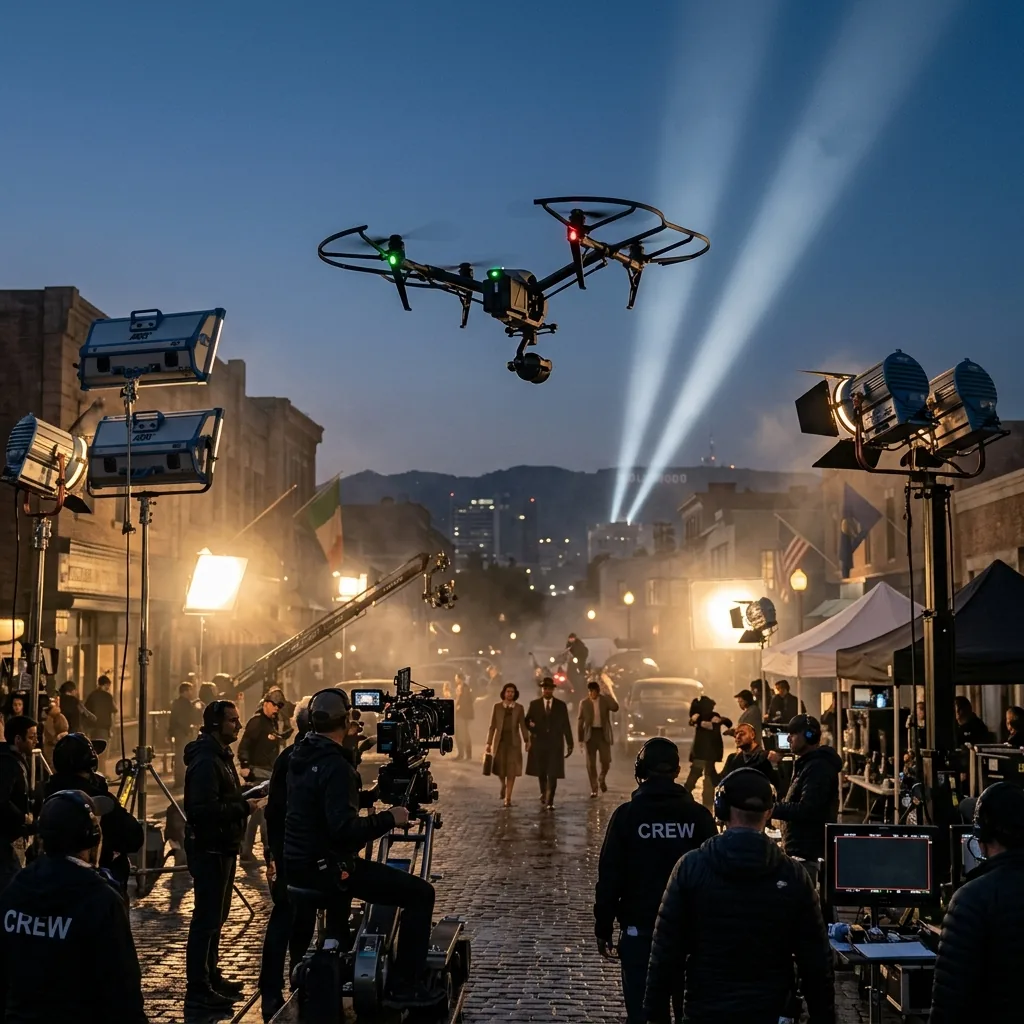
Quick Answer: The DJI Inspire 3 dominates Hollywood sets due to its Zenmuse X9-8K Air full-frame sensor, dual-operator O3 Pro transmission workflow, lossless Apple ProRes RAW/CinemaDNG recording, and high wind resistance of 15 m/s. Combined with centimeter-level RTK positioning, it offers unmatched precision, replacing traditional dolly and crane shots.
In the high-stakes arena of premium feature film and television production, aerial cinematography is no longer just about getting a high-altitude establishing shot. Today’s directors and Directors of Photography (DOPs) demand aerial footage that matches the texture, dynamic range, color science, and camera movement precision of primary ground-based cinema cameras like the ARRI Alexa 35 or RED V-Raptor. In 2026, one unified platform has definitively bridged this gap and established itself as the absolute standard on Hollywood sets: the DJI Inspire 3.
As professional aerial cinematographers at Drone Department, operating on tight schedules where every setup must deliver, we have integrated the Inspire 3 into our core workflow. In this deep dive, we outline the seven critical reasons why the DJI Inspire 3 dominates high-end film sets and remains the ultimate tool for B2B production companies seeking uncompromising cinema results.
1. The Zenmuse X9-8K Air Full-Frame Sensor
The primary reason for the Inspire 3's dominance is the Zenmuse X9-8K Air gimbal camera. Unlike crop-sensor platforms, this full-frame sensor delivers the classic, organic depth of field and wide field of view that DPs demand. It features dual-native ISO (EI 800/4000 at full-frame 24fps), ensuring exceptionally clean, low-noise imagery whether shooting in bright mid-day sun or under dim moonlit night conditions.
Boasting over 14 stops of dynamic range, the sensor preserves delicate highlight details in high-contrast sky environments while retaining shadow information in dark terrain. Integrated with the proprietary DJI Cinema Color System (DCCS), it matches the color space of ground-based cinema setups perfectly. This color consistency allows colorists in post-production to grade aerial shots seamlessly within the same timeline as primary footage.
2. Professional Dual-Operator Workflow
In high-budget commercial and narrative film productions, a single pilot attempting to guide the aircraft and compose the shot simultaneously is a severe bottleneck. The Inspire 3 is engineered from the ground up for a seamless dual-operator workflow.
Utilizing DJI's high-bandwidth O3 Pro transmission system, the pilot and the camera operator receive independent, latency-free Full HD (1080p/60fps) video feeds. The pilot navigates utilizing a dedicated, ultra-wide FPV camera with an integrated night-vision sensor, ensuring complete situational awareness. Meanwhile, the camera operator controls the Zenmuse X9-8K gimbal using a separate DJI RC Plus controller to execute complex, creative framing. This division of labor allows for highly choreographed, dynamic tracking shots that would be impossible to execute solo.
3. Lossless RAW Codecs: Apple ProRes RAW & CinemaDNG
To meet the demands of modern visual effects (VFX) pipelines and Dolby Vision HDR masters, capturing compressed footage is unacceptable. The DJI Inspire 3 records uncompressed RAW footage directly to its high-speed, onboard DJI PROSSD 1TB drive:
- Apple ProRes RAW: Supports recording up to 8K at 75fps, providing maximum latitude for exposure correction, white balance adjustments, and green-screen keying in post-production.
- CinemaDNG: Delivers complete, uncompressed 8K RAW files at up to 25fps, providing a mathematically precise, pixel-for-pixel capture for the most demanding feature film workflows.
Having these licenses natively integrated into the aircraft avoids the logistical challenges of external recorders, ensuring data integrity and allowing media managers to transfer raw files rapidly via USB-C directly from the SSD.
4. Extreme Environmental Resistance (15 m/s Wind Resistance)
Delaying a shoot due to unfavorable weather conditions can cost a production tens of thousands of dollars per hour. The DJI Inspire 3 features a highly aerodynamic, carbon-fiber frame designed to withstand harsh outdoor conditions.
The drone is wind-tunnel tested to operate in wind speeds of up to 15 m/s (approx. 54 km/h or 30 knots) during flight, and up to 12 m/s during take-off and landing. Supported by a redundant dual-battery system and high-torque motors, it maintains rock-solid positioning in turbulent coastal winds or mountainous updrafts, ensuring that no micro-vibrations are transferred to the gimbal. This structural rigidity allows our crew to capture stable, cinematic sequences where smaller platforms would be grounded.
5. Centimeter-Level RTK Precision & Waypoint Pro
Modern cinematography frequently intersects with complex CGI, requiring identical camera passes for multi-take composites, day-to-night transitions, or VFX plates. The Inspire 3 incorporates dual-antenna RTK (Real-Time Kinematic) positioning technology.
By connecting to a D-RTK 2 mobile station or network-RTK, the Inspire 3 achieves centimeter-level positioning accuracy. Using the advanced **Waypoint Pro** flight suite, pilots can program exact flight paths. The drone can autonomously repeat the exact same route, altitude, speed, and camera gimbal angles over multiple takes. This repeatable precision replaces traditional dolly tracks and expensive techno-cranes, enabling creative camera moves in previously inaccessible, open-air volumes.
6. Ultra-Wide FPV Camera with Night Vision
Navigating safely close to talent, prop structures, or lighting rigs requires exceptional pilot visibility, especially during low-light or night-time shooting. The Inspire 3 addresses this with a dedicated, custom FPV camera for the pilot.
Featuring a 161-degree diagonal field of view (DFOV) and a 1/1.8-inch night-vision sensor, it delivers clear, high-contrast structural views even in near-pitch darkness. Since the FPV camera is stabilized independently of the main cinema camera, the pilot always maintains an accurate perspective of the drone’s flight vector, regardless of where the main Zenmuse camera is pointing. This constant situational awareness is a key factor in mitigating risk on active sets.
7. Omnidirectional Obstacle Sensing & On-Set Compliance
Safety is the primary metric for licensing and compliance on professional sets. The DJI Inspire 3 is equipped with nine visual sensors, providing comprehensive omnidirectional obstacle sensing to detect wires, branches, and structures in all directions.
Crucially for film crews, the obstacle-sensing system allows for customized alert ranges. In narrow corridors or close-proximity shots, the pilot can disable automatic braking while retaining visual and acoustic distance warnings. At Drone Department, we operate under EASA Specific category authorizations. This allows us to integrate the Inspire 3's redundant safety systems into our SORA (Specific Operations Risk Assessment) filings, securing legal permits for complex operations near actors, crew members, and urban infrastructure where consumer-grade systems are prohibited.
DJI Inspire 3: Technical Specifications & Filmset Advantages
| Feature | Specification | Hollywood Production Advantage |
|---|---|---|
| Sensor Type | 35mm Full-Frame CMOS (Zenmuse X9-8K Air) | Cinematic depth-of-field, exceptional low-light dual ISO (800/4000). |
| Native Codecs | 8K ProRes RAW, CinemaDNG, ProRes 422 HQ | Lossless files for dynamic color grading and high-end VFX compositing. |
| Transmission Tech | O3 Pro (Dual-Control Mode) | Pilot and gimbal operator receive independent, low-latency HD feeds. |
| Precision Control | Centimeter-RTK & Waypoint Pro | Autonomously repeatable flight paths for VFX plates and complex choreographies. |
| Wind Resistance | Up to 15 m/s (approx. 54 km/h) | Maintains smooth shot stabilization in turbulent weather. |
| Navigation Camera | 1/1.8-inch Night Vision FPV (161° DFOV) | Dedicated pilot navigation feed for safe operations in low-light environments. |
Conclusion: The Standard for Modern Production Crews
The DJI Inspire 3 is not just an incremental update; it represents a paradigm shift in how directors approach aerial filming. By combining full-frame 8K raw capture, dual-operator precision, and centimeter-level flight path repeatability, the platform provides creative choices that previously required heavy, ground-based machinery or expensive helicopter crews.
At Drone Department, we deploy the DJI Inspire 3 for high-end cinematic shoots throughout Europe and globally. Our experienced crew of EASA-certified pilots and camera operators leverage this platform to deliver visual assets that tell compelling stories. Contact our production office today to discuss the technical requirements and creative possibilities of the Inspire 3 for your next high-budget project.