 NL
NL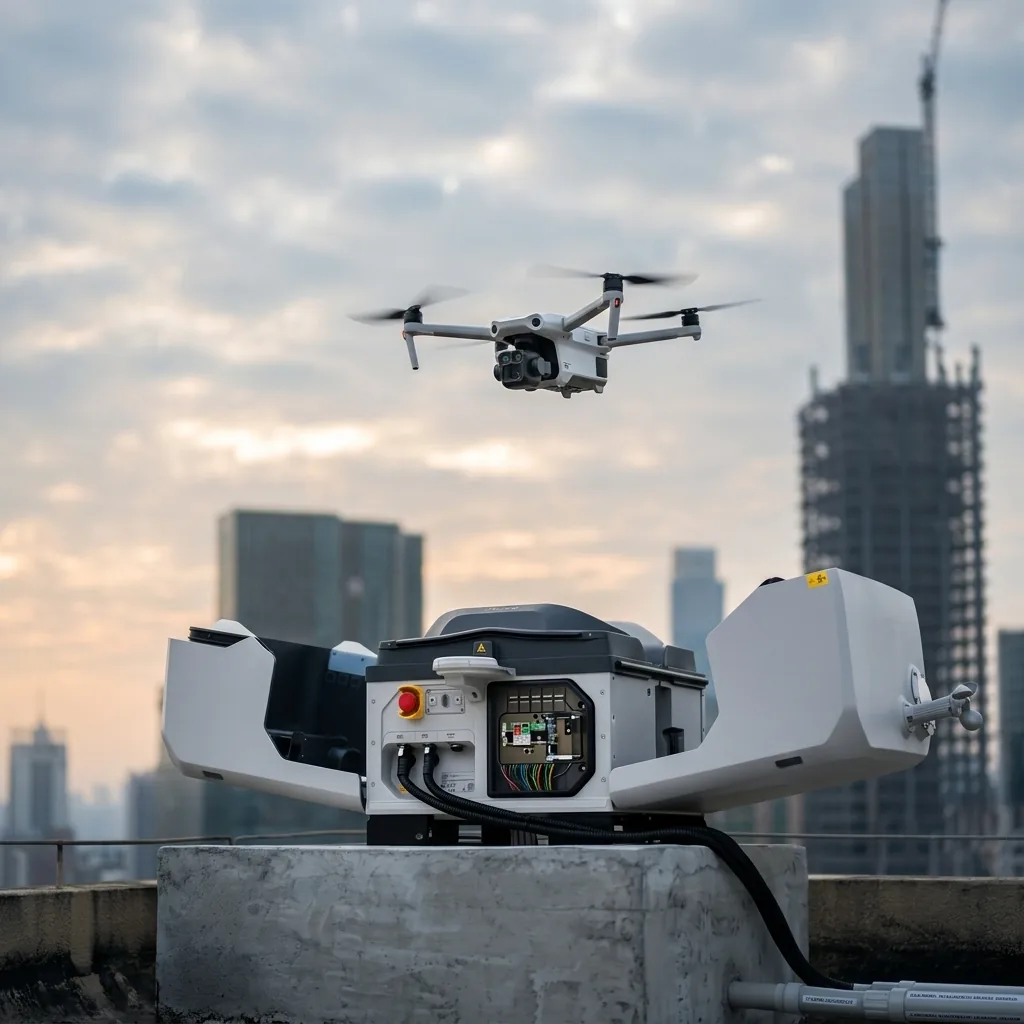
For organizations deploying drones across Europe, obtaining regulatory approval is often a much larger hurdle than the technology itself. While modern drone platforms are fully capable of executing complex beyond visual line of sight (BVLOS) missions, operators still need to prove to aviation authorities that these operations can be carried out safely. Industry leader DJI has taken a significant step to streamline this process for European operators.
The drone manufacturer has completed a SAIL III declaration of compliance package for its automated DJI Dock 3 and the corresponding Matrice 4D drone series. This gives operators across all European Union Aviation Safety Agency (EASA) member states access to manufacturer-backed technical evidence that can be integrated directly into their Specific Operations Risk Assessment (SORA) applications.
Why SAIL III is a critical regulatory milestone
Under the EASA SORA framework, every operation in the Specific category is assigned a Specific Assurance and Integrity Level (SAIL), ranging from I (lowest risk) to VI (highest risk). The higher the SAIL level, the more stringent the safety requirements that the operator and the system must meet.
SAIL III represents the middle tier of risk levels and is particularly important for commercial and industrial BVLOS operations. These operations include automated perimeter security, utility mapping, infrastructure inspections, and drone-as-a-first-responder (DFR) programs for emergency services. In these scenarios, drones operate autonomously without a pilot maintaining direct visual contact.
The key benefit of SAIL III is that, unlike SAIL IV (which requires an EASA-issued Design Verification Report), civil aviation authorities can accept declarations of compliance from the manufacturer for design-related Operational Safety Objectives (OSOs). This is precisely the burden that DJI's package addresses.
Which Operational Safety Objectives (OSOs) are covered?
Rather than requiring every operator to build detailed technical arguments explaining the drone's design safety, DJI has done the engineering analysis and testing. The resulting compliance package covers eight design-related OSOs:
- Manufacturer competence and quality management: Evidence of rigorous design and manufacturing standards.
- Maintenance and continued airworthiness: Protocols and manuals for ongoing system safety.
- System safety and reliability: Safety assessments of the flight telemetry and critical components.
- Command-and-control link performance: Verified command datalink performance limits.
- Flight manuals and operational documentation: Standardized operating guidelines and limitations.
- Flight envelope protection: Built-in system protections preventing the drone from flying outside safe boundaries.
- Human factors and HMI considerations: Analysis of interface usability and human error mitigation.
- Environmental robustness and operating limits: Validation of weather sealing and temperature limits.
What this means for drone operators
While the package simplifies a significant part of the SORA process, it is not a shortcut around operational responsibilities. Operators must still obtain operational authorization from their national regulator, such as the UK Civil Aviation Authority (CAA) or other European aviation registries. The operator remains responsible for preparing their Concept of Operations (ConOps), detailing crew training, outlining emergency procedures, and evaluating site-specific hazards.
However, by eliminating the need for operators to document the drone's design characteristics themselves, the package saves months of effort. The table below outlines the differences in the application process with and without the manufacturer compliance package:
| Process Stage | Without DJI Compliance Package | With DJI SAIL III Compliance Package |
|---|---|---|
| Technical evidence | Operator must draft technical safety cases and request custom manufacturer data. | Signed declarations of compliance are imported directly into the SORA. |
| Regulatory review | Longer evaluation times as authorities verify the aircraft design manual. | Streamlined review based on standardized manufacturer declarations. |
| Compliance risk | Higher risk of delays due to technical design queries from regulators. | Lower technical risk; focus shifts entirely to operational safety. |
| Operator workload | High administrative load writing both hardware and operational safety cases. | Focus remains exclusively on ConOps, crew training, and local risk limits. |
Regulatory expertise in complex drone operations
Operating high-end drone systems under EASA guidelines requires thorough preparation. Demonstrating compliance with specific standards, such as the SORA 2.5 containment levels, is key to obtaining approvals for complex operations. For enterprise clients, working with an experienced team is critical to keeping projects on track. To learn more about our pilot standards, view our page on our certified drone pilots.
At Drone Department, we monitor regulatory updates to provide our clients with compliant drone services. As a premier cinema drone operator, we maintain our operational safety cases to the highest standards, enabling us to execute advanced filming projects safely and efficiently under EASA rules.
Frequently asked questions about DJI SAIL III and BVLOS
What is the DJI SAIL III compliance package?
It is a collection of technical declarations and test data proving that the DJI Dock 3 and Matrice 4D meet EASA design safety objectives for SAIL III operations.
Does this package guarantee automatic flight approval?
No. While it satisfies the hardware safety requirements of the SORA, the operator must still apply for operational authorization, covering local risks and operational procedures.
Which systems are covered by these declarations?
The package is designed specifically for the DJI Dock 3 automated base station and the Matrice 4D drone series.
Why is SAIL III important for automated inspections?
SAIL III is the standard risk class for automated BVLOS missions. Meeting this level using manufacturer declarations bypasses the need for EASA's expensive Design Verification Report (DVR).