 NL
NL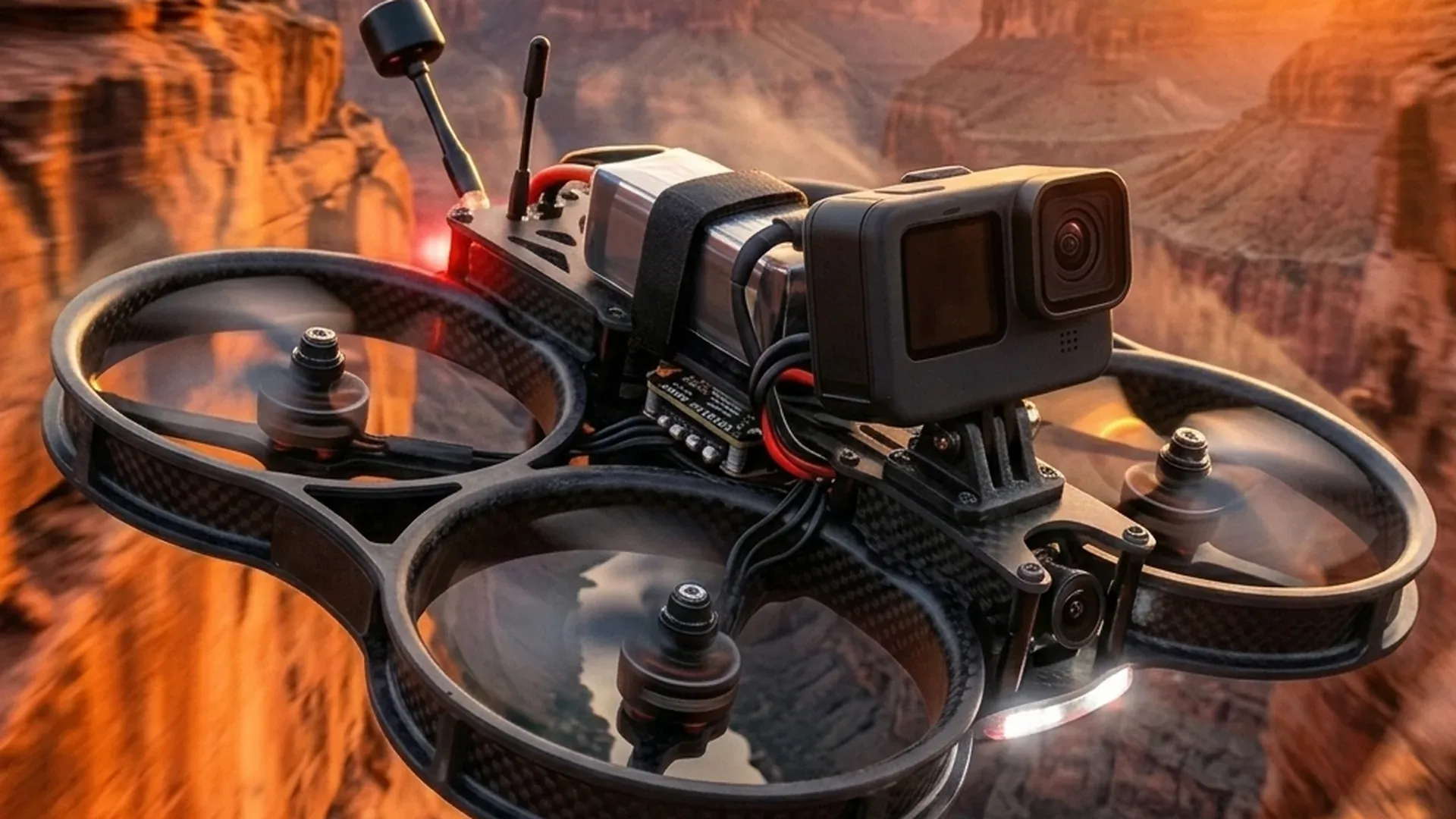
In high-end aerial cinematography, First Person View (FPV) drones have become indispensable. FPV drones provide unique, dynamic perspectives by diving at high speeds through tight spaces and capturing intense chase sequences. However, this high-kinetic flying style introduces a major technical challenge: high-frequency motor vibrations, micro-jitter, and wind turbulence. To transform raw, shaky FPV footage into buttery-smooth cinematic sequences without losing the feeling of flight speed, professional camera operators rely heavily on Gyroflow. This open-source video stabilization software has revolutionized how FPV post-production is handled across the feature film and commercial industries.
Unlike traditional stabilization tools that rely on optical pixel tracking in post-production, Gyroflow uses a fundamentally different approach. The software leverages the physical gyroscope and accelerometer (IMU) data recorded during flight in sync with the video frames. By matching exact camera orientation data to calibrated optical lens profiles, Gyroflow mathematically reverses physical vibrations and unwanted rotations. The result is smooth, gimbal-like stability while preserving the natural kinetic momentum of FPV flight.
Optical frame analysis vs gyro-assisted stabilization
Traditional optical stabilization plugins in NLEs estimate motion by comparing shifting pixels between sequential frames. While optical tracking works well for static tripod shots or gentle handheld camera moves, it quickly fails during high-speed FPV maneuvers. When a drone travels at over 100 km/h past foreground objects, optical algorithms get confused by motion blur, rapid background shifts, and changing lighting conditions. This often results in distracting warping artifacts, rubbery distortion, and loss of resolution.
Gyroflow bypasses optical tracking entirely by evaluating physical IMU motion data recorded at up to 1000 Hz. Because the gyroscope logs every micro-vibration caused by motor turbulence or wind gusts, Gyroflow can isolate and compensate for those precise rotational movements. This delivers a clean, razor-sharp output free from optical warping. This level of precision is vital for delivering broadcast-ready footage in high-speed [action & motorsports productions](../services/action-motorsports.html).
Rolling shutter compensation and custom lens profiles
Another major advantage of Gyroflow is its ability to mathematically correct rolling shutter artifacts, commonly known as 'jello'. Cameras using electronic rolling shutters read sensor lines sequentially. When high-frequency vibrations occur during readout, vertical lines become skewed and distorted. Because Gyroflow tracks exact camera movement during the scanning of every single sensor line, it can undo line-by-line rolling shutter distortion with extreme accuracy.
To perform these complex geometric calculations, Gyroflow relies on precise lens calibration profiles. Every camera lens combination distorts light differently. The software features an extensive preset database for fisheye and wide-angle lenses from manufacturers like GoPro, Sony, and RED Digital Cinema. By undistorting the optical image, applying gyro-stabilization, and re-projecting the field of view, Gyroflow preserves maximum image sharpness. This makes it a crucial tool for complex [indoor FPV fly-throughs](../services/indoor-fpv.html) where millimeter precision matters.
Workflows for internal and external IMU data logging
In production environments, gyro data can be acquired in two main ways. Modern action cameras and cinema cameras store internal IMU telemetry directly within the video metadata container. Gyroflow reads these files automatically, offering an instantaneous post-production workflow. For custom-built cinewhoops or heavy-lifter rigs equipped with cinema cameras lacking built-in gyroscopes, Gyroflow supports external flight controller logs.
When using external data, Blackbox logs from flight controllers (such as Betaflight or FlightOne) are exported alongside the video file. The software synchronizes the physical flight log with the video track by calculating the time offset using sharp sync motions. This flexibility allows [professional drone pilots](../drone-pilots.html) operating heavy-duty [cinema drones](../services/cinema-drones.html) to achieve ultra-smooth stabilization regardless of the camera package.
Seamless integration with DaVinci Resolve and Premiere Pro
Rather than requiring editors to export intermediate master files from standalone applications, Gyroflow provides native OpenFX (OFX) plugins. This enables editors to run stabilization directly within DaVinci Resolve or Adobe Premiere Pro timelines. It saves substantial disk space, reduces rendering bottlenecks, and preserves original RAW/Log image metadata for color grading.
Through OFX integration, [cinema drone operators](../services/drone-pilot-team.html) and post-production supervisors can fine-tune stabilization parameters on a per-shot basis. A high-speed car chase may demand looser panning smoothness to retain raw energy, whereas a sweeping architectural reveal calls for strict horizon locking. Adjusting low-pass filters and horizon leveling directly on the NLE timeline gives directors complete creative control over shot dynamics.
Comparing video stabilization methods for aerial cinematography
The table below highlights the key differences between Gyroflow gyro-assisted stabilization, optical post-processing, and traditional mechanical gimbals:
| Stabilization Method | Gyroflow (Gyro-based) | Optical Post-Tracking (Warp) | Mechanical 3-Axis Gimbal |
|---|---|---|---|
| Operating Principle | Physical IMU/gyroscope data | Optical pixel tracking | Mechanical brushless motors |
| Warp Artifacts | None (mathematical rotation) | High during fast motion/blur | None (physical correction) |
| Rolling Shutter Correction | Yes (line-by-line correction) | No (frame-level only) | No (depends on camera) |
| Payload Weight | 0g additional weight | 0g additional weight | 300g to 1500g extra weight |
| FPV Agility | Extremely High (acrobatic) | Extremely High (acrobatic) | Limited (risk of motor overload) |
A core pillar of modern action cinematography
The rise of Gyroflow has permanently elevated the standard for FPV drone cinematography. By combining hardware sensor logging with advanced mathematical processing, drone operators can capture shots that were once considered impossible. Removing high-frequency micro-jitter while maintaining kinetic flight feel immerses audiences directly into the action. Whether shooting high-speed motorsports or delicate indoor one-shots, Gyroflow remains an indispensable tool for delivering polished, cinematic aerial imagery.
Frequently asked questions about Gyroflow
What is the main advantage of Gyroflow over optical stabilization?
Gyroflow uses physical gyroscope telemetry instead of optical pixel analysis, avoiding unwanted warping artifacts during fast FPV maneuvers.
Which cameras are supported by Gyroflow?
Nearly all modern action and cinema cameras with internal gyro logging (GoPro, Sony, Insta360, RED) are supported, as well as external Blackbox logs from Betaflight controllers.
Can Gyroflow be used natively inside DaVinci Resolve or Premiere Pro?
Yes, through the official Gyroflow OpenFX (OFX) plugin, stabilization can be applied directly on NLE timelines without rendering intermediate files.
How does Gyroflow fix rolling shutter artifacts?
By matching high-frequency gyro data to the line-by-line readout of the camera sensor, Gyroflow mathematically eliminates rolling shutter jello.