 NL
NL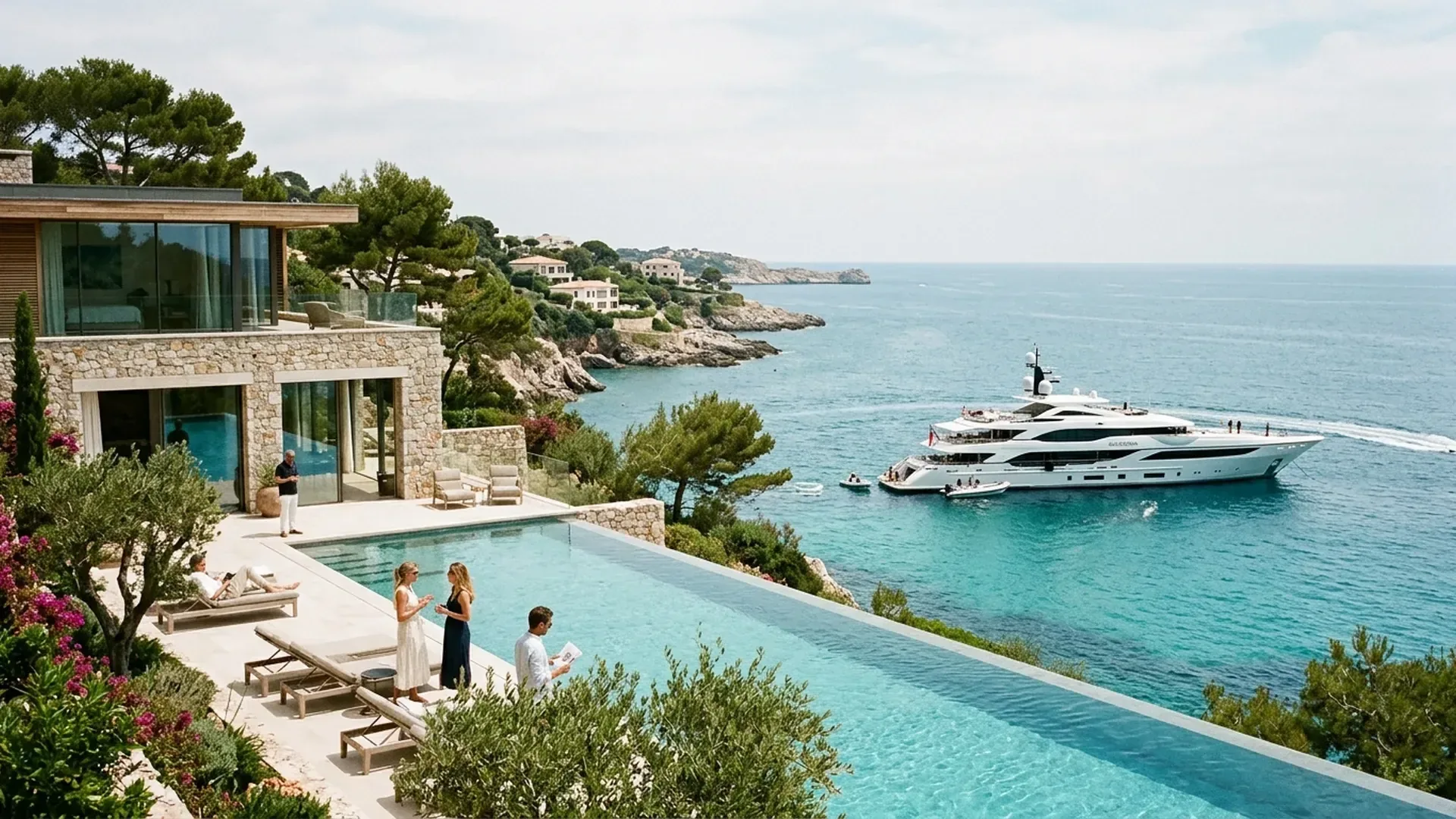
The international marketing landscape for ultra-luxury residential properties and exclusive superyacht charters has undergone a fundamental transformation. High-net-worth buyers and yacht charter clients no longer settle for static wide-angle photographs or conventional tripod-based walkthroughs. Whether presenting a cliffside architectural villa on the French Riviera, an opulent historical estate on Lake Como, or an 80-meter superyacht navigating the Balearic Sea, high-end drone cinematography has established itself as the indispensable centerpiece of luxury marketing campaigns.
Capturing these high-value assets demands far more than basic consumer aerial gear. Complex lighting environments, coastal wind conditions, reflective water surfaces, and moving vessels require cinema-grade camera sensors, specialized flight maneuvers, and strict European regulatory authorizations. In this article, we explore the cutting-edge technology, piloting techniques, and operational protocols that define world-class aerial cinematography for luxury real estate and superyachts.
Cinema drone platforms: full-frame aerial systems versus custom indoor FPV
To accurately render the architectural finesse, fine stonework, and expansive vistas of luxury estates, commercial operators rely on top-tier cinema drone platforms. Within our operational fleet of cinema drones, the DJI Inspire 3 equipped with the Zenmuse X9-8K Air full-frame sensor sets the benchmark. Recording in uncompressed 8K ProRes RAW and CinemaDNG with over 14 stops of dynamic range guarantees that subtle highlights on infinity pools and deep interior shadows beneath shaded verandas are preserved with pristine clarity.
Equally critical is the ability to swap prime lenses across focal lengths such as 18mm, 24mm, 35mm, and 50mm. Unlike distorted fisheye lenses typical of entry-level drones, cinema prime optics ensure that vertical architectural lines, towering columns, and floor-to-ceiling glass facades remain geometrically true. Operating with a dual-crew setup comprising a remote pilot and a dedicated cinema drone operator allows for intricate, coordinated sweeping shots and live aperture adjustments that elevate every frame.
Simultaneously, the integration of custom indoor FPV fly-throughs has created an entirely new visual storytelling format. Using ultra-compact, ducted cinewhoop drones with enclosed propellers, our pilots execute continuous one-take flights: starting from the open sea, soaring across the aft deck, gliding through sliding glass doors into the main salon, traversing the grand staircase, and exiting through the owner's stateroom onto a private balcony. This continuous spatial journey offers potential buyers an intuitive and emotionally resonant understanding of the property's scale and luxury.
Maritime operations: flying and landing on moving superyachts
Aerial filming in an offshore marine environment is among the most demanding disciplines in professional drone aviation. Operating around a moving superyacht involves dynamic three-dimensional motion, unpredictable wind gradients, and high levels of electromagnetic interference:
- Electromagnetic interference from steel superstructures: The massive steel hulls, high-output generators, satellite arrays, and active radar equipment on modern yachts can sever or distort standard magnetic compasses and IMU sensors. Commercial pilots frequently launch and recover aircraft in manual Attitude Mode (Atti-mode), decoupling the drone from GPS to maintain precise manual control without erratic autonomous compensations.
- Coastal wind shear and sea spray: Superyacht superstructures generate complex aerodynamic turbulence and downdrafts. Pilots must constantly anticipate sudden wind shifts while protecting sensitive cinema sensors from corrosive salt spray and ocean humidity.
- Bridge-to-pilot communication: Flawless maritime shoots require direct VHF radio coordination between the flight crew and the yacht's captain. Vessel speed, heading, and stabilizer deployment must be synchronized with the position of the sun and specific flight corridors.
Platform comparison: drone systems for luxury real estate and marine productions
The following overview illustrates the operational characteristics of the primary drone categories used in high-end real estate and yacht productions:
| Platform Type | Camera & Resolution | Primary Application | Key Advantage |
|---|---|---|---|
| DJI Inspire 3 (Cinema Drone) | Full-Frame 8K ProRes RAW / CinemaDNG | Estate exteriors, yacht tracking, twilight vistas | Uncompromised optical fidelity, interchangeable primes, dual-crew |
| Cinewhoop FPV (<250g - 3.5") | 4K 10-bit Log / Naked Cinema Sensors | Indoor villa tours, staterooms, interior fly-throughs | Propeller guards, extreme agility, seamless indoor-outdoor transitions |
| Custom Heavy-Lifter FPV | RED Komodo-X / Sony FX6 Cinema | High-speed tender tracking, watersports, dynamic action | Cinema glass paired with speeds exceeding 140 km/h |
| Mavic 4 Pro / Compact Pro | Hasselblad Medium-Format / Dual Tele | Location scouting, architectural details, discrete filming | Ultra-quiet acoustic footprint, instant deployment |
Optical filtration, HDR exposures, and golden hour lighting
Lighting is the fundamental differentiator in premium architectural and marine media. The most compelling imagery is captured during the golden hour shortly after sunrise or preceding sunset, as well as the blue hour when exterior landscaping lights, pool illumination, and yacht underwater lights create high-contrast elegance against the evening sky.
To eliminate distracting glare from water surfaces and large sliding glass partitions, operators utilize custom circular polarizers (CPL) and neutral-density (ND) filters. A properly calibrated polarizing filter cuts through surface reflections to reveal turquoise seabed waters and allows camera sensors to capture furnished interiors through panoramic windows. Recording in 14-bit log profiles enables colorists to grade rich, authentic Mediterranean color palettes during post-production.
Privacy, European EASA regulations, and coastal airspace zones
High-end estates and luxury anchorages are often located near populated coastlines, exclusive private enclaves, or environmentally protected marine reserves. Commercial drone operators must strictly respect GDPR privacy guidelines, ensuring adjacent private estates and non-participating vessels are not intruded upon.
Furthermore, European coastal airspace is heavily regulated under the EASA framework. Operating heavy cinema aircraft in controlled airport zones (such as Nice Côte d'Azur, Cannes Mandelieu, or Ibiza) requires operational authorizations within the Specific category, comprehensive SORA risk mitigations, or cross-border declarations under EASA Article 13. For comprehensive details on operational airspace compliance, consult our guide to European drone regulations.
Creating an unmatched visual identity for the ultra-luxury sector
The strategic combination of full-frame cinema drones, agile indoor FPV fly-throughs, and disciplined maritime flight operations elevates real estate and yacht showcases into cinematic experiences. Rather than merely documenting rooms and deck layouts, cohesive aerial storytelling evokes an emotional connection with prospective international buyers and charter clients.
For luxury real estate developers, brokerage agencies, and superyacht management firms, partnering with an experienced, certified European drone operator provides a distinct market advantage. With professional flight safety protocols and cinema-standard optics, your properties and vessels are showcased with the elegance, prestige, and visual impact they deserve.
Frequently asked questions about luxury real estate and superyacht drone shoots
Why is a full-frame cinema drone like the Inspire 3 necessary for luxury real estate?
Standard consumer drones have smaller sensors with limited dynamic range, resulting in blown-out highlights on sunlit pools or washed-out marble surfaces. A full-frame camera like the Zenmuse X9-8K delivers 14+ stops of dynamic range, 8K RAW recording, and interchangeable DL prime lenses (18mm, 24mm, 35mm, 50mm) to preserve natural architectural geometry without wide-angle barrel distortion.
How do pilots prevent magnetic compass errors on steel and aluminum superyacht decks?
Massive steel superstructures, high-output marine generators, and powerful onboard radar antennas disrupt internal drone compasses. Experienced pilots mitigate this by launching and catching in manual Attitude Mode (Atti-mode without GPS lock) or by integrating dedicated offshore RTK positioning baselines.
What is the primary advantage of indoor FPV cinewhoop drones for luxury estates and yachts?
With lightweight, duct-protected cinewhoop drones, pilots execute seamless, continuous 'one-take' transitions gliding from exterior cliffside infinity pools directly through open salon doors, down private corridors, through master staterooms, and out onto the private helipad, delivering an immersive sense of scale and luxury.
What regulatory permits are required for drone shoots in European coastal destinations?
Popular destinations like the French Riviera, Balearic Islands, and Italian coasts enforce strict EASA airspace restrictions and maritime safety buffers. Operating cinema-class aircraft requires a Specific category operational authorization (or cross-border notification under EASA Article 13), coordination with coastal aviation authorities, and rigorous adherence to GDPR privacy standards.