 NL
NL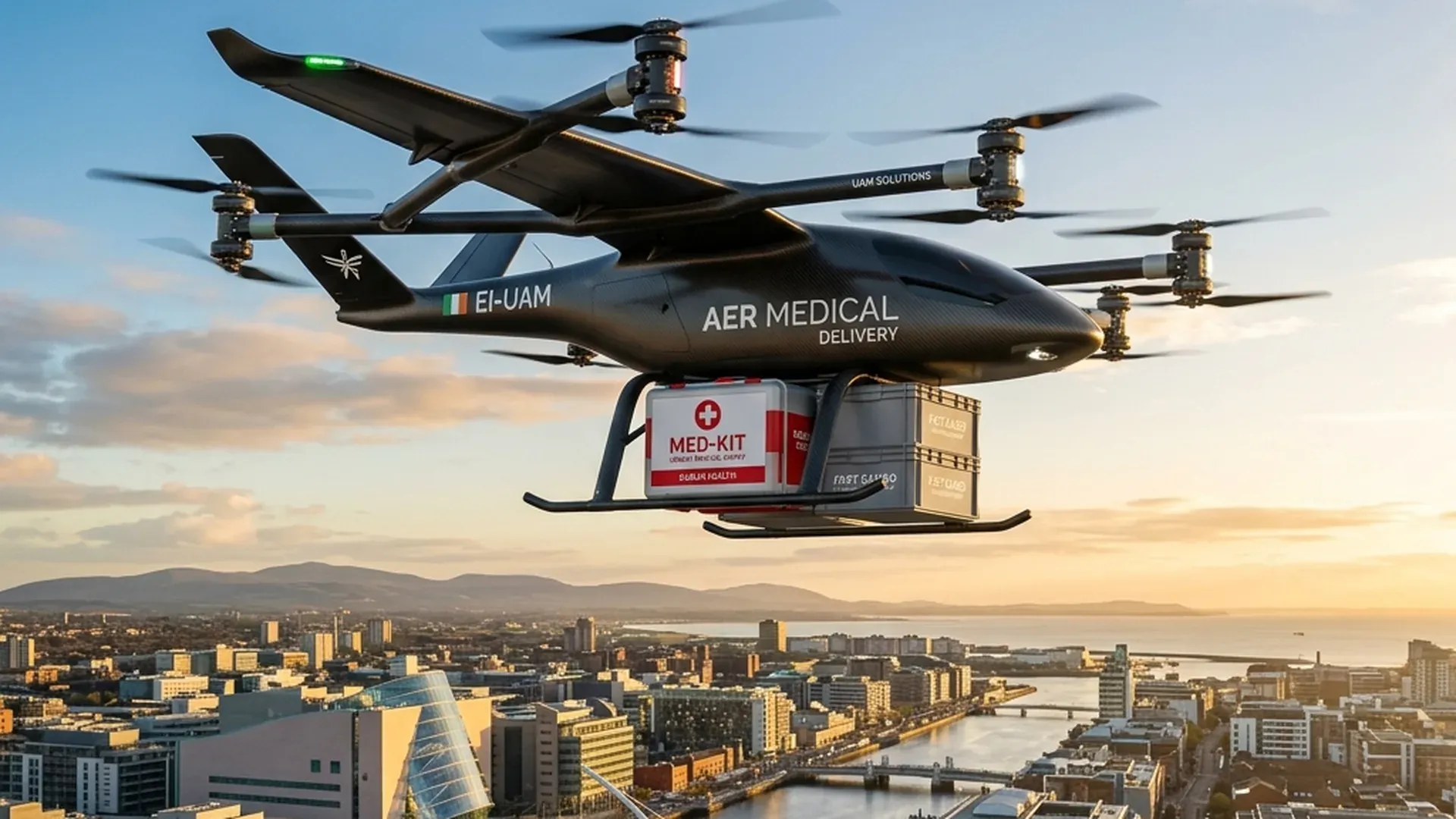
The rapid technological advancement of unmanned aerial vehicles and electric vertical takeoff and landing (eVTOL) aircraft brings urban mobility closer to a transformation. While these aerial systems are maturing from a technical perspective, a significant gap remains between technological feasibility and societal acceptance. To bridge this so-called societal readiness gap, the innovative research project PEGASUS has officially launched in July 2026. Standing for Piloting European Green Air Mobility and Services for Urban Societal Readiness, this initiative is backed by a budget of 4.83 million euros from the European Commission's prestigious Horizon Europe program. The overall coordination is led by Trinity College Dublin, directing a multidisciplinary consortium of researchers, cities, and leading air mobility operators.
The primary goal of PEGASUS is to develop an environmental, economic, and social framework to guide and validate Urban Air Mobility (UAM) deployment across Europe. Drones and unmanned systems offer major benefits to society, such as accelerating urgent medical deliveries and performing complex infrastructure inspections. However, operations in the real world often face citizen concerns regarding noise levels, visual impact, and privacy. By collaborating closely with various stakeholders over the next four years, the consortium aims to ensure that unmanned aviation is not only technically reliable but also fully trusted by the public.
How PEGASUS bridges the gap between technology and society
Historically, the aviation industry has focused heavily on technical certification and direct flight safety. While these elements are crucial, the social context in which the technology is deployed is equally important. A UAM service that is technically flawless can still fail if local communities reject its deployment. PEGASUS shifts the focus from purely technical readiness to societal readiness. This requires a human-centric approach, where citizens are actively involved in the design and planning of drone infrastructure in their neighborhoods from the very beginning.
The project focuses on identifying and addressing the main concerns of the general public. This includes not only concerns about safety and potential accidents but also the impact on local wildlife, urban noise pollution, and privacy protection. Through extensive surveys, citizen panels, and public dialogues, the project team maps out the needs and concerns of city residents. The resulting insights are translated into practical recommendations for drone designers, operators, and urban planners. This ensures that aviation technology aligns with society, rather than the other way around.
Introducing the Societal Readiness Score
A key innovation of the PEGASUS project is the development of the Societal Readiness Score (SRS). This is a standardized, measurable index designed to evaluate the public acceptance and environmental impact of specific drone operations. Similar to the well-known Technology Readiness Level (TRL) used to classify the technical development of systems, the SRS provides a compass for evaluating the social dimension of aviation projects. The score allows local authorities and regulators to objectively assess whether a planned drone service is socially responsible and desirable.
The Societal Readiness Score is calculated based on various parameters, including noise emissions, impact on privacy, energy efficiency, and contribution to the local economy or healthcare sector. For example, a medical drone carrying urgent supplies would receive a higher SRS than a commercial delivery service carrying non-essential goods, because its societal value carries more weight. This scoring model encourages developers to build quieter, more sustainable systems, thereby reducing the potential for public resistance.
Large-scale demonstrations in four European countries
To test and refine the SRS framework, the PEGASUS consortium is organizing large-scale demonstrations in four European countries: Ireland, Portugal, Italy, and Bulgaria. These test flights will be conducted in diverse urban and peri-urban environments, allowing the framework to be evaluated under different geographical and cultural conditions. In Ireland, demonstrations will take place at the Future Mobility Campus Ireland (FMCI) vertiport in Shannon, providing a testbed to study interactions between manned and unmanned aviation systems.
During these trials, the project team will collaborate with leading air mobility operators and logistics pioneers, including Ireland's Manna Drone Delivery, Portugal's Connect Robotics, and cargo drone developer Dronamics. By conducting real transport flights with various types of unmanned cargo aircraft, the project gathers valuable empirical data on noise levels, energy consumption, and operational reliability. Feedback from local residents and authorities during these tests will be used to calibrate the Societal Readiness Score.
Collaboration within the PEGASUS consortium
The success of a large-scale project like PEGASUS depends heavily on cross-disciplinary collaboration. The consortium brings together eighteen partners from seven European countries, including aviation authorities, tech startups, municipal governments, sociologists, and environmental organizations. This diverse group ensures that the research remains grounded in the practical realities of commercial aviation and municipal planning. By combining forces, the partners can establish a holistic vision for the future of shared airspace.
An essential part of the project's methodology is analyzing existing flight data. The consortium will utilize anonymized data from more than 200,000 completed commercial drone flights in Europe. By merging this historical data with new empirical findings from the demonstrations, the project team can construct an accurate model of drone operational impacts. This enables municipalities to make evidence-based decisions regarding flight corridors and residential no-fly zones.
Sustainability and the economic potential of UAM
In addition to building public trust, integrating UAM drones contributes significantly to the sustainability of urban logistics. Replacing traditional delivery vans with zero-emission, electric drones can dramatically reduce carbon emissions in city logistics. Drones fly in a direct line to their destination, consuming far less energy per kilometer than road vehicles that are subject to traffic congestion and detours.
The comparison table below provides an objective evaluation of autonomous UAM drones compared to traditional transport methods in urban environments, based on average operational data in the EU:
| Metric | Autonomous UAM Drone | Electric Delivery Van | Traditional Diesel Van |
|---|---|---|---|
| Average Speed | 80 to 100 km/h (direct path) | 25 to 35 km/u (traffic dependent) | 20 to 30 km/u (traffic dependent) |
| CO2 Reduction per Trip | ~98% reduction (compared to diesel) | ~85% reduction (grid-dependent) | Baseline value (0% reduction) |
| Noise Level | Localized (temporary during transit) | Low (tire-road noise) | High (engine noise) |
| Infrastructure Required | Minimal (rooftop vertipads) | High (charging network and roads) | Moderate (existing road network) |
| Weather Dependency | High (sensitive to strong wind/rain) | Low (operable in most conditions) | Low (operable in most conditions) |
EASA regulations and the integration of BVLOS operations
To perform complex drone operations at scale, harmonizing European aviation regulations is essential. Flights in the specific category, where the drone flies beyond the visual line of sight of the pilot (BVLOS), must comply with the strict requirements of the European Union Aviation Safety Agency (EASA). The risk assessments for these operations are developed in accordance with the latest [EASA SORA 2.5 rules](easa-easy-access-rules-sora-2-5.html), which define technical redundancy standards.
When executing complex urban operations, drone operators must also respect the specific [containment levels](sora-2-5-containment-levels-explained.html) defined by EASA guidelines. This ensures that in the event of a system failure, the aircraft is contained within a predefined area. Strict adherence to current [drone regulations](../drone-rules.html) is a vital prerequisite for safety in shared airspace. Only by employing certified systems and highly trained, [professional drone pilots](../drone-pilots.html) can the industry maintain public trust and foster long-term societal acceptance.
A new milestone for European unmanned aviation
The PEGASUS project represents a major shift in how the aviation sector approaches new technology. By putting public acceptance and environmental impact at the center of the design process, the consortium demonstrates that integrating drones responsibly into society is achievable. The results of the trials in Ireland and other member states will lay the groundwork for future European UAM policies. Successfully balancing technological innovation with the interests of citizens opens the door to a quieter, cleaner, and more efficient airspace. The coming years will show how this blueprint reshapes the future of unmanned aviation across Europe.
Frequently asked questions about the PEGASUS project
What is the PEGASUS project?
PEGASUS is a four-year European research project funded by the European Commission's Horizon Europe program. It focuses on measuring and strengthening the societal readiness and public acceptance of Urban Air Mobility (UAM) and drone services in Europe.
Who coordinates the PEGASUS consortium?
The project is coordinated by Trinity College Dublin and involves eighteen partners across seven European countries, including city councils, universities, and commercial UAM operators.
What is the Societal Readiness Score (SRS)?
The SRS is a newly developed framework to objectively evaluate the public acceptance, privacy impact, noise emissions, safety, and environmental contribution of specific drone services.
Where will the project demonstrations take place?
Live trial flights and demonstrations are being conducted in Ireland (at the Future Mobility Campus Ireland in Shannon), Portugal, Italy, and Bulgaria.