 NL
NL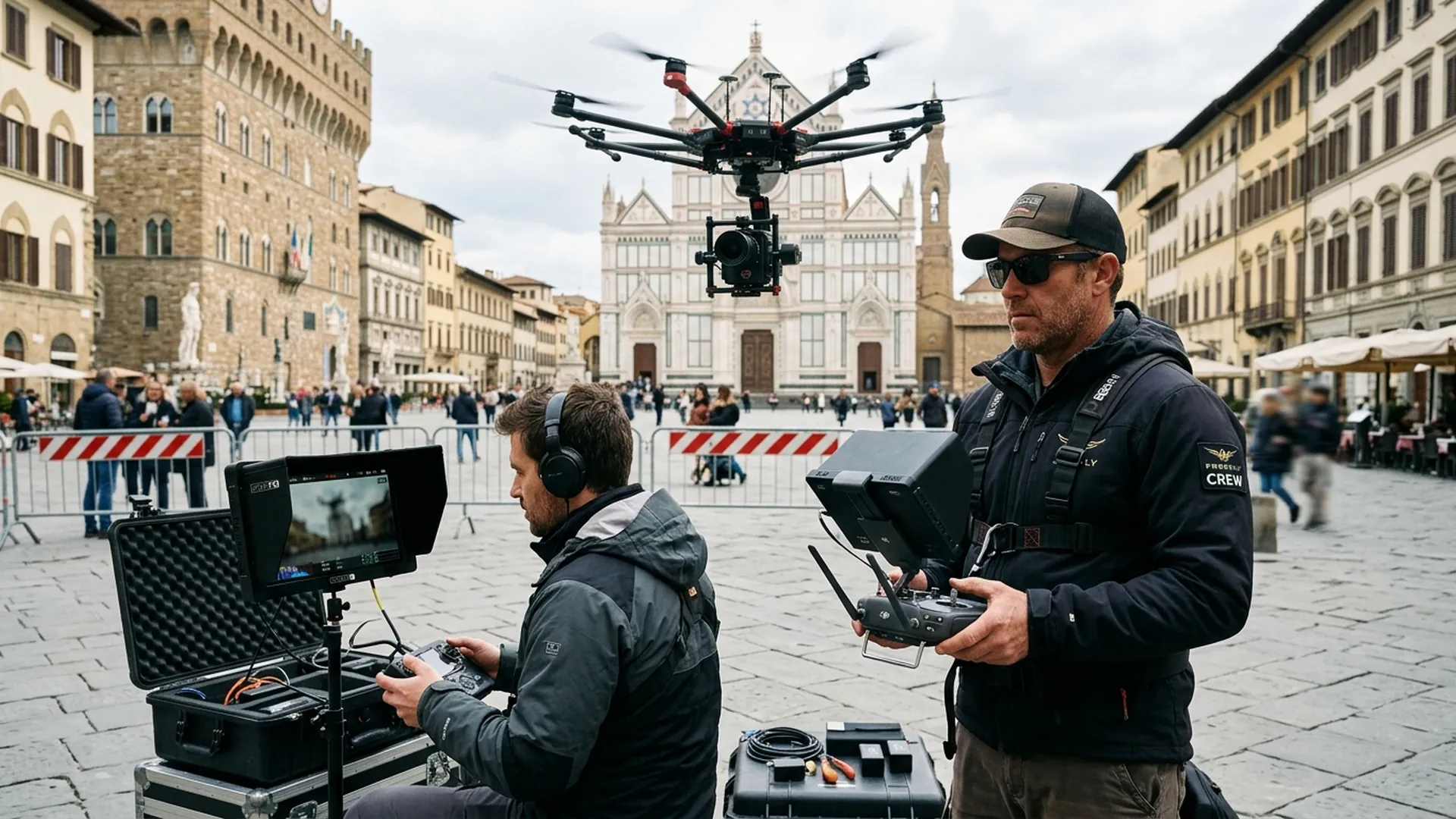
Commercial drone operations across European metropolitan areas, festival venues, and corporate events have grown exponentially in both volume and sophistication. While production houses and enterprise clients historically concentrated on airspace permissions and civil aviation compliance, data privacy and personal data protection have emerged as equally critical legal imperatives. Modern 8K cinema cameras, high-power telephoto lenses, and smart optical zoom systems can inadvertently capture recognizable facial details, vehicle license plates, and intimate views into private residential balconies or courtyards.
Under the European General Data Protection Regulation (GDPR) and regulatory enforcement directives issued by national supervisory authorities such as the Dutch Autoriteit Persoonsgegevens and the European Data Protection Board (EDPB), aerial video footage containing identifiable human beings constitutes personal data. For commercial film crews, event organizers, and drone companies, conducting a structured Data Protection Impact Assessment (DPIA) is no longer optional paperwork—it is an indispensable operational safeguard against heavy administrative fines, privacy litigation, and reputational damage.
When is a DPIA legally mandatory for commercial drone operations?
Article 35 of the GDPR dictates that a Data Protection Impact Assessment is required whenever processing operations are likely to result in a high risk to the rights and freedoms of individuals. Drones create heightened privacy exposure compared to fixed surveillance or ground cameras because their three-dimensional mobility and aerial vantage points can bypass traditional physical privacy boundaries.
In commercial practice across European jurisdictions, a DPIA is almost universally mandatory in the following operational scenarios:
- Urban public cinematography: Flights traversing public squares, busy shopping promenades, waterfronts, or transit hubs where uninvolved pedestrians are systematically captured on camera.
- Live festivals and sporting events: Aerial coverage of concertgoers, stadium crowds, and festival attendees for aftermovies, marketing campaigns, or live broadcast feeds.
- Telephoto lenses and AI tracking: Deploying focal lengths of 50mm or greater, long optical zoom lenses, or automated object tracking algorithms capable of isolating and identifying individuals from substantial altitudes.
- Filming in proximity to private residences: Real estate, urban planning, and infrastructure shoots where the camera orientation permits direct views into private windows, gardens, or fenced properties where citizens have a legitimate expectation of privacy.
Core stages of a comprehensive drone DPIA assessment
An effective DPIA provides an end-to-end evaluation of how image data is collected, transmitted, stored, and deleted. A professional assessment documents the following key stages:
- Systematic processing description: Clearly outlining the commercial objective (e.g. tourism commercial, feature film, engineering inspection), specific aircraft and sensor types, flight altitudes, route waypoints, and optical zoom parameters.
- Necessity and proportionality analysis: Verifying whether the creative or technical objective could be achieved through less intrusive means, such as flying higher or scheduling flights during low-footfall hours.
- Risk assessment to data subjects: Evaluating potential harms, such as accidental surveillance, unlawful identification, or exposure of private domestic activities.
- Targeted mitigation measures: Specifying concrete operational, technical, and post-production protocols to minimize personal data capture and prevent unauthorized data access.
Privacy-by-design flight tactics for aerial camera crews
Embedding privacy-by-design principles directly into flight planning prevents unnecessary personal data collection before it even reaches a recording medium. Expert cinema drone operator crews utilize distinct operational safeguards in three-dimensional airspace:
Flight altitude and lens choice represent the first line of defense. By operating at altitudes of 30 meters or higher with wide-angle glass (such as a 24mm full-frame lens), passersby on the ground appear as anonymous, low-resolution silhouettes. Facial features and biometrics cannot be extracted, effectively removing the footage from the scope of identifiable personal data processing.
Furthermore, gimbal framing discipline is paramount. The camera operator keeps optical centers focused on architectural landmarks, designated actors, or specific infrastructure assets, actively avoiding tilts toward residential balconies, open windows, or office interiors. If private property is accidentally captured during a maneuver, the crew logs the timecode immediately for mandatory post-production blurring.
Comparative matrix: DPIA requirements across common drone missions
The table below summarizes GDPR risk classifications, DPIA obligations, and necessary compliance actions across primary commercial drone operations:
| Operational Scenario | DPIA Mandatory? | Primary GDPR Risk | Required Safeguards & Mitigations |
|---|---|---|---|
| Urban City Center Cinematography | Yes (High Risk) | Uninvolved pedestrians and residential window intrusion | Altitudes >30m, warning signage, post-production face/plate blurring |
| Festivals & Outdoor Public Events | Yes (High Risk) | Mass recording of spectators and attendees | Advance ticket/web disclosures, wide establishing angles, no zoom close-ups |
| Closed Film Sets & Commercials | No (if fully cordoned) | Images of cast and crew members | Talent release forms, physical perimeter control excluding public |
| Industrial & Maritime Asset Inspections | No (Low Risk) | Incidental capture of facility workers | Internal workforce briefing, cameras locked on structural assets |
| Landscape & Nature Documentaries | No (Negligible) | Occasional hikers in open countryside | Generous standoff distances, no tracking of recreational users |
Transparency notices and the GDPR duty to inform on site
Articles 13 and 14 of the GDPR mandate that data controllers inform individuals when their personal data is collected. Because approaching individual pedestrians during an active drone flight is practically impossible, drone crews implement layered transparency measures:
- High-visibility perimeter signage: Clearly legible signboards positioned at entry points to the flight zone featuring a recognizable camera icon, production company identity, processing purpose, and a QR code linking to a full privacy policy.
- Advance digital publication: Municipal and festival organizers announce drone filming schedules on public event websites, social channels, and ticket terms in advance of production.
- Identifiable ground crew uniforms: Pilots, visual observers, and gimbal operators wear branded high-visibility vests clearly marked 'Drone Camera Crew', providing a visible point of contact for members of the public.
Data storage security and encryption under Article 32 GDPR
Data protection obligations extend far beyond the moment of touchdown. High-performance cinema drones record raw, uncompressed 8K and ProRes video streams onto high-speed solid-state drives and CFexpress media.
Under Article 32 GDPR (Security of Processing), operators must implement robust technical and organizational data safeguards:
- Hardware encryption on mobile storage: All on-set backup drives and portable NVMe SSDs must utilize robust AES-256 hardware encryption to render data unreadable in the event of drive loss or theft.
- Defined data retention and purging: Raw outtakes featuring identifiable members of the public that are not utilized in final client deliverables should be permanently wiped following project sign-off according to a documented retention policy.
- Data processing agreements (DPAs): Formal contracts between the production agency, drone operator, and client clarifying roles as data controller or data processor.
Harmonizing aviation authorizations and privacy governance
Successful drone cinematography across European cities requires seamless alignment between the aviation safety regulations of the EASA and the data protection mandates of the GDPR. While operational flight authorizations (such as SORA risk approvals or Specific Category permits) ensure airworthiness and physical ground safety, the DPIA safeguards citizens' fundamental right to privacy.
European municipalities and regional authorities increasingly request privacy compliance documentation alongside the flight credentials of certified drone pilots when granting location permits. Operators who demonstrate rigorous DPIA protocols streamline local approvals, eliminate legal liability, and cultivate long-term public trust in commercial drone technology.
Frequently asked questions about drone privacy and DPIA
When is a DPIA legally mandatory for commercial drone operations?
A Data Protection Impact Assessment (DPIA) is mandatory whenever drone filming poses a high risk to individuals' privacy rights under Article 35 GDPR. This includes systematic monitoring of public plazas, event coverage of crowded festivals, or using long telephoto lenses and AI-driven tracking where identifiable personal data (such as faces and license plates) can be captured.
How do operators meet GDPR transparency requirements in public spaces?
Operators place clear physical warning signage with camera symbols around flight zones, publish advance notifications on event websites or municipal portals, and equip crew members with high-visibility vests displaying company details and contact links.
What are key privacy-by-design flight techniques for drone crews?
Key measures include maintaining an altitude above 30 meters to turn crowds into unrecognizable silhouettes, orienting gimbals strictly toward architectural subjects rather than private balconies or gardens, and applying automated facial/license-plate blurring in post-production.
How should raw aerial footage be secured on production sets?
Raw video recorded onto SSDs and SD cards must be secured using hardware-level AES-256 encryption, strict role-based access for crew members, and established data deletion schedules conforming to Article 32 GDPR.