 NL
NL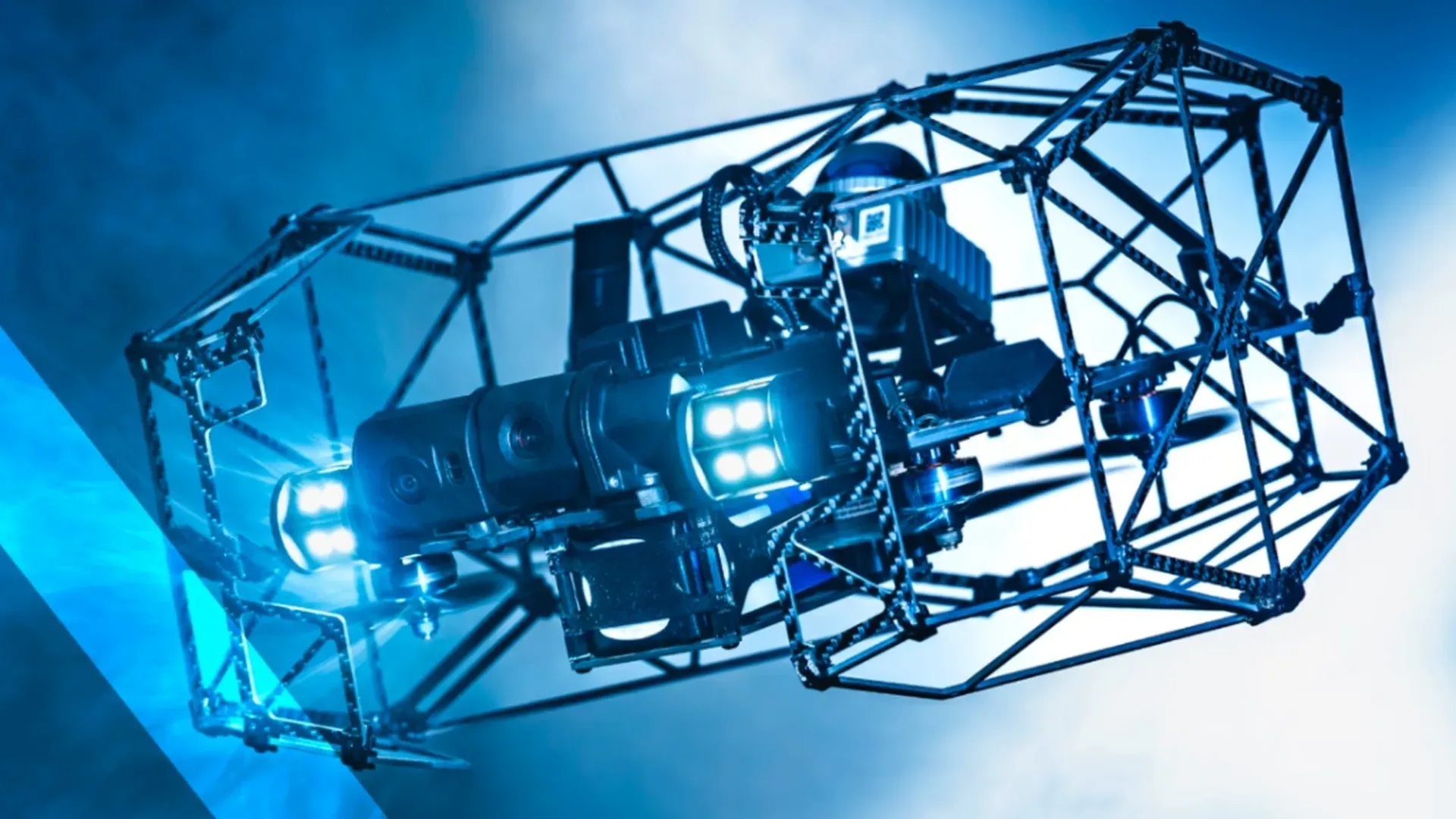
Inspecting confined indoor spaces and critical infrastructure remains one of the most demanding tasks in the commercial drone industry. Energy giants, chemical processing plants, and maritime operators increasingly rely on unmanned aerial vehicles (UAVs) to examine storage tanks, boilers, pressure vessels, and underground vault structures without placing human inspectors in hazardous environments. However, signal degradation and total communication loss inside radio-shielded structures have long presented a major technical hurdle. Japan-based drone leader Terra Drone, in collaboration with energy majors Chevron and Shell, has achieved a major milestone by introducing a state-of-the-art Signal Recovery Feature for its Japanese-built indoor inspection drone, the Terra Xross 1.
This automated safety capability was developed under a joint technology innovation program established by The Nippon Foundation and the global DeepStar Consortium. The initiative aims to advance operational safety, accelerate decarbonization, and significantly lower asset maintenance costs across the global energy sector by incorporating frontline user feedback directly into drone hardware and flight control software.
The Operational Challenges of GPS-Denied Indoor Inspections
When operating a drone inside a steel storage tank, a reinforced concrete culvert, or an offshore oil platform hull, the aircraft operates in a GPS-denied environment. Conventional positioning systems that rely on satellite signals cannot function indoors. To maintain stable position hold and precise navigation, the Terra Xross 1 combines high-precision 3D LiDAR sensors with optical visual sensors, allowing the drone to map its immediate surroundings continuously.
While sensor fusion guarantees flight stability, maintaining a reliable radio frequency (RF) link between the pilot's ground station and the aircraft remains inherently difficult. Thick metal bulkheads, dense concrete walls, and complex piping structures absorb and reflect radio signals. As a drone flies deeper into a vessel or navigates around metal corners, the control link can suddenly disconnect. On traditional drones, signal loss frequently causes equipment flyaways, crashes, or the permanent loss of expensive inspection gear inside inaccessible structures.
How the Signal Recovery Feature Prevents Asset Loss
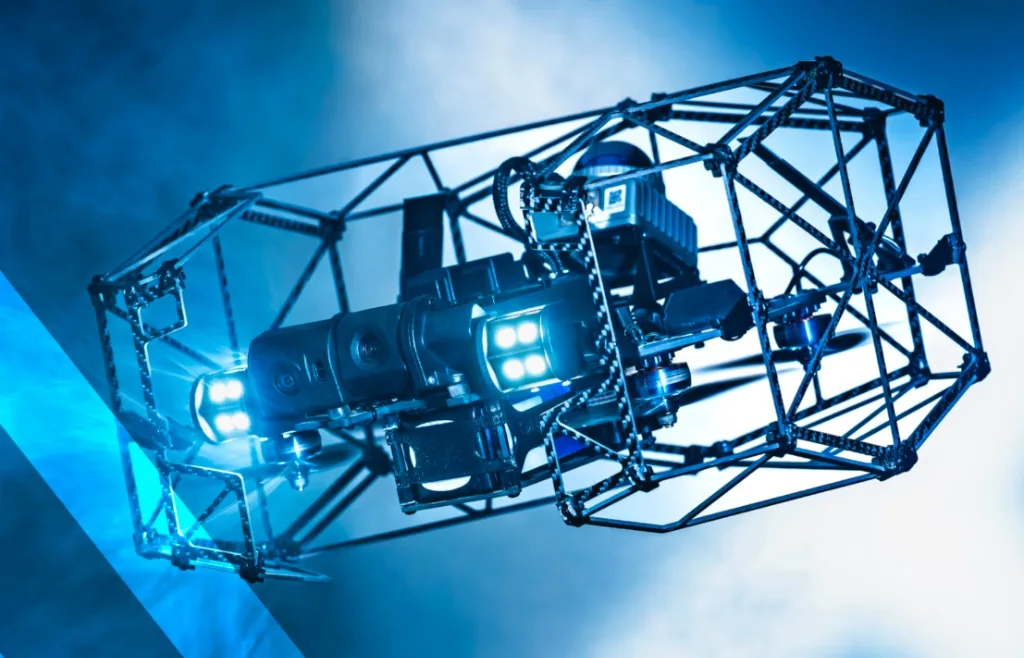
The newly engineered Signal Recovery Feature acts as an automated, fail-safe mechanism triggered immediately when RF communication between the drone and the controller is severed. Upon detecting signal disconnection, the drone initiates its automated recovery protocol without requiring human intervention:
- Immediate Flight Path Reversal: The drone halts its forward inspection trajectory and holds its altitude in a controlled hover.
- Autonomous Backtracking via Recorded Path: Utilizing its onboard LiDAR spatial map and flight memory, the aircraft autonomously backtracks along the exact 3D flight path it previously navigated.
- Seamless Signal Restoration: As soon as the drone returns to a zone with sufficient RF strength, the control link reconnects, allowing the operator to resume full manual or semi-autonomous control to finish the mission or execute a safe landing.
By eliminating the risk of lost equipment or unrecoverable crashes in tight spaces, inspection teams can confidently execute wide-area, deep-range inspections in massive industrial assets without fear of operational disruption.
Strategic Development via the DeepStar Consortium
The engineering of the Terra Xross 1 and its signal recovery suite is the direct outcome of real-world operational feedback from leading offshore energy operators. The DeepStar Consortium is a world-renowned joint industry project involving global energy leaders like Chevron and Shell. Through the partnership between The Nippon Foundation and DeepStar, technology developers receive direct operational guidance from field engineers working on complex asset maintenance.
Terra Drone worked closely with consortium members to integrate field-proven requirements into the aircraft's architecture. The result is a highly durable, Japanese-manufactured inspection drone built specifically to endure harsh industrial environments while maintaining effortless maneuverability.
Democratizing Indoor Inspections Through Cost Efficiency
Beyond its advanced failsafe features, the Terra Xross 1 stands out for its disruptive cost-to-performance ratio. Historically, specialized indoor inspection quadcopters equipped with protective cages and LiDAR navigation systems have carried prohibitively high price tags, slowing down adoption across smaller service companies. Terra Drone engineered the Terra Xross 1 to deliver high-end sensor capabilities at approximately one-third of the cost of conventional indoor inspection drones.
| Specification | Terra Drone Terra Xross 1 | Conventional Indoor Drones |
|---|---|---|
| Navigation System | LiDAR + Visual Sensors (GPS-denied) | Optical flow / Manual cage protection |
| Failsafe Security | Automated Signal Recovery Feature | None / Manual tether retrieval |
| Cost Structure | Approx. 1/3 of conventional cost | High capital purchase & maintenance fee |
| Target Applications | Storage tanks, boilers, mines, pipes, vessels | Limited by RF range & asset loss risks |
By dramatically lowering both financial and technical barriers, Terra Drone is empowering industrial asset owners throughout Europe—from the Port of Rotterdam to offshore energy platforms across the North Sea—to digitize their maintenance workflows rapidly.
Compliance with European Regulatory Frameworks & EASA Standards
Operating drones inside industrial infrastructure in Europe is subject to stringent safety guidelines established by the European Union Aviation Safety Agency (EASA). While operations inside fully enclosed structures fall outside open public airspace, industrial facility operators and SEVESO-designated sites impose rigorous safety mitigation criteria under Specific Operations Risk Assessment (SORA) methodologies.
Features such as automated signal recovery and robust containment directly align with EASA Specific Category mitigation requirements. At Drone Department, our experience shows that implementing verified failsafe software simplifies operational approval processes for complex industrial locations across European member states.
In addition to industrial inspection technologies, spatial positioning and specialized drone stabilization play a major role in commercial creative projects. Explore our specialized indoor FPV fly-throughs for architectural showcases, our heavy-lift cinema drones for feature film productions, and meet our certified drone pilot team experienced in navigating challenging environments.
The Future of Autonomous Indoor Asset Management
The successful deployment of the Signal Recovery Feature on the Terra Xross 1 represents a significant step forward for industrial drone autonomy. By merging deep frontline operational feedback from energy leaders Chevron and Shell with Japanese engineering excellence, Terra Drone has set a new benchmark for confined space inspection tools.
As autonomous navigation and failsafe recovery software mature, robotic inspections will become the standard protocol for energy and industrial infrastructure worldwide. This evolution not only minimizes downtime and operational costs but, most importantly, keeps human maintenance crews out of potentially dangerous enclosed environments.
Frequently Asked Questions About Indoor Drone Inspections and Signal Recovery
How do indoor inspection drones navigate without GPS?
Indoor drones rely on sensor fusion combining 3D LiDAR sensors, visual cameras, and Inertial Measurement Units (IMUs). This allows the aircraft to measure distances to surrounding walls and build a real-time 3D spatial map for precise position hold.
What happens if the radio signal disconnects during an inspection?
With Terra Drone's Signal Recovery Feature, the Terra Xross 1 automatically halts, reverses direction, and backtracks along its recorded 3D flight path until it regains a stable RF connection with the pilot controller.
Are indoor drone operations regulated by EASA in Europe?
Flight operations inside fully enclosed structures do not enter public airspace, but facility operators require compliance with occupational health and safety standards. For semi-enclosed or complex industrial sites, EASA Specific Category rules and SORA risk assessments apply.