 NL
NL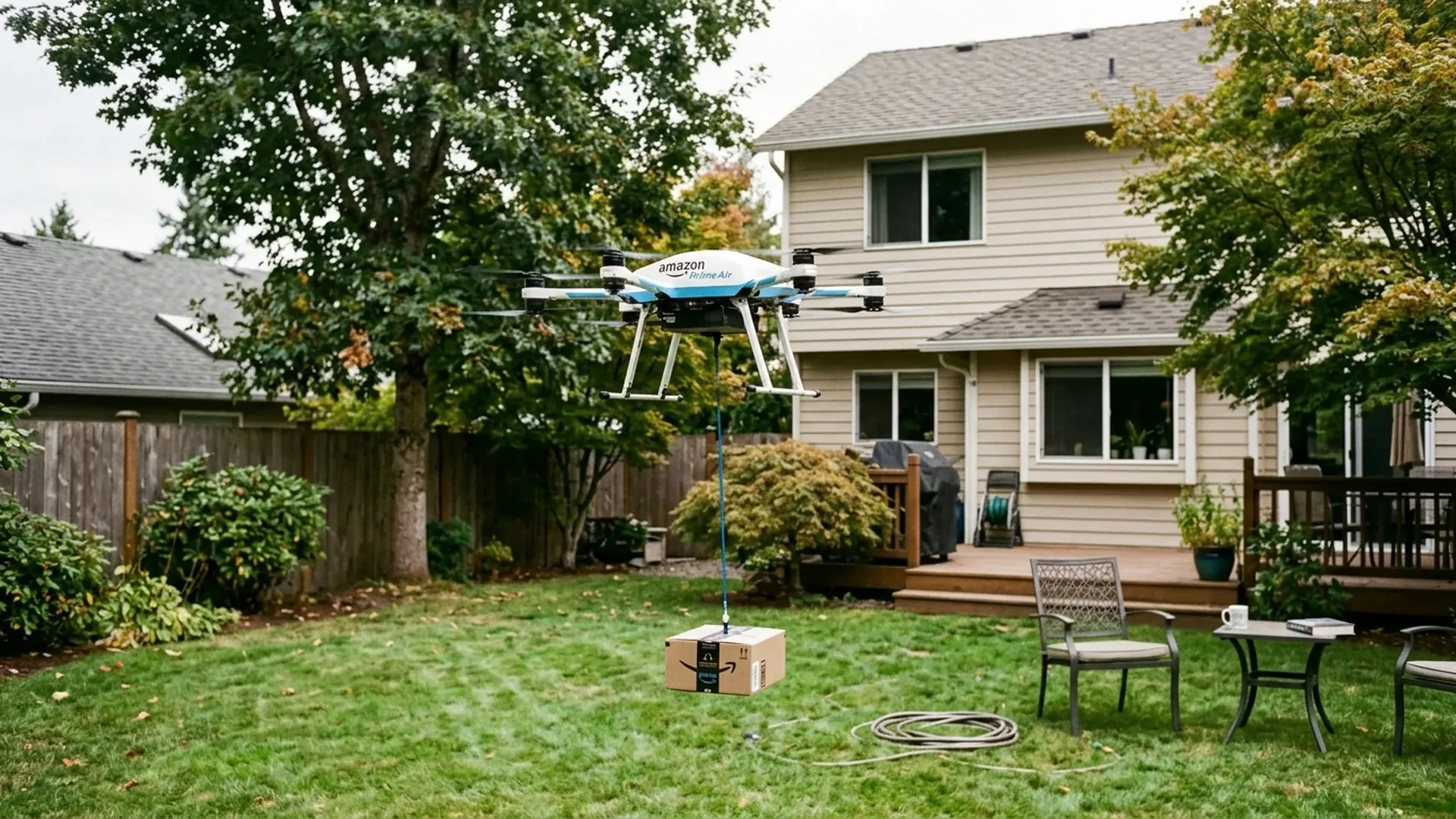
The global commercial drone ecosystem is witnessing a decisive inflection point toward industrial scale. Retail and technology giant Amazon has officially announced an ambitious expansion of its Prime Air drone delivery network to nearly 500 cities and suburban communities across the United States before the end of the year. This aggressive rollout represents a sixfold expansion from its current operational footprint, signaling that autonomous beyond visual line of sight (BVLOS) last-mile aerial logistics is shifting rapidly from experimental pilot programs into mainstream infrastructure.
For years, commercial drone delivery faced considerable headwinds, including stringent airspace regulations, localized acoustic concerns, and early hardware constraints. However, advancements in computer vision, onboard radar-based detect-and-avoid (DAA) systems, and progressive regulatory approvals from civil aviation bodies are unlocking scalable, autonomous operations in complex suburban environments. This development offers profound insights for European commercial drone operators, enterprise buyers, and aviation regulators navigating their own airspace modernization agendas.
Scaling up: from localized testbeds to 500 metropolitan hubs
Prior to this milestone, Amazon operated Prime Air out of 11 dedicated fulfillment locations across 10 metropolitan markets, primarily focused on pilot testing in areas such as Texas and Arizona. The newly announced expansion brings the ultrafast aerial service into major metropolitan regions including Chicago, Atlanta, Cleveland, Syracuse, and Boise, with additional regional hubs slated for release throughout the coming quarters.
Eligible customers will be able to order hundreds of thousands of qualifying items weighing under five pounds, ranging from urgent pharmaceuticals and personal care items to electronic accessories and pantry goods, with deliveries landing in residential backyards within 30 to 60 minutes. The service is free for Amazon Prime members on orders of 50 dollars or more, while carrying a nominal fee for smaller baskets. Having completed hundreds of thousands of commercial drone deliveries in 2026 without significant safety incidents, Amazon has successfully built regulatory confidence with the Federal Aviation Administration (FAA).
Engineering the breakthrough: the MK30 drone in detail
The central catalyst behind this extensive operational scale-up is Amazon's latest generation aircraft: the MK30. Designed specifically to overcome the physical, regulatory, and public acceptance hurdles of suburban package delivery, the MK30 integrates key engineering enhancements over earlier iterations such as the MK27-2.
Key technical specifications of the MK30 include:
- Payload capacity and dimensions: The aircraft is engineered to carry payloads up to 2.3 kilograms (5 lbs) inside an enclosed aerodynamic fuselage suited for items fitting within a standard shoebox footprint.
- Acoustic optimization: Custom-designed swept rotor blades and advanced motor timing reduce perceived flight noise by nearly 40 percent, ensuring minimal disturbance in residential neighborhoods.
- Extended range and weather tolerance: The aircraft delivers double the operational range of its predecessor, enabling deliveries up to 12 kilometers from launch hubs, and is rated to fly safely in light rain and sustained winds.
- Autonomous Detect-and-Avoid (DAA): Equipped with a multimodal suite of optical sensors, machine vision processing, and radar, the MK30 can autonomously identify and maneuver around static obstacles such as trees and utility wires, as well as dynamic hazards like wildlife, pets, and low-flying aircraft.
Comparative analysis: autonomous drone delivery vs. ground parcel vans
To quantify the logistical and environmental impact of scaling aerial deliveries across suburban communities, the following comparison highlights key performance indicators between the MK30 drone and standard courier ground delivery vehicles:
| Operational Metric | Amazon Prime Air (MK30) | Standard Delivery Van (Diesel/EV) | Logistical Benefit |
|---|---|---|---|
| Average Delivery Speed | 30 - 60 minutes | 2 to 24 hours (batched routing) | Up to 80% faster fulfillment |
| Traffic Dependency | Zero (point-to-point aerial transit) | High (rush hour, roadworks, gridlock) | 100% predictable transit times |
| Emissions per Delivery | Zero direct emissions (100% electric) | 150 - 450g CO2 per individual drop | Significant decarbonization of last mile |
| Delivery Mechanism | Tether/low hover drop in designated garden | Driver curb parking & walk to front door | Fully contactless autonomous handoff |
| Road Infrastructure Impact | Zero road wear or residential parking strain | Wear on neighborhood streets and curb blockage | Relief for urban and suburban streetscapes |
The European landscape: regulatory rigor and diverging strategies
While the United States is rapidly accelerating commercial drone deployments, the landscape across Europe presents a distinctly nuanced and regulated scenario. In the United Kingdom, Amazon currently conducts operational trial flights from its fulfillment center in Darlington under strict permissions granted by the UK Civil Aviation Authority (CAA). The trials are tightly capped in terms of flight frequencies, daylight hours, and weather windows, with ongoing safety evaluations determining future permit extensions.
Across continental Europe, commercial rollouts have encountered varying corporate and regulatory dynamics. Following successful trial flights in San Salvo, Italy, Amazon decided in late 2025 to pause its Italian commercial drone delivery program due to a broader strategic review. At the same time, specialized European drone operations are flourishing in critical sectors, as demonstrated by the ongoing medical drone deliveries between Isala Meppel and Zwolle in the Netherlands.
Under the harmonized framework of the European Union Aviation Safety Agency (EASA), European airspace integration is governed through the Specific Category SORA (Specific Operations Risk Assessment) and emerging U-Space services. Crucial standards, such as mandatory Remote ID compliance for C1-C3 drones, ensure that all uncrewed aircraft can be seamlessly tracked, identified, and integrated into national air traffic management systems.
Airspace deconfliction and commercial operations
As commercial delivery drones multiply across suburban flight corridors, effective airspace coordination with other professional uncrewed operators becomes paramount. For specialized commercial crews, such as our cinema drone operators and certified commercial drone pilots working on high-end film sets, live broadcast events, and industrial mapping missions, situational awareness is fundamental.
Standardized digital airspace platforms, such as the Dutch drone map and automated UTM (Unmanned Traffic Management) systems, ensure clear flight separation. Real-time telemetry sharing, ADS-B transponder tracking, and designated flight altitude ceilings enable logistics drones, emergency services, and creative film drones to safely share controlled and uncontrolled low-altitude airspace without mutual interference.
The evolving landscape of autonomous commercial drone delivery
Amazon's massive scale-up of Prime Air across 500 American cities signals that autonomous aerial logistics is transitioning from a speculative vision into a viable pillar of global supply chains. The synergy of mature airframe engineering in the MK30, reliable detect-and-avoid technologies, and structured BVLOS regulatory approvals paves the way for widespread commercial adoption.
For European operators and aviation authorities, this deployment provides tangible operational data on public acceptance, noise mitigation, and low-altitude traffic density. As U-Space regulations mature and automated authorization platforms become ubiquitous, the future of uncrewed aviation will continue to expand across European skies, delivering safer, faster, and more sustainable aerial solutions.
Frequently asked questions about Amazon Prime Air drone delivery
What is the scope of Amazon's Prime Air drone delivery expansion?
Amazon is scaling Prime Air from 11 initial sites to nearly 500 cities and suburban areas across the United States, targeting delivery times of 30 to 60 minutes using its next-generation MK30 drone.
What are the key specifications of the Amazon MK30 drone?
The MK30 carries packages up to 5 pounds (2.3 kg), delivers twice the range of previous models, is 40 percent quieter, flies in light rain, and uses advanced detect-and-avoid sensor systems.
What is the current status of Amazon Prime Air in Europe?
Amazon currently operates a limited trial from Darlington in the United Kingdom under UK Civil Aviation Authority (CAA) permissions. Planned operations in Italy were discontinued in late 2025 following a strategic review.
How does autonomous drone delivery improve last-mile logistics?
Drone delivery cuts delivery times from hours to minutes, eliminates road congestion delays in suburban areas, and removes vehicle tailpipe emissions through 100 percent electric aerial transit.