 NL
NL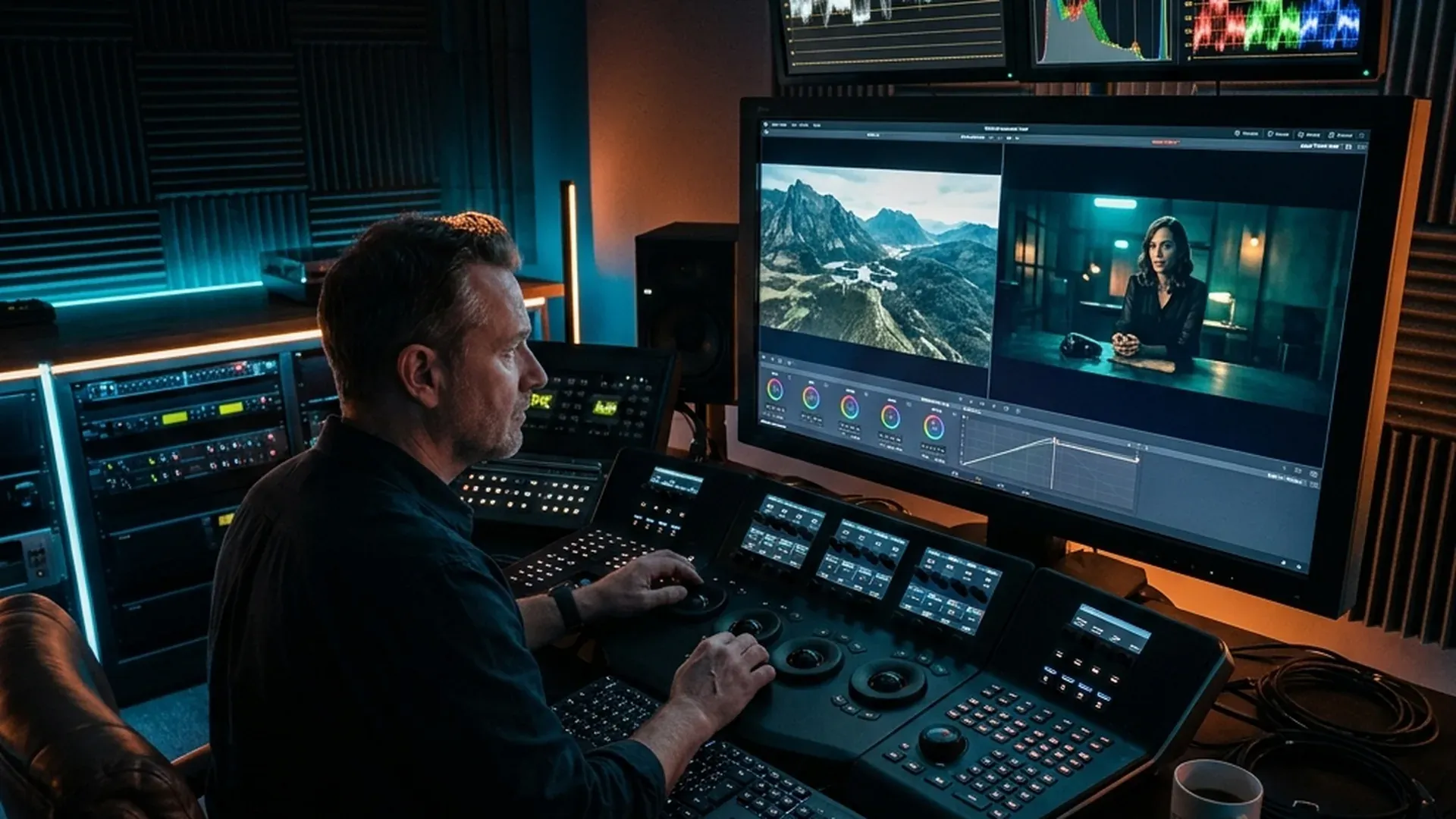
The challenge of multi-camera color harmony on high-end film sets
On modern feature film sets and high-budget commercial productions, aerial footage is no longer an isolated visual interlude. Directors and Directors of Photography (DOPs) demand an absolutely seamless visual transition between ground-based A-cameras and aerial drone perspectives. When the main camera on set is an ARRI Alexa Mini LF or Alexa 35, colorists face a complex task: matching ARRI's proprietary LogC4 color science with aerial footage captured by cinema drones and custom FPV platforms.
Aerial shots are captured under rapidly shifting lighting environments—from extreme high-contrast sunlight above clouds to rapid light changes during FPV fly-throughs in confined spaces. The selected color profile on the drone determines how effectively the sensor preserves dynamic range, color fidelity, and shadow details. In practice, post-production houses often choose between compressed 10-bit log profiles like D-Log M and uncompressed 12-bit Apple ProRes RAW.
D-Log M vs Apple ProRes RAW vs ARRI LogC4: Technical Comparison
To understand why specific color profiles match cinema cameras more seamlessly, we must examine how sensor data is encoded. D-Log M is a 10-bit logarithmic profile with a fixed gamma curve designed for efficient data transmission and fast grading. Apple ProRes RAW, by contrast, preserves uncompressed Bayer sensor data, granting the colorist complete control over white balance, ISO gain, and demosaicing inside software like Blackmagic DaVinci Resolve.
| Feature | DJI D-Log M (10-bit) | Apple ProRes RAW (12-bit) | ARRI LogC4 (16-bit Linear) |
|---|---|---|---|
| Color Depth | 10-bit (1.07 billion colors) | 12-bit (68.7 billion colors) | 16-bit Container (Linear RAW) |
| Dynamic Range | ~12.5 stops | ~14 to 15 stops (sensor dependent) | 17 stops (ARRI Alexa 35) |
| On-Set Data Footprint | Low (~150-200 Mbps) | Very High (~1.1 to 1.8 Gbps) | Extremely High (ARRIRAW) |
| White Balance Flexibility | Within 10-bit tolerance (baked-in) | Fully lossless in post-production | Fully lossless in post-production |
| Matching with ARRI | Requires custom CST & color tweaking | Seamless via ACES / ARRI LogC Transformation | Industry reference standard |
Color space transformation and ACES workflows in DaVinci Resolve
When working with a mixed timeline in DaVinci Resolve Studio, the most efficient method for aligning color data is utilizing ACEScc (Academy Color Encoding System) or Color Space Transforms (CST). By transforming the drone's source signal—whether D-Log M from a DJI Mavic 4 Pro or ProRes RAW from a DJI Inspire 3—into a neutral working color space like ACESAP1 or DaVinci Wide Gamut, secondary colors and skin tones align naturally with ARRI Alexa footage.
With 10-bit D-Log M, accurate exposure on set is critical. Because the logarithmic curve lifts shadows, severe underexposure can introduce unwanted noise when boosting shadow detail in post. Our experienced drone pilots and camera operators utilize precise false-color monitoring on ground stations to ensure highlights do not clip and shadows stay within optimal sensor response boundaries.
Practical color grading tips for matching drone footage with cinema A-cameras
To achieve a flawless transition between drone aerials and main camera footage, our colorists and camera operators employ industry-standard grading workflows. When matching 10-bit D-Log M with ARRI LogC4, we recommend using a custom Look-Up Table (LUT) or a node-based Color Space Transform in DaVinci Resolve. The camera color space is first mapped to DaVinci Wide Gamut/Intermediate before applying secondary adjustments such as skin tone isolation and shadow tint balancing.
Furthermore, precise on-set exposure control plays a vital role in color management. By utilizing high-quality neutral density (ND) filters and false-color monitoring on ground stations, we prevent blown-out highlight details in bright skies. With 12-bit Apple ProRes RAW, colorists can fine-tune sensor ISO gain and debayer algorithms in post-production to match the organic grain structure and dynamic range of ARRI main cameras seamlessly. Interested in learning more about how our stabilization techniques combine on set? Read our article on Gyroflow stabilization in FPV cinematography.
Frequently asked questions about color profiles and drone post-production
Is D-Log M sufficient for commercial TV productions?
Yes, 10-bit D-Log M provides ample color depth and dynamic range for the majority of television commercials and corporate video productions. Its primary advantage is low data overhead and fast turnaround during editing.
When is ProRes RAW strictly required over D-Log M?
Apple ProRes RAW is essential for feature films, international brand campaigns, and scenes with extreme dynamic range (such as sunsets or high-contrast direct lighting). It grants colorists full latitude to match white balance and exposure directly with ARRI LogC4 or RED IPP2 footage.
Can D-Log M be converted directly to ARRI LogC?
Yes, utilizing Color Space Transform (CST) nodes in DaVinci Resolve allows D-Log M to be mapped into ARRI LogC3 or LogC4. However, care must be taken to prevent color banding in subtle gradients like sky backgrounds.
Does DaVinci Resolve support Apple ProRes RAW natively?
DaVinci Resolve requires an intermediate conversion step for ProRes RAW (such as using SlimRAW or transcoding to ProRes 4444 XQ / CinemaDNG). Our post-production pipeline delivers files in your colorist's preferred intermediate format automatically.
The future of seamless color matching on high-end film sets
With rapid advancements in both camera sensor technology and post-production software, the boundary between traditional main cinema cameras and aerial platforms is dissolving. By selecting the optimal color profile—tailored to project budget and color fidelity requirements—filmmakers ensure a cohesive visual experience. Drone Department continuously invests in cutting-edge camera systems, color calibration, and pilot certifications to offer directors uninhibited artistic freedom in the air.