 NL
NL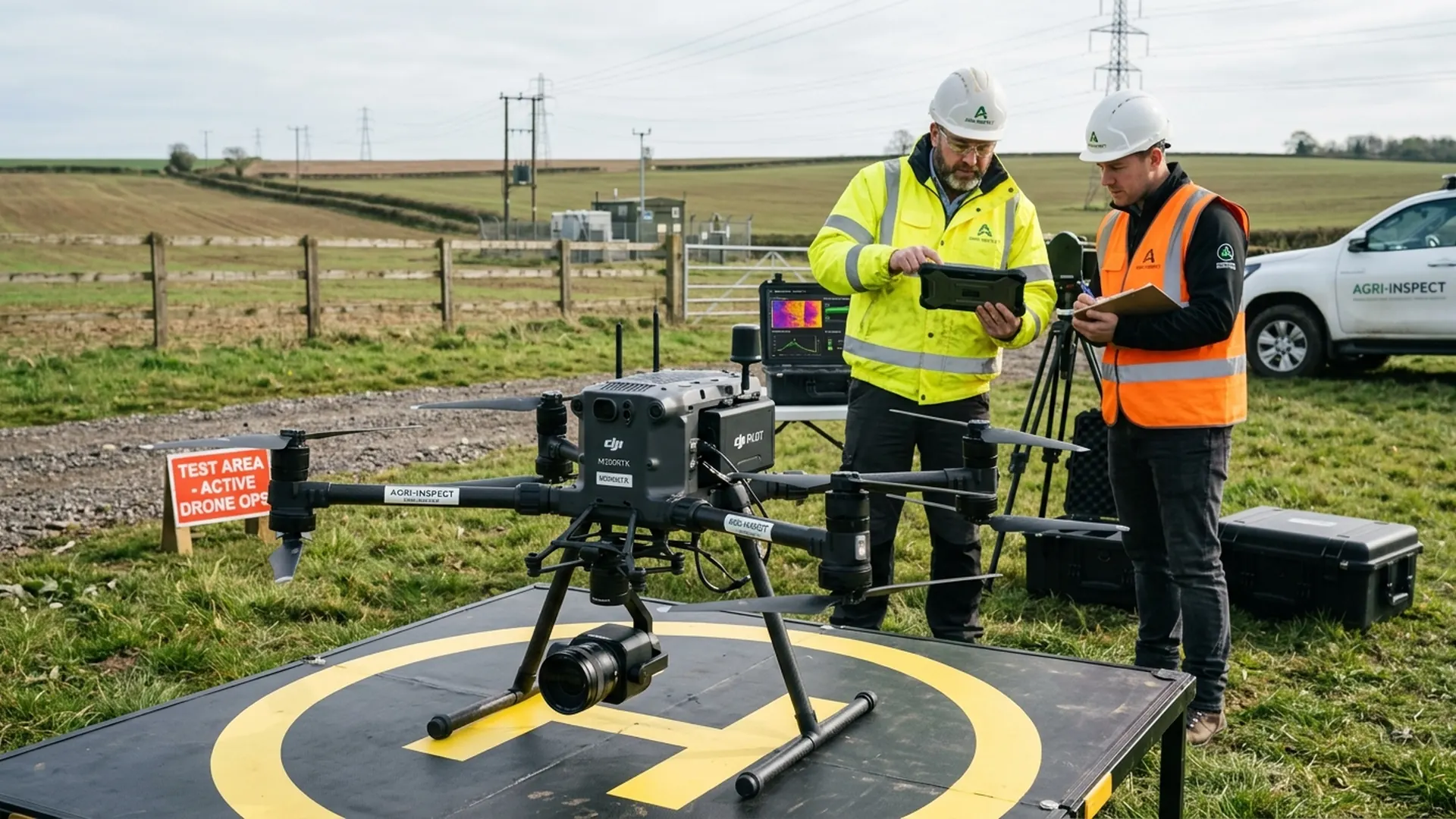
The commercial drone sector has arrived at a pivotal turning point. For over a decade, uncrewed aerial vehicles served primarily as airborne data harvesters, capturing vast arrays of high-resolution imagery and video streams for retrospective processing back at the office. Today, that paradigm is shifting toward instant, in-flight comprehension. Global drone technology leader DJI has officially announced the winners of the DJI Enterprise Drone Onboard AI Challenge 2026, crowning 15 cutting-edge solutions that demonstrate how artificial intelligence deployed directly onto aircraft platforms is revolutionizing field operations.
The objective of the global challenge was straightforward yet ambitious: eradicate the latency bottlenecks of conventional cloud analytics. By executing optimized computer vision algorithms and deep neural networks on compact onboard computing hardware, enterprise drones can now autonomously interpret sensor data, identify anomalies, and trigger operational alerts in real time without depending on continuous high-speed cellular links.
Transitioning from cloud bottlenecks to autonomous edge intelligence
In traditional drone operations across civil infrastructure, precision agriculture, and public safety, post-flight data processing represents the most time-consuming phase of the workflow. An aerial inspection covering an expansive bridge, industrial plant, or utility grid generates thousands of high-resolution stills. Manually sorting or uploading these files to cloud servers often takes hours or days. For time-critical missions such as search-and-rescue or emergency disaster response, such delays can directly jeopardize outcomes.
Onboard edge computing addresses this challenge by analyzing camera frames immediately at the hardware level. The embedded AI engine filters out static background noise and pinpoints specific defects, target assets, or safety hazards while stamping them with precise geospatial coordinates. For certified professional drone pilots and enterprise inspection teams, this capability delivers live actionable intelligence straight to the ground control station before the drone even touches down.
The 5 winners of the Best Onboard AI Model Award
This award category celebrates software engineers who built exceptionally lightweight, high-performance neural networks tailored specifically to the strict power and compute boundaries of drone hardware:
- 9-in-1 Onboard Fusion Algorithm (Hangzhou New Modal Technology): A comprehensive highway management solution integrated on FlightHub 2 and Manifold 3, merging 9 monitoring tasks across traffic enforcement, road maintenance, facility tracking, and flow control.
- Automated Ecological Monitoring for Nature Reserves (Zhongke Beiwei Technology): Dedicated AI models for biodiversity protection, automated grazing monitoring, avian habitat tracking, and flagship mammal preservation.
- Integrated Onboard Multi-Model & AI Agent (Cheng'an Zhilian Information Tech): Deployed on the DJI Dock 3 and M4TD drone. Autonomously identifies illegal parking, takes over flight control to capture ultra-HD license plate close-ups, and logs full evidentiary work orders.
- Huineng Real-Time Defect Recognition System (Huineng Technology): Fuses visible optical and thermal infrared analytics with 5G transmission for real-time anomaly detection across electrical substations and high-voltage transmission lines.
- Smart Detection of Fire Lane Illegal Parking (Aoshi Cangqiong): High-altitude broad-area surveillance providing real-time alerts when vehicles obstruct emergency fire access routes in dense urban districts.
The 10 winners of the Industry Application Excellence Award
Recognizing complete, mission-ready enterprise deployments that address operational challenges across key commercial sectors:
- Solar Smart AI Inspection Solution (Shangtejie AI R&D Department): Autonomous photovoltaic park inspections utilizing the Matrice 400 and Manifold 3 to identify five defect classes across optical and thermal sensors without cloud dependency.
- Fine Bridge Crack AI Recognition (Bridge Inspection Master): Real-time structural assessment detecting micro-fissures finer than 0.1 mm across concrete bridge spans in a single automated flight.
- Muniu Hetu Shoreline & Waterway Inspection (Muniu Hetu Algorithm Team): Automated patrols along port facilities and inland waterways with autonomous target tracking, classification, and anomaly alerts.
- Beach Garbage Tiny Object Recognition (East China Normal University): Specialized computer vision deployed on the DJI Matrice 4E to detect micro-litter and plastic debris along coastal shorelines.
- Multi-Algorithm Fusion SAR Target Detection (Shenzhen Public Welfare Rescue Volunteer Federation - SRVF): Embedded into search-and-rescue response protocols for swift missing-person triage using AI pre-screening and rescuer confirmation.
- Point Cloud Core Box (Wuhan Luanchuang Digital Tech): Real-time onboard 3D LiDAR point cloud computation and feature extraction on the Matrice 400 for utility power grids.
- Jingwei Mutong Grassland Grazing Monitoring (Lanzhou University): Automated livestock enumeration and alpine pasture condition evaluation for agricultural authorities, research institutes, and insurers.
- Real-Time E-Bike Helmet Detection (Sky Patrol Smart Inspection): Edge-based video analysis providing instant traffic safety alerts and non-compliance tracking during urban drone patrols.
- AgroCount AI Crop Counting System (Daniel Tovar): Validated on a 50-hectare banana plantation in Colombia, condensing a week of manual crop auditing into an autonomous four-hour flight with exact GIS mapping.
- Air Pollution Spike Traceability Solution (Chongqing Guangruida Technology): Rapid source tracing and real-time detection of industrial emission spikes and illegal burning near environmental monitoring stations.
Comprehensive summary of all 15 winning AI innovations
The table below summarizes all fifteen crowned projects, participating development teams, award categories, and targeted industries:
| Solution / Project | Development Team / Organization | Award Tier | Target Industry |
|---|---|---|---|
| 9-in-1 Smart Transportation Fusion | Hangzhou New Modal Technology | Best Onboard AI Model | Transportation & Highways |
| Automated Ecological Monitoring | Zhongke Beiwei Technology | Best Onboard AI Model | Forestry & Nature Reserves |
| Integrated Onboard Multi-Model AI Agent | Cheng'an Zhilian Information Tech | Best Onboard AI Model | Automated Traffic Control |
| Huineng Real-Time Defect Recognition | Huineng Technology | Best Onboard AI Model | Power Grids & Utilities |
| Fire Lane Illegal Parking Detection | Aoshi Cangqiong | Best Onboard AI Model | Urban Fire Safety |
| Solar Smart AI Inspection | Shangtejie AI R&D Department | Industry Application Excellence | Renewable Solar Parks |
| Fine Bridge Crack Recognition (<0.1mm) | Bridge Inspection Master | Industry Application Excellence | Civil Infrastructure |
| Muniu Hetu Waterway Inspection | Muniu Hetu Algorithm Team | Industry Application Excellence | Waterways & Ports |
| Beach Garbage Tiny Object Recognition | East China Normal University | Industry Application Excellence | Coastal Environmental Cleanup |
| Multi-Algorithm Fusion SAR System | SRVF Rescue Federation | Industry Application Excellence | Search and Rescue (SAR) |
| Point Cloud Core Box 3D LiDAR | Wuhan Luanchuang Digital Tech | Industry Application Excellence | Power Lines & 3D Modeling |
| Jingwei Mutong Grassland Grazing | Lanzhou University Flying Team | Industry Application Excellence | Precision Agriculture |
| E-Bike Helmet Detection & Alert | Sky Patrol Smart Inspection | Industry Application Excellence | Traffic Safety & Enforcement |
| AgroCount AI Crop Counting | Daniel Tovar | Industry Application Excellence | Crop Yield & Plantation Audit |
| Air Pollution Spike Traceability | Chongqing Guangruida Technology | Industry Application Excellence | Air Quality & Environmental |
Hardware foundation: Matrice 4 series, Dock 3, and Manifold 3 platform
The practical feasibility of edge computing in aviation relies entirely on synchronized hardware and software architectures. The challenge focused on enterprise systems including the DJI Matrice 4 series, the Matrice 4D docked drones paired with the autonomous DJI Dock 3 and Matrice 4D ecosystem, and the heavy-duty Matrice 400 platform.
Central to this ecosystem is the DJI Manifold 3 onboard computer. Engineered with energy-efficient AI acceleration chips and specialized graphic processing units, it delivers high computational throughput while preserving battery endurance. Using DJI's Payload SDK and Onboard SDK, developers can directly link AI inferences with gimbal control and optical zoom. If an algorithm flags a potential structural flaw on a wind turbine blade, the drone can autonomously pivot and zoom to capture detailed evidentiary imagery without operator intervention.
European regulatory landscape: EASA SORA, BVLOS, and U-Space integration
Across Europe, the deployment of intelligent uncrewed aircraft aligns seamlessly with safety frameworks established by the European Union Aviation Safety Agency (EASA). In complex Beyond Visual Line of Sight (BVLOS) operations conducted in the Specific Category under the SORA (Specific Operations Risk Assessment) methodology, onboard intelligence significantly enhances risk mitigation.
AI models capable of real-time landing zone evaluation, dynamic obstacle detection, and automatic geofence compliance help satisfy stringent air and ground risk mitigation criteria. Whether executing critical commercial infrastructure missions or operating high-end cinema drones and cinema drone operators on complex sets, unwavering adherence to airspace zoning on the Dutch drone map and international standards remains paramount.
The future of autonomous flying assistants in enterprise operations
The results of the DJI Enterprise Drone Onboard AI Challenge signal an enduring transformation in aerial robotics. Enterprise drones are progressing from remote-controlled data gatherers into proactive, autonomous assistants capable of perceiving, interpreting, and responding to complex physical environments in real time.
Winners will receive global exposure via DJI Enterprise channels, listing in the Onboard AI Solutions Catalog, and fast-track access to future product beta programs with direct engineering support. Discover full video demonstrations and project profiles on the official DJI Developer Innovation Contest portal. For commercial operators, agricultural enterprises, and emergency response teams, onboard edge AI unlocks unprecedented operational efficiency, safety, and scalability across the modern European skies.
Frequently asked questions about DJI Onboard AI innovations
What is the primary goal of the DJI Enterprise Drone Onboard AI Challenge?
The competition encourages developers worldwide to deploy artificial intelligence models directly on drones and edge computers, allowing flight data to be analyzed in real time without relying on slow post-flight cloud processing.
Which solutions won the Best Onboard AI Model Award?
The 5 Best Onboard AI Model winners are: Hangzhou New Modal Technology (9-in-1 traffic inspection), Zhongke Beiwei (automated ecological reserve monitoring), Cheng'an Zhilian (autonomous traffic enforcement & parking agent), Huineng Technology (real-time power grid defect detection), and Aoshi Cangqiong (fire lane parking detection).
Which hardware platforms support DJI Onboard AI computing?
The AI models run on enterprise platforms including the DJI Matrice 4 series, Matrice 4D docked aircraft, Matrice 400, the DJI Dock 3 automated station, and the dedicated DJI Manifold 3 onboard computing module.
What are the main advantages of edge AI over traditional cloud processing?
Edge AI provides real-time decision-making with near-zero latency, operates reliably in remote areas without mobile cellular coverage, significantly reduces data bandwidth costs, and enhances privacy by processing imagery on-device.