 NL
NL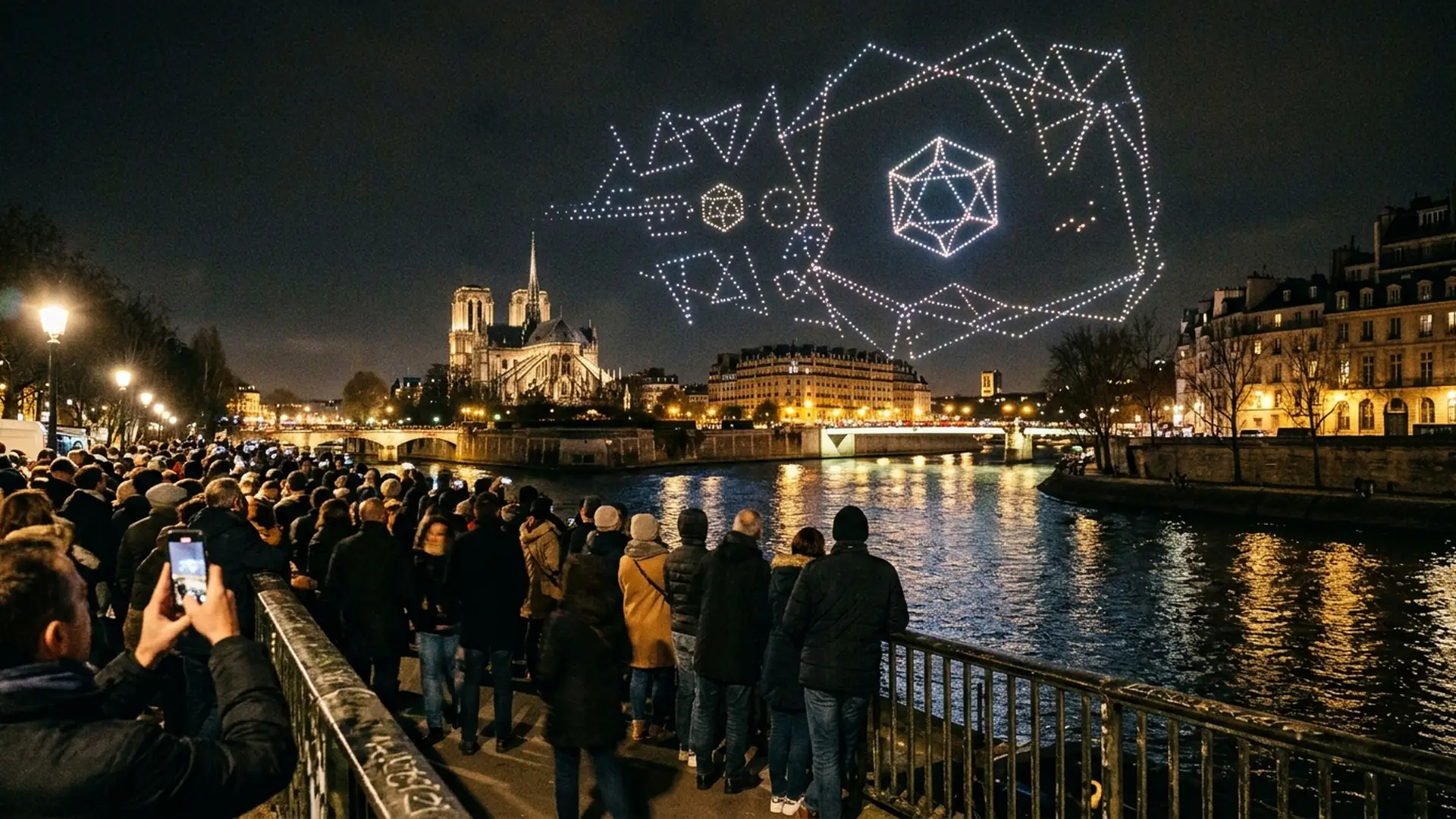
The landscape of public celebrations, major festivals, and brand activations across Europe is experiencing a monumental paradigm shift. For decades, traditional pyrotechnics served as the customary climax for national holidays, sporting ceremonies, and cultural gatherings. However, rising environmental concerns, strict particulate matter thresholds, animal welfare considerations, and the boundless creative possibilities of 3D aerial light art are prompting European city councils and event producers to embrace synchronized drone swarms.
Throughout countries such as the Netherlands, Germany, France, and Switzerland, municipal authorities are tightening regulations surrounding pyrotechnic permits. Public health agencies and environmental bodies consistently highlight the severe spikes in heavy metal residues and fine particulate matter caused by fireworks displays. In contrast, illuminated drone swarms deliver a clean, reusable, and whisper-quiet alternative that captivates audiences with algorithmic precision.
Environmental Pressures Facing Traditional Fireworks in Europe
Traditional pyrotechnic displays carry significant environmental and logistical drawbacks. A standard fifteen-minute fireworks show releases tons of airborne particulate matter (PM10 and PM2.5), carbon dioxide, and toxic chemical compounds including strontium, barium, and copper into the atmosphere, soil, and local waterways. In urban centers with stringent emission ceilings, these events routinely trigger severe air quality violations under European directives.
Noise pollution represents another decisive factor in municipal permitting decisions. Domestic pets, livestock, and wildlife within nearby Natura 2000 preservation areas experience extreme psychological stress and panic responses from unexpected concussive blasts. Furthermore, the physical ground safety perimeter required for high-grade pyrotechnics is extensive: falling debris, hot ash, and unexploded shells necessitate wide public exclusion zones and pose heightened wildfire hazards during dry summer seasons.
Synchronized drone shows eliminate these environmental hazards entirely. Operating on rechargeable lithium-polymer batteries charged via renewable energy, light drones produce zero particulate emissions, leave no chemical debris on the ground, and emit only a gentle hum. This allows organizers to host major visual spectacles in sensitive historic city centers or natural reserves without ecological disruption.
The Visual Storytelling Power of Swarm Programming
The primary advantage of drone swarms over traditional fireworks lies in their narrative depth and visual fidelity. Pyrotechnics are ephemeral and abstract; once a shell detonates, the visual impression dissipates within seconds amid smoke clouds. Conversely, a coordinated fleet of light drones transforms the night sky into a massive three-dimensional digital canvas.
Utilizing advanced 3D animation suites and dedicated swarm flight planning tools, choreographers can craft intricate three-dimensional sculptures, fluid geometric morphs, dynamic text, recognizable logos, and lifelike animated characters. Each drone functions as a flying voxel equipped with high-output RGBW LED modules delivering thousands of lumens with microsecond color modulation.
This dynamic capability enables brands and municipalities to convey bespoke narratives tailored precisely to their heritage or campaign objectives. Whether animating the maritime history of a coastal city, projecting a New Year countdown, or launching a global commercial product, the creative range is unparalleled. Our dedicated drone show services showcase how cutting-edge aviation engineering and visual art unite seamlessly above thousands of spectators.
Technological Infrastructure: RTK-GNSS and Mesh Networks
Maintaining pinpoint synchronization across hundreds of aircraft separated by mere centimeters demands aerospace-grade telemetry. While standard consumer drones rely on basic GPS with an accuracy buffer of several meters, professional swarm drones utilize Real-Time Kinematic (RTK) satellite positioning. Continuous differential correction signals from an onsite base station allow each drone to maintain spatial accuracy within 2 to 3 centimeters.
Communication between the central ground control station (GCS) and the aerial fleet is managed through redundant, encrypted radio channels and decentralized mesh protocols. This ensures robust signal stability even in radio-dense metropolitan areas or crowded festival venues. If an individual drone encounters telemetry anomalies or abnormal cell voltage drops, automated safety failsafes immediately command the aircraft to dim its LEDs and perform a controlled descent to a designated emergency landing area without impacting neighboring flight paths.
Comparison: Traditional Fireworks versus Modern Drone Light Shows
To provide a clear overview of operational, ecological, and economic distinctions, we have summarized the core parameters of both formats below:
| Feature | Traditional Fireworks | Advanced Drone Shows |
|---|---|---|
| Emissions & Waste | Heavy particulate matter (PM2.5), CO2, toxic heavy metals | Zero emissions, no physical residue, rechargeable battery fleet |
| Acoustic Impact | Explosive blasts above 120-150 dB, acute wildlife distress | Quiet operation (< 60 dB at ground level), city-friendly |
| Visual Storytelling | Abstract bursts, heavy smoke obscuring clarity | Custom 3D sculptures, precise logos, dynamic typography |
| Fire Risk & Safety | High risk of burns, bushfires, and unexploded pyrotechnic duds | Geofenced containment, redundant failsafes, no open flame |
| Reusability & ROI | Single-use consumables (combusted entirely during the show) | Fully reusable hardware, software-driven show adaptations |
| European Permitting | Increasing bans, dense noise complaints, environmental restrictions | Structured under EASA Specific Category (SORA / STS authorizations) |
European Regulatory Framework and EASA Safety Standards
Executing commercial drone shows in European airspace requires rigorous compliance with the regulatory framework set by the European Union Aviation Safety Agency (EASA). Because swarm operations involve multiple autonomous aircraft operating near populated environments and urban infrastructure, these flights invariably fall within the EASA Specific Category. Consequently, flight authorizations require an extensive Specific Operations Risk Assessment (SORA) approved by national aviation authorities (such as the CAA in the UK, ILT in the Netherlands, or DGAC in France).
Core risk mitigation measures include:
- Dynamic Geofencing and Containment: Strictly enforced virtual boundaries that prevent drones from exiting the flight volume. Breaching boundaries immediately triggers automated motor cut-offs or emergency descents.
- Certified Flight Directors: Licensed, experienced drone pilots and air traffic coordinators overseeing real-time telemetry, local weather conditions, and surrounding airspace via ADS-B receivers.
- Ground Risk Buffers: Dedicated, barricaded launch and flight exclusion zones beneath the display volume, ensuring zero audience presence directly under active flight corridors.
- NOTAM Issuance: Formal Notice to Airmen publications alerting regional general aviation to scheduled night-time unmanned flight operations.
In our comprehensive guide on filming drone shows and safety licenses, we explore the regulatory workflows, cinematographic capture techniques, and operational requirements governing European airspace clearances.
Integration with Live Performances, Audio, and Broadcasts
Contemporary drone shows rarely exist in isolation. Modern event producers seamlessly integrate drone swarms into comprehensive multimedia experiences. Through SMPTE/LTC timecode synchronization, aerial transitions correlate to the millisecond with live orchestral music, laser projections, stadium lighting, and kinetic water fountains.
Furthermore, drone shows provide outstanding visual dynamics for live television and digital streaming. Ground-based multi-camera setups can be paired with dedicated wireless camera drones, as detailed in our analysis of live broadcast drone links for festivals and events. The immense lumen output of the swarm ensures vivid clarity on broadcast cameras and giant LED stadium displays alike.
The Future of Large-Scale Open-Air Storytelling in Europe
Accelerating developments in solid-state battery technology, high-density LED arrays, and autonomous swarm flight algorithms continue to expand the horizons of aerial entertainment. What began as experimental demonstrations with fifty drones has evolved into colossal productions involving thousands of aircraft sculpturing vivid 3D art across the night sky.
For European cities, festival organizers, and global brands seeking to reduce their environmental impact without sacrificing wonder and spectacle, drone light shows represent an established, sustainable, and forward-looking standard. They empower creators to tell compelling stories that unite audiences, respect the nocturnal ecosystem, and elevate public entertainment into a new digital era.
Frequently Asked Questions
Can drone light shows operate in rain or strong winds?
Modern swarm drones feature weather-sealed enclosures (typically rated IP43 to IP54) and can operate reliably in light precipitation. In terms of wind resistance, professional fleets maintain stable flight in sustained winds up to 28 to 38 km/h (Force 4 to 5 on the Beaufort scale). Higher gusts trigger automated safety holds or modified show profiles.
How does the cost of a drone show compare to fireworks?
The initial entry cost of a custom drone show is comparable to a mid-to-large scale professional fireworks display. The significant financial advantage emerges in recurring and multi-day events: because the hardware is completely reusable, subsequent performances require only choreography adjustments and battery recharging, eliminating the recurring cost of single-use explosives.
What is the typical flight duration of a drone light show?
Standard drone shows run between 10 and 18 minutes. This duration optimizes lithium-polymer battery discharge curves while preserving a mandatory 20 to 30 percent energy reserve for safe, controlled landings. Shows can be extended indefinitely by deploying multiple rotating fleets in seamless relays.
How much ground space is required for the launch grid?
A fleet of 200 drones requires a flat, secured launch pad of approximately 15 by 15 meters. Surrounding this takeoff grid, a designated safety buffer is established in accordance with EASA SORA requirements to maintain strict separation from the public.